
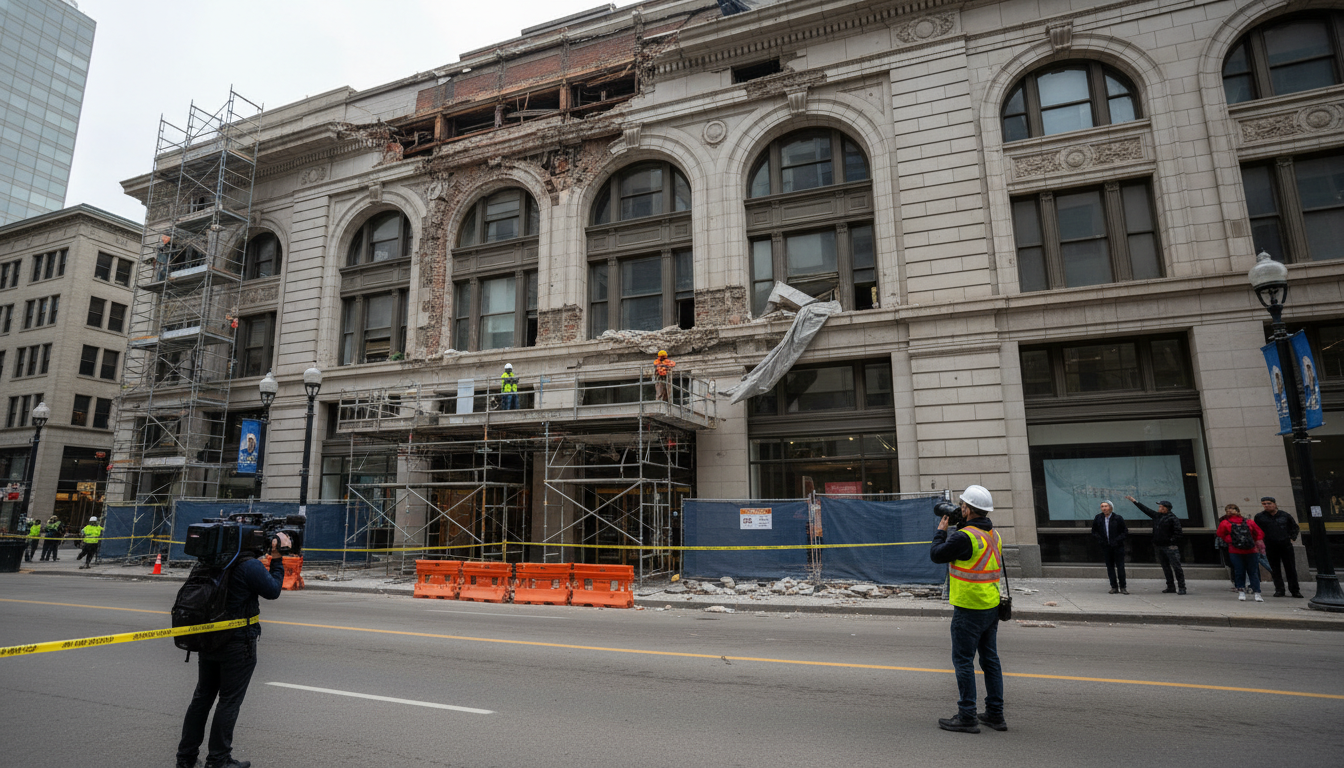
Downtown Hudson’s Bay building in Calgary shows accelerated decay as Astra prepares restoration
Downtown Hudson’s Bay building in Calgary is visibly deteriorating; new owner Astra faces pressure to secure the site, begin repairs and seek heritage status.
Deterioration seen in arcade and facade
A once-prominent six-storey Hudson’s Bay building in downtown Calgary has seen visible deterioration in recent months, with cracked and missing tiles in the arcade and burn marks on the stonework. Photographs taken May 28, 2026, show stripped brass window trim and sections of damaged walkway beneath the building’s arches, prompting renewed concern from heritage and downtown advocates. Observers say the damage has accelerated since the flagship store closed last year and the property spent time in receivership.
The building’s terracotta cladding and Chicago commercial-style design mark it as an architectural anchor for Calgary’s retail history, making the visible decline particularly striking. Those who walk the block say the condition risks creating safety hazards and discouraging visitors during the busy summer season.
Vacancy, social disorder and public-safety worries
Local heritage groups and downtown stakeholders have flagged social disorder around the vacant parts of the property, including evidence of small fires and loitering that can follow prolonged vacancy. Erika Topola, executive director of Heritage Calgary, said the site can "flip quickly" from a maintained urban asset to a location vulnerable to encampments and damage. The combination of vacancy, limited oversight and weathering has left sidewalks and arcade surfaces in visibly poor condition.
City and downtown leaders worry that visible neglect on a key downtown block could deter tourists and shoppers in the lead-up to major summer events, while also creating added costs for remediation if problems are left to worsen.
Tenancy history and current occupants
Though largely vacant, the building still houses a handful of long-term tenants that provide a measure of activity and security. A ground-floor restaurant and an event centre on the sixth level have continued to operate, according to local observers, keeping parts of the property in intermittent use. That occupancy has likely limited some deterioration, but it has not prevented the broader decline visible on the exterior arcade and facades.
Owners and managers who once maintained the property say the retail empire’s financial struggles in recent years contributed to delayed upkeep, and the departure of the flagship store last June left large portions of the building empty.
Astra Real Estate acquisition and response
Astra Real Estate Corp. has been identified as the new purchaser of the 114-year-old building, and its track record converting downtown properties has prompted cautious optimism among preservation advocates. The company has previously completed restorations in other cities, and downtown stakeholders say they are engaging with Astra about immediate remediation steps. A spokesperson for Astra declined detailed comment, noting the firm did not yet hold formal ownership and could not speak on planned works.
Calgary Downtown Association director Andrew Doudican said the association has been in touch with Astra to discuss short-term fixes ahead of the Calgary Stampede in July 2026. He expressed confidence in the new owner’s ability to manage a renovation, but stressed the urgency of addressing visible safety and aesthetic issues quickly.
Heritage advocates press for formal protection
Heritage Calgary and other preservation groups are urging that any restoration plan include consideration of formal heritage designation for the building. Without designation, advocates say, elements that signal historical value can be lost—an outcome exacerbated when original lettering and fixtures are removed. Topola described the removal of historic signage as a symbolic loss that can make demolition more likely in future development pressures.
Advocates argue that securing heritage status would not only protect significant architectural features but could also unlock funding streams and conservation incentives to guide a sensitive rehabilitation.
Economic context and broader retail decline
The building’s deterioration mirrors wider shifts in the retail landscape that have affected long-standing department store anchors across Canada. The Hudson’s Bay Company, a retail institution dating back to the 17th century, has seen foot traffic and revenues fall in many urban centres as online competition and changing consumer patterns reshaped downtown retail. That commercial decline contributed to the closure of the Calgary flagship and left large-format spaces vulnerable to vacancy and deferred maintenance.
Urban strategists note that successful reuse of such properties typically depends on clear redevelopment plans that balance preservation, mixed uses and investment in streetscape improvements to restore public confidence.
The downtown Hudson’s Bay building sits at a crossroads: its architectural significance is widely acknowledged, yet its physical state now requires immediate attention to prevent further decay. As Astra advances toward taking control, downtown officials and heritage advocates are pushing for a remediation plan that addresses safety, repairs and the potential for heritage designation before the summer events calendar brings larger crowds to the core.
