
Sam O’Reilly trade stirs doubt after Memorial Cup MVP performance
Sam O’Reilly trade scrutiny rises after Memorial Cup MVP performance; the junior forward had three goals and five assists in four games, prompting debate.
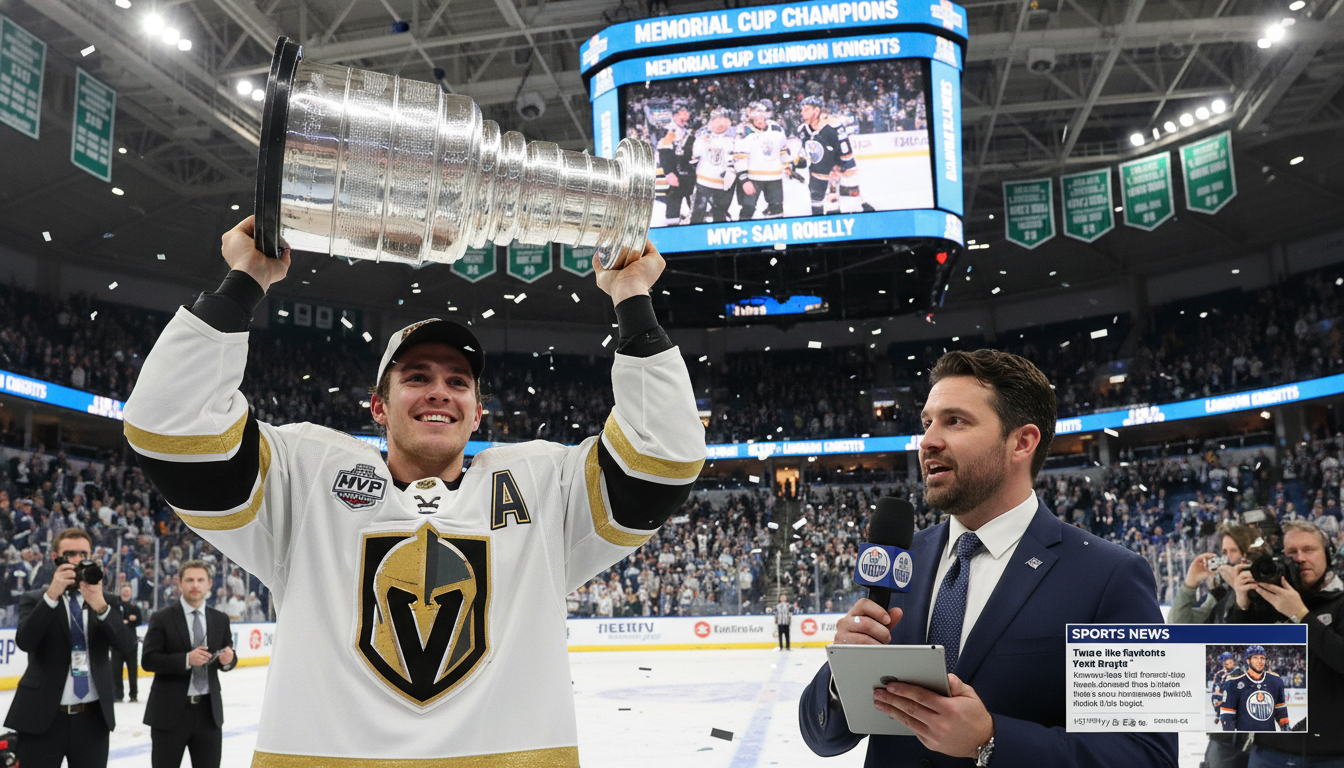
Sam O’Reilly delivered a standout Memorial Cup showing that has reignited questions about the Sam O’Reilly trade between the Edmonton Oilers and the Tampa Bay Lightning. O’Reilly was named the tournament’s most valuable player after contributing three goals and five assists in four games as the Kitchener Rangers routed Everett 6-2 in the final. The performance capped a dominant post-season run and put a spotlight on the prospect exchange made last summer.
O’Reilly’s Memorial Cup dominance
O’Reilly finished the Memorial Cup with a five-point game log that made him the event’s clear offensive leader. His production included a multi-point effort in the championship and a series of high-impact plays that consistently set up teammates and drove Kitchener’s top line. Coaches and scouts noted his poise in high-pressure moments, an attribute that elevated his MVP case throughout the tournament.
The forward’s vision on the ice and ability to find soft spots in coverage were on full display, earning praise from league observers. That polished performance at junior level raises expectations about his readiness to advance within a professional organization. It also intensified the discussion around whether Tampa Bay secured a long-term asset or whether Edmonton missed an opportunity.
Historic sweep of junior awards
O’Reilly entered rare company by adding Memorial Cup MVP to a résumé that already included major junior awards and playoff honors. He became just the fourth player to claim his league’s top player award, playoff MVP and Memorial Cup MVP in their junior career, joining names familiar to hockey fans. Those predecessors — who went on to lengthy professional careers — provide a benchmark that scouts will reference when projecting O’Reilly’s upside.
The achievement signals both consistency and the ability to elevate his game at key moments. For NHL evaluators, that combination can be as valuable as raw scoring totals because it suggests a higher floor when transitioning to stronger competition. The historical context amplifies the narrative around the prospect and feeds into comparative discussions about the trade.
Trade mechanics and draft background
The deal that sent O’Reilly to Tampa Bay last summer involved the Lightning acquiring the 20-year-old in exchange for Isaac Howard, who moved to Edmonton. O’Reilly was selected 32nd overall in the 2024 NHL Draft, while Howard had been a 2022 draftee at 31st overall by Tampa Bay. The swap paired two young forwards with differing development paths and timelines, and both clubs framed the move as an investment in future top-six potential.
O’Reilly had been part of a midseason move from London to Kitchener at the OHL level, while Howard arrived in Edmonton after a collegiate career highlighted by a Hobey Baker Award season. Those backgrounds shaped immediate expectations: O’Reilly as a high-upside junior scorer and Howard as a player with NCAA polish. Contractually, O’Reilly has signed an entry-level deal and is slated to pursue a roster spot with Tampa Bay at training camp, with AHL eligibility available should the Lightning choose that route.
Comparing the prospects’ early pro steps
Isaac Howard saw NHL games this past season, appearing in the opening months with Edmonton after his standout collegiate campaign. That early exposure offered him an initial taste of the NHL environment and accelerated his professional learning curve. Howard’s blend of college-level maturity and immediate NHL minutes provides one set of benefits for Edmonton, while O’Reilly’s junior dominance suggests a different but promising developmental trajectory for Tampa Bay.
Evaluators will weigh those divergent paths against organizational needs and timelines. A player like Howard may fit a team seeking quicker readiness, whereas O’Reilly projects as a potentially higher-upside piece who could require additional seasoning. Both franchises retained flexibility by acquiring young, controllable players rather than finished NHL commodities.
Implications for Edmonton and Tampa Bay
For Edmonton, O’Reilly’s tournament exploits will prompt reflection among fans and analysts over the cost-benefit of the swap. Front offices typically balance immediate roster impact with long-term asset management, and trades of this nature are often judged over multiple seasons. The Oilers have received some NHL-level contributions from Howard, while Tampa Bay now possesses a junior star who has added to his stock.
Tampa Bay gains a prospect who showed he can dominate at the top junior level and perform under pressure. That increases the likelihood the Lightning integrate him into their development pipeline, testing him in AHL competition or at NHL training camp to see how his game translates. For Edmonton, Howard’s early NHL minutes and collegiate pedigree remain part of the club’s short-term calculus.
O’Reilly’s Memorial Cup MVP run will be used as a reference point in trade retrospectives, but the ultimate verdict on the Sam O’Reilly trade will hinge on how both players adapt to professional hockey. Teams will monitor playing time, physical adjustments, and consistency as each prospect advances through their respective systems.
The immediate outcome is clear: O’Reilly’s performance has added fresh momentum to the conversation, ensuring the summer swap will be revisited frequently as the new NHL season approaches.
