
Ottawa pledges $15M to remove ghost fishing gear from Atlantic, issues call for proposals
Ottawa pledges $15 million over three years to remove ghost fishing gear from Atlantic waters; proposals accepted until June 29 to support cleanup partners.
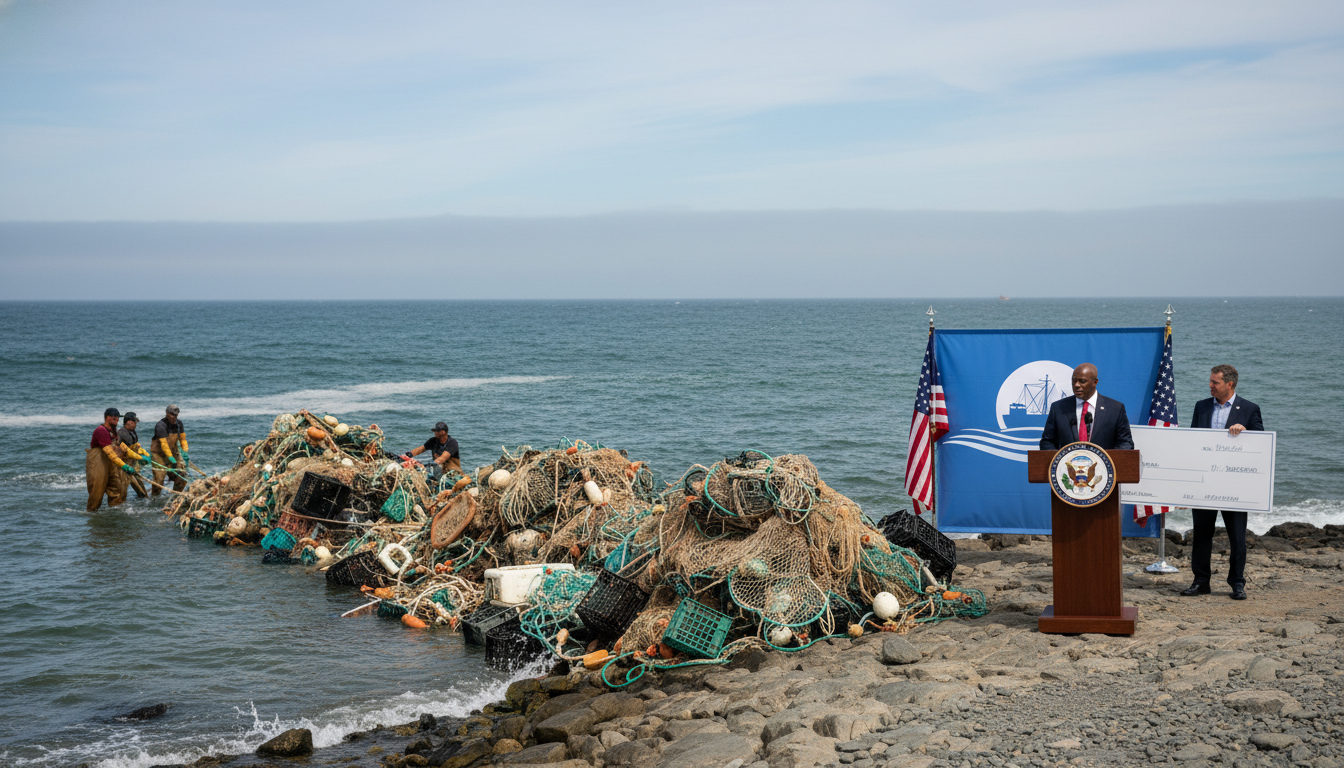
The federal government has launched a new call for proposals to fund partners working to remove lost, abandoned and discarded fishing gear — commonly known as ghost fishing gear — from Canadian waters. Fisheries Minister Joanne Thompson announced the initiative in Yarmouth, Nova Scotia, and said Ottawa has allocated $15 million to support cleanup efforts over the next three years. The ministry said the program builds on a fund launched in 2020 that has already supported dozens of projects to recover gear and reduce harm to marine life.
Federal announcement in Yarmouth
The minister made the announcement during a visit to southwestern Nova Scotia, a region where lobster fishing is economically significant and where abandoned gear has been documented. Minister Thompson emphasized that cleaning ghost fishing gear protects marine mammals, fisheries and coastal habitats. Officials framed the call for proposals as a way to expand partnerships with coastal communities and Indigenous organizations already engaged in removal work.
Funding history and previous results
Since the program began in 2020, federal funding has supported 144 projects with total investments exceeding $58.4 million. The government reports that more than 2,500 tonnes of lost or discarded fishing equipment have been removed from Canadian waters under the fund. The new $15-million envelope is intended to sustain and scale those efforts over the next three years, according to the announcement.
Scientific findings from Dalhousie researchers
Researchers at Dalhousie University in Halifax have documented the local impacts of ghost fishing gear along Nova Scotia’s southwest coast. A 2021 study led by Dalhousie scientists found that abandoned traps, lines and buoys continued to trap and kill marine species long after being lost. The study’s field operations on five fishing vessels recovered more than seven tonnes of gear, providing direct evidence of the persistence and scale of the problem.
Economic toll on the lobster industry
Dalhousie researchers calculated that abandoned gear can impose measurable losses on the lobster fishery. The study estimated annual commercial losses approaching $200,000 in lost catch for the region, with specific calculations suggesting reductions of up to $176,000 per year from ghost-trapping alone. Industry observers say those figures understate the broader economic and operational strain, which includes damage to active gear, increased hauling costs and the diversion of labour to gear recovery.
Composition of recovered gear and bycatch concerns
The field work cited in the study found that lobster traps made up roughly 66 percent of gear recovered during the sampling operation. Other items included cables, ropes, marking buoys and assorted marine debris. Scientists warn that these items not only continue to entrap fish and invertebrates but can also entangle protected marine mammals and damage sensitive seabed habitats over time.
Partnerships with coastal and Indigenous communities
The federal announcement specifically thanked partners and Indigenous communities for their contributions to cleanup efforts to date. Officials indicated the new call for proposals is open to governments, non-profit organizations, Indigenous groups and other collaborators able to plan and execute removal operations. The ministry framed community-led projects as central to both locating submerged gear and delivering efficient, locally informed recovery work.
Next steps for applicants include preparing detailed proposals and meeting the submission deadline of June 29. The government did not release full selection criteria in the announcement, but emphasized that funded projects should prioritize measurable removals and safety for crews. Observers expect applications to propose a mix of at-sea recovery, shoreline retrieval and measures to prevent future gear loss.
The renewed federal investment arrives amid growing international attention on marine debris and its effects on fisheries and biodiversity. For coastal communities reliant on lobster and other groundfish, the removal of ghost fishing gear is being presented as both a conservation priority and an economic necessity. Continued monitoring and longer-term prevention strategies will be necessary to ensure the returns from these cleanup investments are sustained.
