
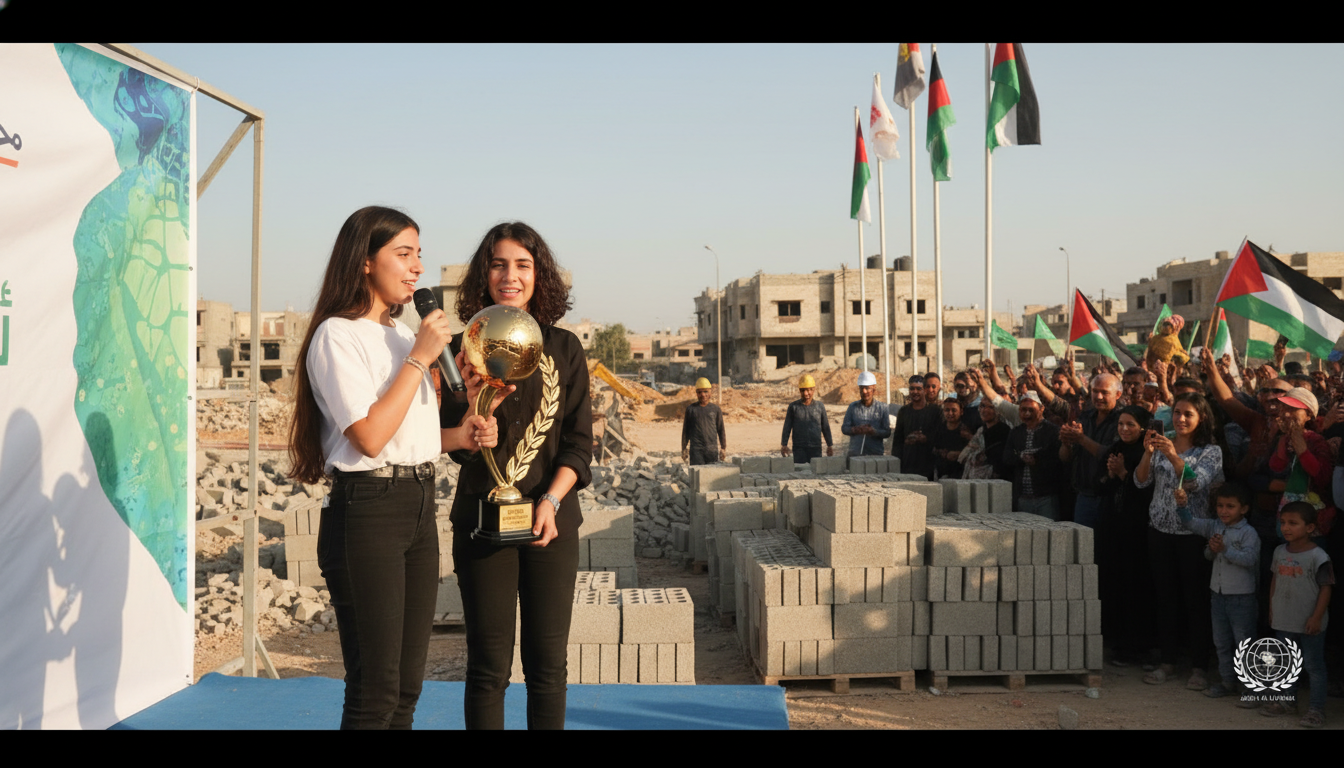
Palestinian sisters turn Gaza rubble into reusable bricks, win 2026 Earth Prize Middle East
Tala and Farah Mousa transformed the rubble of their bombed Gaza home into reusable bricks, becoming the first Palestinian winners of the 2026 Earth Prize Middle East.
The sisters were announced as winners on 21 May 2026 after developing a method to convert debris from destroyed buildings into standardized construction bricks. Their project, based in Gaza, repurposes war-damaged concrete and masonry into materials suitable for rebuilding homes and small infrastructure. The win marks a notable recognition for grassroots innovation emerging from a conflict zone.
Sisters transform Gaza rubble into reusable bricks
Tala and Farah Mousa began experimenting with salvaged materials after their family home was destroyed, adapting simple presses and moulds to reshape pulverized rubble. The result is a compact, stackable brick that can be cured and reused in reconstruction projects, reducing reliance on imported cement and new aggregates.
Their approach prioritizes low-cost tools and local labour, enabling neighbours with limited resources to participate in rebuilding efforts. The sisters have trained small teams in their neighbourhood, turning informal destruction sites into sources of construction material and short-term employment.
First Palestinian team to win 2026 Earth Prize Middle East
The Earth Prize Middle East jury recognised the Mousa sisters as the first Palestinian team to receive the award, citing the project’s combination of environmental reuse, social impact and practical scalability. The accolade is given annually to innovators whose projects address climate, waste and rebuilding challenges in the region.
Judges noted the project’s relevance in Gaza, where blockade, import restrictions and recurrent conflict constrain building supplies. Winning the 2026 prize has brought international attention and offers access to mentorship and possible grant funding to expand the initiative.
The brick-making process and materials
The Mousa method begins with sorting and crushing concrete, masonry and other inert debris into a targeted grain size, removing hazardous contaminants where present. The processed aggregate is mixed with a small binder — a low-cement or geopolymer blend in pilot trials — then formed into bricks using mechanical or manually operated presses.
Curing and quality checks are performed to ensure strength and durability meet local building standards for non-load-bearing walls and partitions. The sisters emphasise that the bricks are designed for local reconstruction needs and are not intended to replace primary structural elements in taller buildings without engineering oversight.
Local reconstruction and economic implications
Reusing rubble reduces disposal needs and cuts the cost of raw building materials for families and community projects, a key advantage in Gaza’s constrained economy. By converting debris into saleable bricks, the project creates micro-enterprises and short-term jobs for displaced workers and women seeking income.
Local councils and community committees have shown interest in integrating the bricks into reconstruction plans for shelters, schools and small commercial buildings. The sisters are exploring partnerships with NGOs and municipal bodies to pilot neighbourhood-level rebuilding using their materials.
Barriers and safety concerns amid ongoing conflict
Operating in an active conflict environment presents logistical and safety hurdles, from access to rubble sites to the presence of unexploded ordnance and other hazardous materials. The Mousas work with local civil defence volunteers to screen sites and ensure teams use protective equipment and follow safety protocols.
Regulatory and technical barriers remain, including the need for wider testing to meet formal construction codes and to confirm long-term performance in local climate conditions. Funding constraints and restrictions on imported technical equipment also limit rapid scaling of production capacity.
Plans for scale-up and international recognition
As Earth Prize recognition brings visibility, the sisters plan to document their process and establish training modules for other Gaza communities and the broader region. They have signalled interest in pilot projects supported by international funders to expand production lines and invest in safer, semi-automated pressing equipment.
Organisers of the Earth Prize have offered mentorship and connections to materials scientists and builders to support testing and certification work. The Mousas aim to balance growth with community control, ensuring local ownership of the production and distribution networks.
The Mousa sisters’ achievement highlights a practical, place-based response to the twin challenges of waste and reconstruction in Gaza, showing how local ingenuity can convert destruction into a resource for rebuilding communities.
