
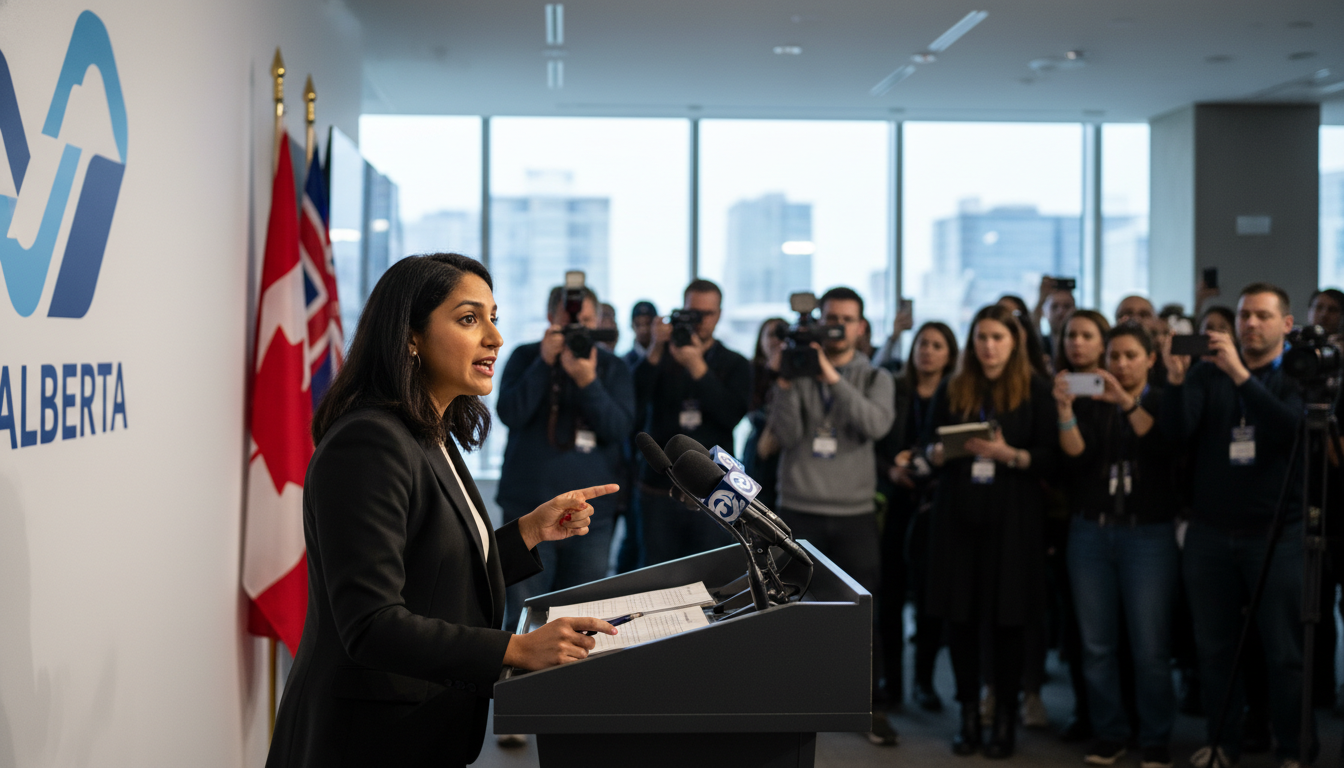
Pancholi Accuses Party of Forcing Alberta Separatism Referendum
Pancholi warns the governing party is pushing an Alberta separatism referendum, saying it will drag residents, the economy and neighbours into a divisive and unnecessary vote. (157 characters)
Pancholi delivered a blunt rebuke of a ruling party’s move toward a province-wide vote on separation, saying the decision was not part of the platform on which the party was elected. She argued the proposed Alberta separatism referendum would force residents and businesses into a divisive political fight that could harm the economy and regional relations. Her remarks singled out reliance on grassroots petitions and separatist support as evidence the campaign is coming from the party’s base rather than the broader electorate.
Pancholi’s accusation and central claim
Pancholi said the party can no longer “hide behind the separatists in their base” and accused it of adopting a referendum agenda despite not being elected on that platform. She framed the move as a deliberate choice by party leadership, one that would impose a referendum process on Albertans. Her statement cited a petition known as “Forever Canadian” as part of the pressure driving the shift.
The criticism reflects broader concerns among some elected officials and stakeholders about the political calculus underpinning the referendum push. Opponents stress that a referendum of this nature would change the political conversation in the province and could redirect government attention from other policy priorities.
Reference to the ‘Forever Canadian’ petition
Pancholi specifically mentioned the Forever Canadian petition as evidence of organized pressure influencing the party’s direction. She suggested the petition had been used to justify advancing the referendum proposal, despite the party lacking an electoral mandate for such a measure. The invocation of the petition underscores how grassroots campaigns can shape party agendas, for better or worse.
Observers note that petition movements can be influential but do not always reflect the full scope of public opinion. Parties that act on petitions risk alienating moderate voters who may view such moves as catering to a vocal subset of the electorate.
Economic and cross-border concerns raised
Pancholi warned that the referendum could drag the province’s economy and neighbours “through a separatism referendum,” raising questions about investor confidence and regional cooperation. Business groups and industry stakeholders often say political uncertainty can slow investment, disrupt supply chains and complicate long-term planning. The prospect of a divisive vote raises immediate concerns for sectors that rely on stable interprovincial and cross-border relationships.
Analysts have previously cautioned that constitutional or sovereignty debates can have real economic consequences, affecting credit ratings and the cost of borrowing for government projects. Pancholi’s remarks reflect a political attempt to spotlight those risks and shift discussion back to economic stability.
Political fallout and voter reaction
The move toward a referendum has the potential to reshape party dynamics and voter alignments heading into future elections. Pancholi argued the governing party’s decision could politicize issues that many voters prefer to be handled through dialogue and federal-provincial negotiation. For opposition politicians, the referendum provides a focal point for criticism and may mobilize both pro-unity and separatist constituencies.
Voter reaction is likely to vary across urban and rural communities, with differences in priorities and perceptions of the referendum’s urgency. Political strategists warn that hardline positions can energize a base while pushing undecided or moderate voters away.
Questions about timing, process and legal implications
Pancholi’s remarks raise practical questions about how and when a province-wide separatism referendum would be scheduled and conducted. Legal experts typically point to constitutional barriers and the need for federal engagement in any process that seeks to alter Canada’s territorial integrity. A referendum’s legal weight and the steps required to act on its outcome are complex and contested.
Policy watchers say clarity on procedure, thresholds for success and the intended follow-up actions would be essential to any credible referendum plan. Without that detail, critics argue the referendum could be symbolic rather than substantive, while still inflicting political and economic costs.
Pancholi framed the debate as a matter of accountability, saying the party must answer for choosing a path that was not part of its electoral mandate. Her statement positions opposition voices to demand clear explanations and possibly legislative safeguards before any referendum proceeds.
In the short term, the controversy is likely to intensify scrutiny of party messaging and the influence of activist petitions on official agendas. Stakeholders from business, labour and municipal governments may weigh in as the issue develops, seeking assurances that day-to-day governance will not be sidelined.
The coming weeks are expected to bring further statements from party officials and critics alike as Alberta confronts the possibility of a referendum that could reshape political and economic relationships within the province and beyond.
