
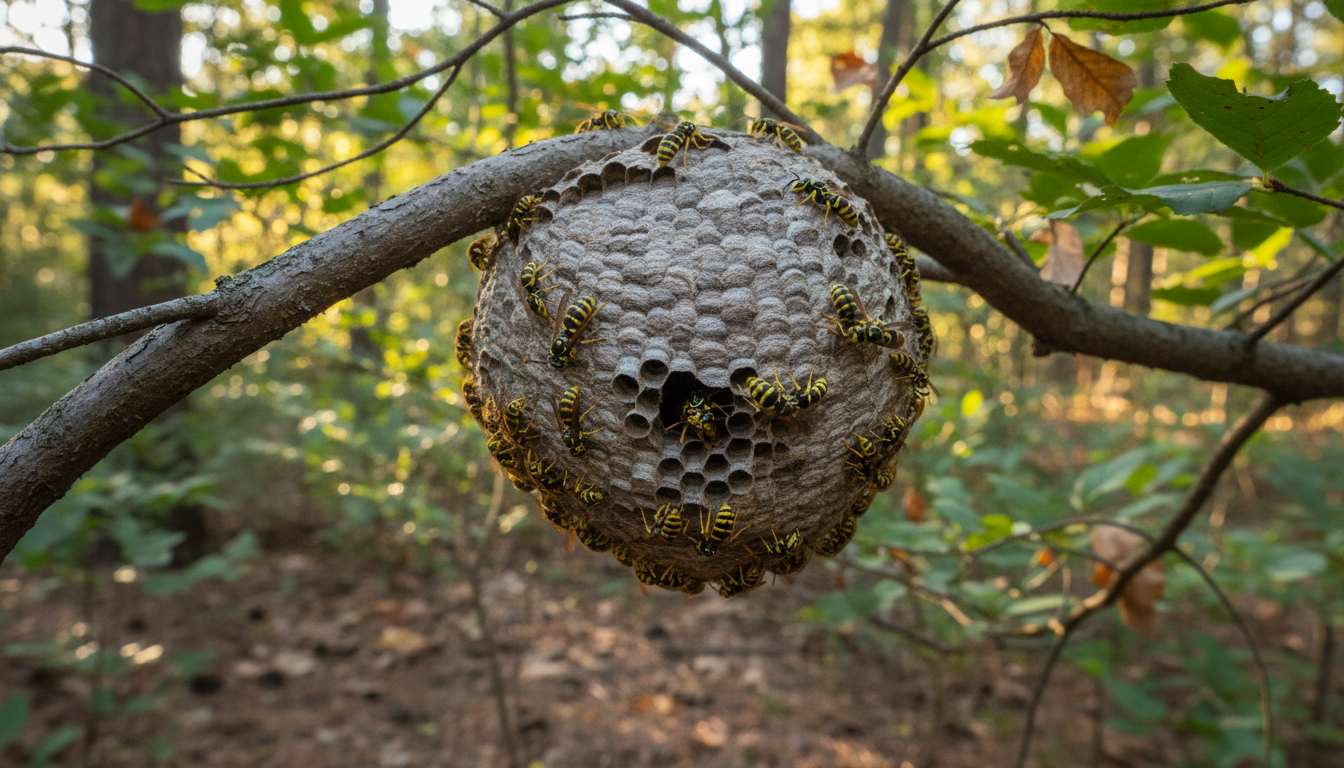
Yellowjacket nest growth explains summer surge in foraging workers
Yellowjacket nest growth accelerates in late summer as workers forage and new queens prepare to fly. Read how colonies expand and what to watch for this season.
As the first eggs hatch, a yellowjacket nest can transform rapidly, with newly emerged workers switching to foraging and construction duties. The queen remains sheltered and focused on laying eggs, which fuels the colony’s expansion and the seasonal increase in worker activity.
A steadily growing brood can swell nests to hundreds or even thousands of individuals, changing local encounter rates with people and pets. By late summer, many colonies produce additional queens whose departure seeds new nests and prompts a spike in foraging intensity.
Queen’s eggs set the pace for colony development
The colony’s lifecycle begins when an overwintered queen establishes a nest and lays an initial clutch of eggs. Those eggs develop into larval brood that the queen and early workers feed and protect until they mature.
Once the first cohort of workers emerges, their role quickly shifts to supporting the queen by expanding the nest and gathering food. The queen’s uninterrupted egg-laying is the engine that allows the nest to increase in size and complexity over weeks.
Colony growth is not linear; environmental factors such as food availability, weather and nesting sites influence how broadly a yellowjacket nest will expand. Where resources are abundant, a modest start can become a large, resilient colony by late summer.
Workers transition to foragers within weeks
Newly hatched workers typically begin with tasks inside the nest, such as feeding larvae and maintaining brood cells. Within a short period, many of these workers change roles and leave the nest to gather protein and carbohydrates needed by the developing colony.
Foraging behaviour concentrates on sugary liquids and protein sources, including ripe fruit, open garbage, and other insects. Increased foraging activity makes workers more visible in yards, parks and around outdoor dining areas as the season progresses.
Because foragers learn routes and local food locations, a single productive source can attract many workers from the same yellowjacket nest. This learned behaviour underlies sudden increases in worker numbers near specific human food sources.
Late-summer expansion produces future queens
In late summer the colony’s priorities shift again as it produces new reproductive individuals. Mated queens are reared and eventually leave the original nest to find overwintering sites and start fresh colonies the following year.
The emergence and departure of new queens may coincide with some of the highest worker densities of the season, because the colony’s workforce is at its peak while it prepares the next generation. This combined activity explains why encounters with yellowjacket workers are often most frequent in August and September.
When conditions allow, colonies that have prospered through spring and summer can yield dozens of future queens, increasing local yellowjacket presence in subsequent seasons. This reproductive pulse is crucial to the species’ persistence and local population dynamics.
Nest size and overwintering resilience
As a yellowjacket nest grows, its ability to survive seasonal change improves, at least through the active months. Large nests can store more food and support more workers to defend and maintain the structure, giving them a better chance to produce reproductive offspring.
However, most yellowjacket colonies are annual: only newly mated queens overwinter and found nests the following spring. The rest of the colony, including the original queen and workers, typically declines with the first hard frosts.
Understanding nest size and composition helps predict the timing and intensity of seasonal activity. Larger nests mean more workers, more foraging pressure and a greater need for careful management by people sharing the landscape.
Homeowner guidance for managing yellowjacket nests
Avoid disturbing a yellowjacket nest during peak activity, as sudden agitation often provokes aggressive defensive behaviour from workers. If a nest is on private property and poses a risk, consult licensed pest control professionals who can assess and remove nests safely.
Simple preventative steps reduce attractants: keep garbage sealed, remove fallen fruit promptly, cover outdoor food and drinks and repair voids in siding or eaves that can host nests. Traps and DIY tactics may reduce nearby activity but are rarely a complete solution when a nest is well established.
Timing matters for interventions: early spring removal or control when colonies are small reduces worker numbers and lowers the risk of aggressive encounters. Late-summer attempts to handle large nests should be left to experienced technicians equipped for the job.
Public spaces and municipal crews often coordinate responses when nests threaten shared amenities or high-traffic areas, balancing public safety with safe removal practices. Reporting a nest to local authorities can help protect the community while ensuring professional treatment.
Late-summer increases in yellowjacket activity reflect the natural cycle of egg laying, worker emergence and the production of new queens. Recognizing how a yellowjacket nest develops and when worker foraging peaks helps residents take sensible precautions and request professional help when necessary.
