
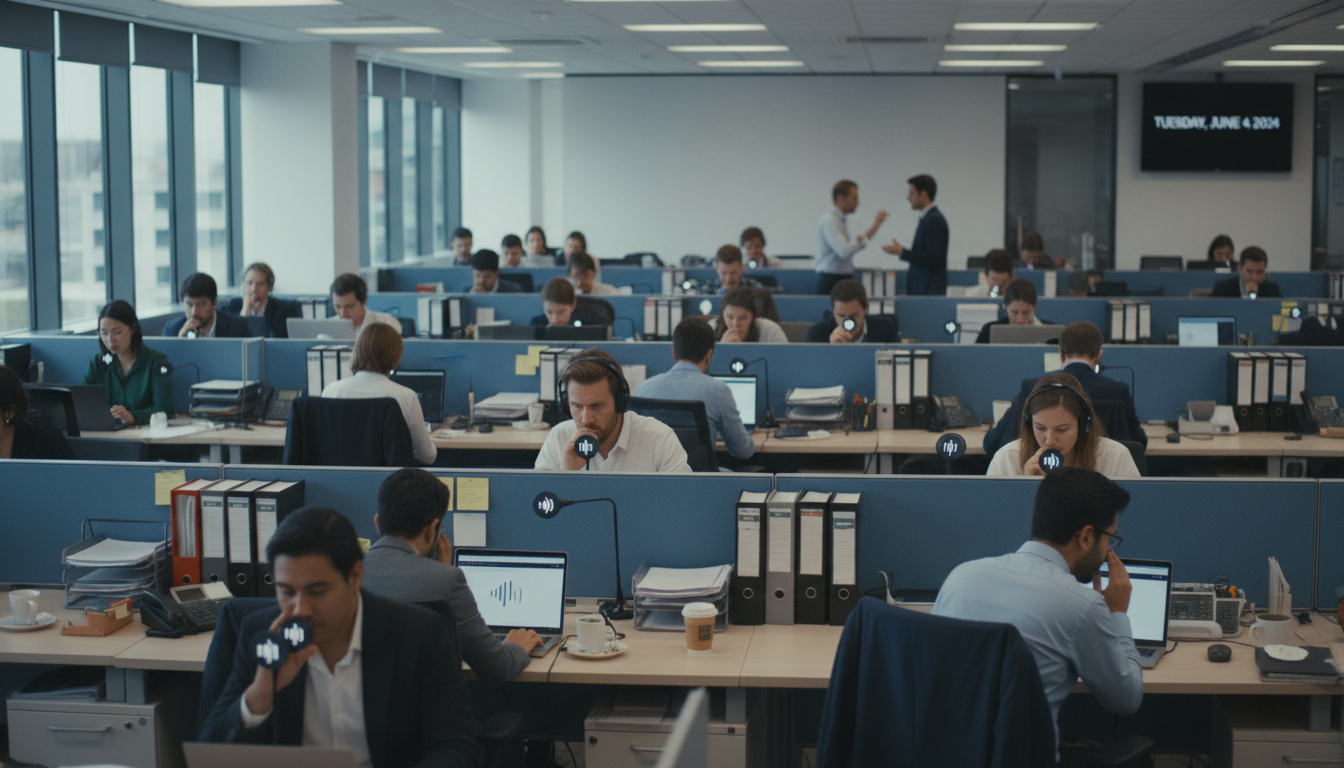
Offices Grow Noisy as Dictation Apps Like Wispr Push Whispered Work into the Open
Dictation apps are reshaping workplace soundscapes, with tools such as Wispr prompting questions about office etiquette, privacy, and design as employees increasingly whisper to computers.
The rise of dictation apps and their integration with coding and productivity tools is changing how people interact with workstations and colleagues. A recent feature in the Wall Street Journal highlighted startups where constant speech to machines makes offices feel more like call centers. The move toward voice-first workflows is prompting leaders and workers to reconsider norms that have long governed office behavior.
Startups Sound Like Call Centers
A growing number of venture capitalists and visitors to startup offices say the ambient noise now resembles that of high-end call centers. Employees using dictation apps speak aloud or murmur to devices throughout the day, producing a continuous low-level hum of conversations with machines.
That shift is driven by new speech-to-text models and software integrations that make voice input faster and more natural for many tasks. Startups that adopt these systems early often report productivity gains, but the acoustic side effects are becoming a visible workplace characteristic.
Executives Predict a Sales Floor Future
Some technology leaders are vocal about what they expect to be the future of office sound. Executives at companies that build or rely on dictation apps have compared future offices to sales floors, where constant spoken interaction is routine and accepted.
Proponents argue that voice interfaces speed decision-making and lower the friction of typing, especially for complex or iterative tasks. Yet the predicted normalization raises questions about whether all employees will be comfortable or productive in such environments.
Employees Describe New Awkward Habits
Workers report real social friction as voice-first tools spread. Some say they now whisper to their computers to avoid drawing attention, while others limit spoken queries to private spaces or reserve typing for shared work areas.
These small adaptations can affect collaboration and informal communication, as colleagues navigate interruptions caused by audible prompts, transcriptions, or AI responses. The result is a gradual renegotiation of conversational boundaries and shared expectations in open-plan settings.
Home Life and Whispering Strain
The shift to dictation apps is not confined to offices; it reaches home workspaces and domestic routines. Anecdotes from entrepreneurs and remote workers show spouses and partners adjusting living arrangements to reduce disturbance during vocal sessions.
Such changes can be practical, like moving to separate rooms for focused voice work, or emotional, as partners adapt to new habits that feel intrusive. The domestic friction highlights how tools meant to increase convenience can create interpersonal costs when private spaces become workspaces.
Privacy and Workplace Policy Questions
Wider use of dictation apps raises immediate privacy and compliance concerns for employers and employees. Automatic transcription, cloud processing of speech, and integrations with project tools make it necessary for offices to revisit data governance and consent practices.
Human resources and legal teams are increasingly tasked with setting clear policies around voice data retention, where speech is recorded or routed, and how sensitive information is handled during verbal interactions. Organizations that fail to address these issues risk exposing proprietary details and employee discomfort.
Design and Tools to Manage Noise
Architects and office designers are already responding to the new soundscape with solutions aimed at balancing speech-driven productivity and communal comfort. Companies are experimenting with quiet pods, reserved whisper rooms, targeted acoustic treatments, and dedicated voice booths to contain spoken interactions.
On the technology side, software vendors are developing features to reduce audio spill, such as local processing, push-to-talk modes, and headphone-first experiences that keep speech private. Employers adopting dictation apps often pair them with training and etiquette guidelines to ease the transition.
The trajectory of dictation apps suggests a durable change in workplace interaction patterns, but the pace of adoption will depend on how well companies manage the accompanying cultural and technical challenges.
As offices integrate more voice-driven tools, leaders face choices about layout, policy, and employee training to ensure productivity gains do not come at the expense of comfort or privacy. The normalization of whispering to computers may be inevitable for some teams, but how it is implemented will determine whether workplaces become more efficient or simply louder.
