
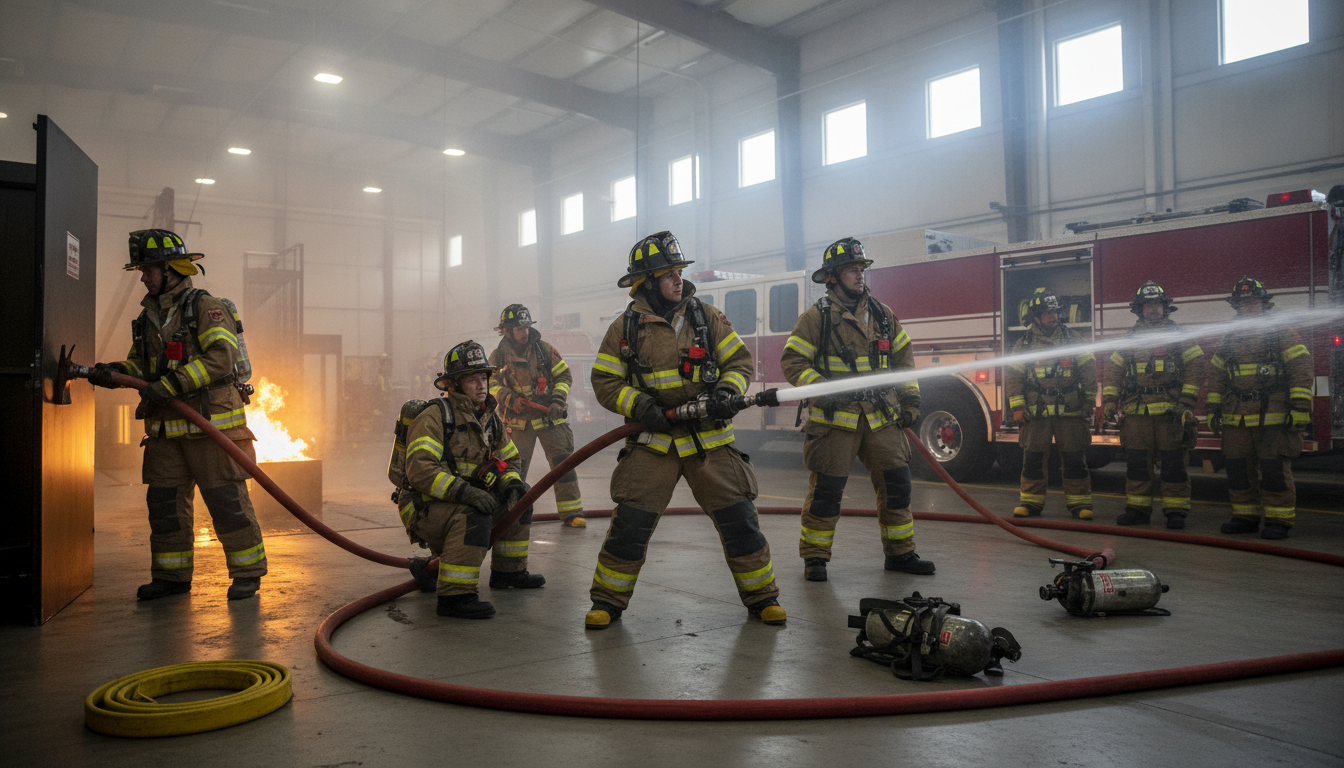
Calgary fire training puts nine city councillors through hands-on Fire Ops 101
Nine councillors joined Calgary fire training ‘Fire Ops 101’ to experience emergency drills and witness rising call volumes shaping upcoming budget debates.
Councillors participate in hands-on Fire Ops 101
Nine Calgary city councillors spent a day at the Calgary Fire Department training academy taking part in the union-run Fire Ops 101 program.
Wearing full turnout gear, the councillors were guided through practical drills designed to show the physical and operational demands firefighters face on a typical shift.
Participants included Kim Tyers, Jennifer Wyness, Andrew Yule, DJ Kelly, John Pantazopoulos, Nathaniel Schmidt, Myke Atkinson, Harrison Clark and Mike Jamieson.
Training scenarios recreated the unpredictability of frontline work
The exercise staged multiple emergency situations: a simulated structure fire, a water rescue, an urgent medical call and a vehicle extrication using hydraulic rescue tools.
Organizers deliberately interrupted the day with an alarm during a scheduled lunch break to underscore how quickly routine plans can be overtaken by real incidents.
Councillors reported that the experience — entering training structures, operating rescue equipment and performing patient care drills — made the intensity and breadth of fire service work more tangible.
Union leaders stressed the goal was experiential understanding
Jamie Blayney, president of the Calgary Firefighters Association, said the point of Fire Ops 101 is to move beyond presentations and let elected officials see the work up close.
He told councillors that seeing crews train on trucks, in gear and on the water gives context that briefings alone cannot provide.
Blayney also highlighted that the program aims to inform future conversations about staffing, equipment and station placement by showing what crews must be prepared for each day.
Call volumes, medical responses and operational strain
City figures show the Calgary Fire Department answered more than 92,000 calls last year, with roughly half classified as medical emergencies.
Department leaders say total calls have risen about 50 per cent since 2020, bringing the average to roughly 250 responses a day and stretching crews and resources.
That shift toward high-volume, high-acuity medical work has altered deployment patterns and increased pressure on frontline firefighters and paramedic responders.
Changing fire behaviour and growth on the urban fringe
Union officials warned that firefighting has grown more complex, with modern fires burning hotter and faster and structural fires escalating within very short timeframes.
Rapid expansion of new neighbourhoods on Calgary’s edges has also placed a premium on response times, prompting calls for additional halls and apparatus to meet industry standards.
Blayney stressed that faster arrival and up-to-date tools are essential because seconds can be the difference in life‑and‑death situations.
Budget context and timing ahead of the 2027–2030 plan
The Calgary Fire Department’s operating budget for this year is $363 million, representing about eight per cent of the city’s operating expenditures, while its capital plan totals $57 million.
Council recently approved increases to fire funding, including a $21‑million boost this year relative to 2024, but union leaders argue those rises have not kept pace with population growth and service demand.
Fire Ops 101 took place roughly six months before council is scheduled to begin deliberating the city’s next four‑year budget in November, a cycle that will set spending from 2027 through 2030.
Governance proposal to create a fire services committee
Councillor Jennifer Wyness has put forward a motion to establish a standing fire services committee that councillors will debate at the regular council meeting on May 26, 2026.
Wyness argues a dedicated committee would give elected members more continuous visibility into fire operations, which currently are discussed in limited settings and cross multiple municipal departments.
Councillor DJ Kelly said the idea merits discussion and that hands-on experience like the training helps inform those governance conversations, while also cautioning that any structural changes should follow the upcoming budget process.
Councillors left the training with a clearer picture of the demands facing firefighters and the operational implications of population growth and rising medical calls.
As council moves toward budget decisions and potential governance changes, participants said the day on the drill yard had given them practical context to weigh resource requests and station planning against the realities of frontline service.
