
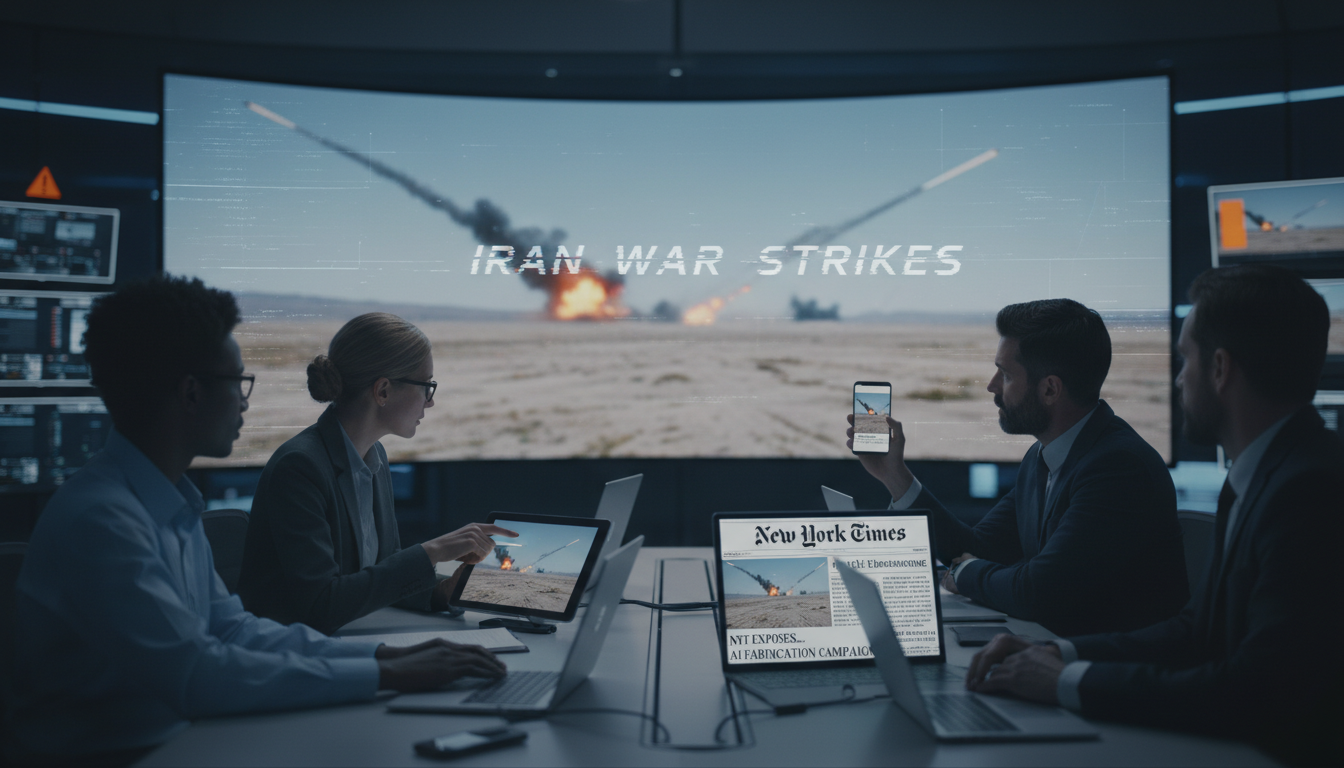
NYT: AI-Generated Videos Fuel Organized Disinformation Around Iran War
NYT investigation finds organized disinformation using AI-generated videos on the Iran war, including fake missile strikes and a fabricated U.S. jet shootdown online.
The New York Times has identified an organized campaign spreading AI-generated videos that falsely depict events from the Iran war. The investigation says the fabrications range from manufactured missile strikes to a completely invented shootdown of a U.S. military jet, and they are being circulated widely on social platforms. These AI-generated videos are designed to appear authentic and to amplify partisan narratives, complicating public understanding of the conflict.
New York Times investigation details
The NYT analysis traced multiple clips back to coordinated networks of accounts and distributors that amplified the material across platforms. Investigators found consistent technical markers and repeated messaging patterns that suggested planning and orchestration rather than isolated pranks. The report concludes that the campaign’s goal appears to be to shape perceptions of battlefield events and to stoke confusion about the course of the war.
Examples of fabricated incidents
Among the most prominent falsifications cited by the NYT are staged missile strikes and an entirely fabricated downing of a U.S. jet. Videos purporting to show exploding ordnance, scorched terrain, and wreckage were created using generative imagery and edited soundscapes. Fact-checkers and analysts who reviewed the clips found discrepancies between the footage and verifiable geolocation, timestamps, and official records.
Techniques used to create the forgeries
The forgeries combine synthetic imagery, manipulated footage, and digitally altered audio to produce convincing scenes. Generative AI models can synthesize smoke, fire, aircraft, and crowds while voice-cloning tools reproduce statements or radio chatter that never occurred. Editors then splice these elements with real footage or stock clips to increase believability, a process that can mislead viewers who do not have the tools or expertise to verify authenticity.
Patterns of coordination and dissemination
The NYT highlighted coordinated posting strategies that rapidly pushed fabricated clips across multiple networks and languages. Accounts with linked behavior — repeated reposting, shared captions, and synchronized timing — increased the clips’ visibility and seeded them into broader conversations. Some videos gained traction after being picked up by influential pages or private channels, where reach is harder for investigators and platforms to monitor.
Platform response and moderation challenges
Social networks face growing pressure to detect and remove AI-generated disinformation without impinging on legitimate journalism and free expression. Automated detection tools struggle with high-quality synthetic media that blends real and generated elements, while manual review teams cannot scale to the volume of content. Platforms have experimented with labeling, takedown policies, and partnership with independent fact-checkers, but the NYT reporting underscores the speed and sophistication of coordinated campaigns that often outpace responses.
The circulation of convincing fake footage complicates the work of journalists, humanitarian organizations, and governments attempting to document events on the ground. When fabricated images compete with verified reporting, public trust erodes and policymakers may make decisions on distorted premises. Analysts warn that continued exploitation of AI tools for organised disinformation will increase the fog around conflict reporting.
Independent verification and media literacy have emerged as frontline defenses against these campaigns. Newsrooms and verification teams now rely on geolocation, metadata analysis, cross-referencing with official sources, and collaboration with open-source investigators to challenge false claims. Public awareness about deepfakes and simple verification steps — such as checking source accounts and corroborating footage with multiple reputable outlets — can reduce the immediate impact of misleading clips.
The NYT’s findings signal a widening tactic in modern information warfare: the manufacture of believable but false visual evidence to shape narratives about conflict. As generative technologies become more accessible, the onus falls on platforms, news organizations, and users to strengthen verification practices and to seek corroboration before amplifying graphic or extraordinary claims.
