
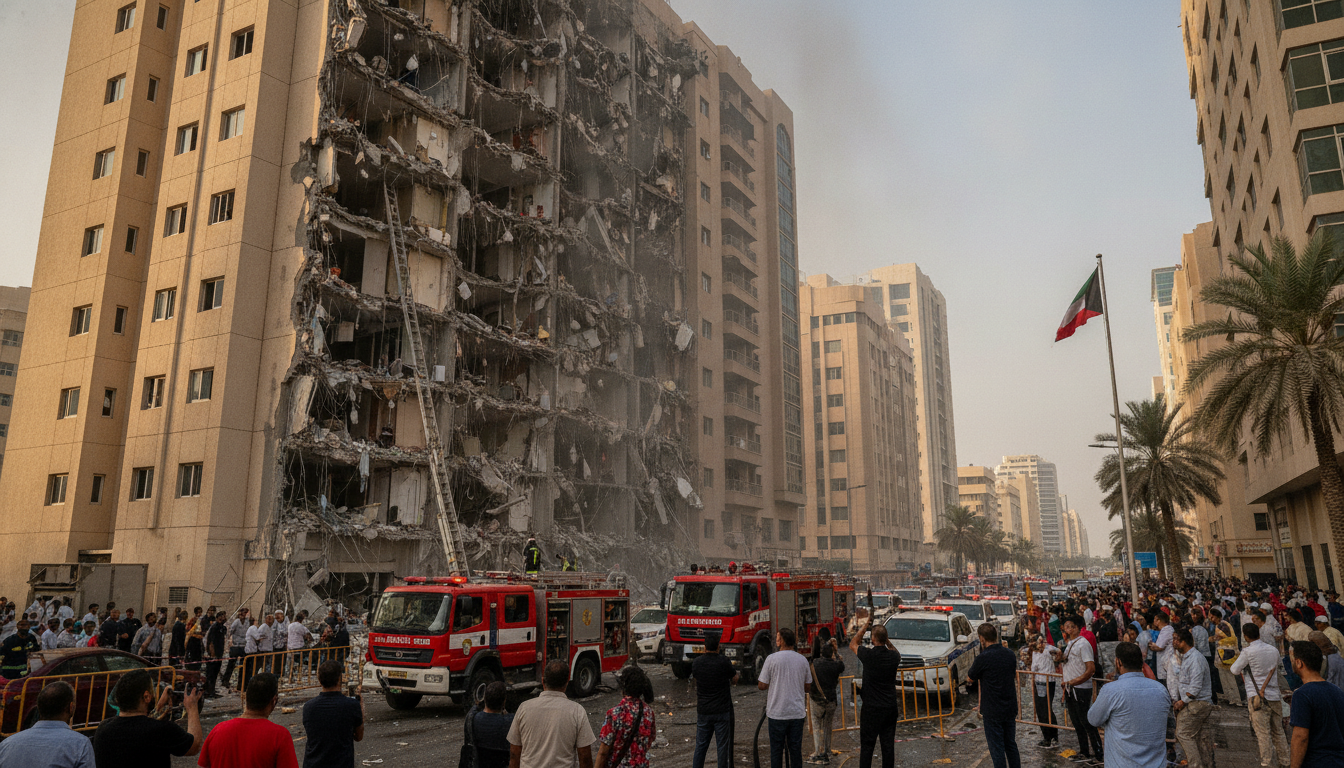
Iranian drone damages residential building in Kuwait City
Iranian drone damages residential building in Kuwait City on Sept. 3, 2026, according to Kuwaiti authorities, who report property damage but no casualties as tensions rise across the Gulf.
An apparent Iranian drone struck a residential building in Kuwait City on Sept. 3, 2026, leaving visible structural damage but causing no reported fatalities, Kuwaiti officials said. The attack comes amid a series of strikes Tehran has directed at U.S. military assets and allied facilities across the region.
Drone strike damages building in Kuwait City
Kuwaiti emergency services responded to reports of an explosion at a multi-story residential block in the early hours of Sept. 3, 2026. Firefighters and structural engineers assessed damage to the façade and interior spaces while officials secured the scene to begin a forensic inspection.
Authorities described the impact as localized and said the building sustained damage to several apartments and common areas, but no collapsed floors were reported. Photographs shared by local news outlets showed shattered windows and debris on the street outside the complex.
No casualties reported, temporary evacuations ordered
Kuwait’s civil defence announced that residents were evacuated from the affected building as a precaution while first responders checked for secondary hazards. Medical teams were on site to triage anyone with smoke inhalation or minor injuries, and officials confirmed there were no deaths.
Local authorities said displaced residents were being provided temporary shelter and support services, and that investigators were interviewing witnesses and reviewing surveillance footage. The neighbourhood remained cordoned off while crews removed unexploded ordnance and assessed structural safety.
Attack linked to wider retaliation against U.S. assets
Kuwaiti officials and regional observers linked the strike to a broader campaign of Iranian retaliation following recent U.S. strikes on Iranian targets. Tehran has claimed responsibility for or been blamed for attacks across Kuwait, Bahrain, Jordan and the United Arab Emirates in the weeks preceding this incident.
Analysts say the pattern reflects a shift toward using unmanned aerial systems to strike military and allied positions without large-scale conventional engagement. The use of drones complicates attribution and raises concerns about controlling escalation between state and proxy actors.
Kuwait opens investigation and tightens security measures
Kuwait’s Interior and Defence ministries said they had launched a formal criminal and security investigation into the incident and were coordinating with international partners. Authorities ordered heightened surveillance and increased patrols around vulnerable infrastructure and diplomatic facilities.
The government also indicated plans to review airspace monitoring and air-defence readiness, as well as to inspect other high-density residential areas for potential vulnerabilities. Officials declined to provide a timetable for releasing the investigation’s findings, citing the need for forensic verification.
Diplomatic ripple effects across the Gulf
The strike in Kuwait City is expected to prompt diplomatic consultations among Gulf Cooperation Council members, the United States, and other regional partners. Foreign ministries in the region typically convene rapidly after such incidents to discuss collective security and intelligence-sharing measures.
Observers note the potential for increased pressure on Kuwait to balance its diplomatic relationships, given its longstanding ties with both Western partners and neighbours in the region. The incident may also influence upcoming multilateral discussions on maritime and airspace security in the Gulf.
Analysts warn of escalation and civilian risk
Security experts cautioned that continued drone strikes raise the risk of miscalculation and unintended civilian harm, particularly in densely populated urban areas. They said that without clear communication channels and de-escalation mechanisms, sporadic attacks can quickly produce wider confrontations.
Analysts urged all parties to prioritize protecting non-combatants and to pursue diplomatic channels to reduce the likelihood of further strikes. They recommended strengthening early-warning systems and expanding humanitarian contingency planning for residents in high-risk zones.
Kuwaiti officials said investigations are ongoing and that they will provide updates to the public when more information becomes available, while security forces remain on heightened alert across the capital. The damage to the residential building underscores the growing dangers posed by regional drone strikes and the urgent need for measures that reduce risk to civilians and prevent further escalation.
