
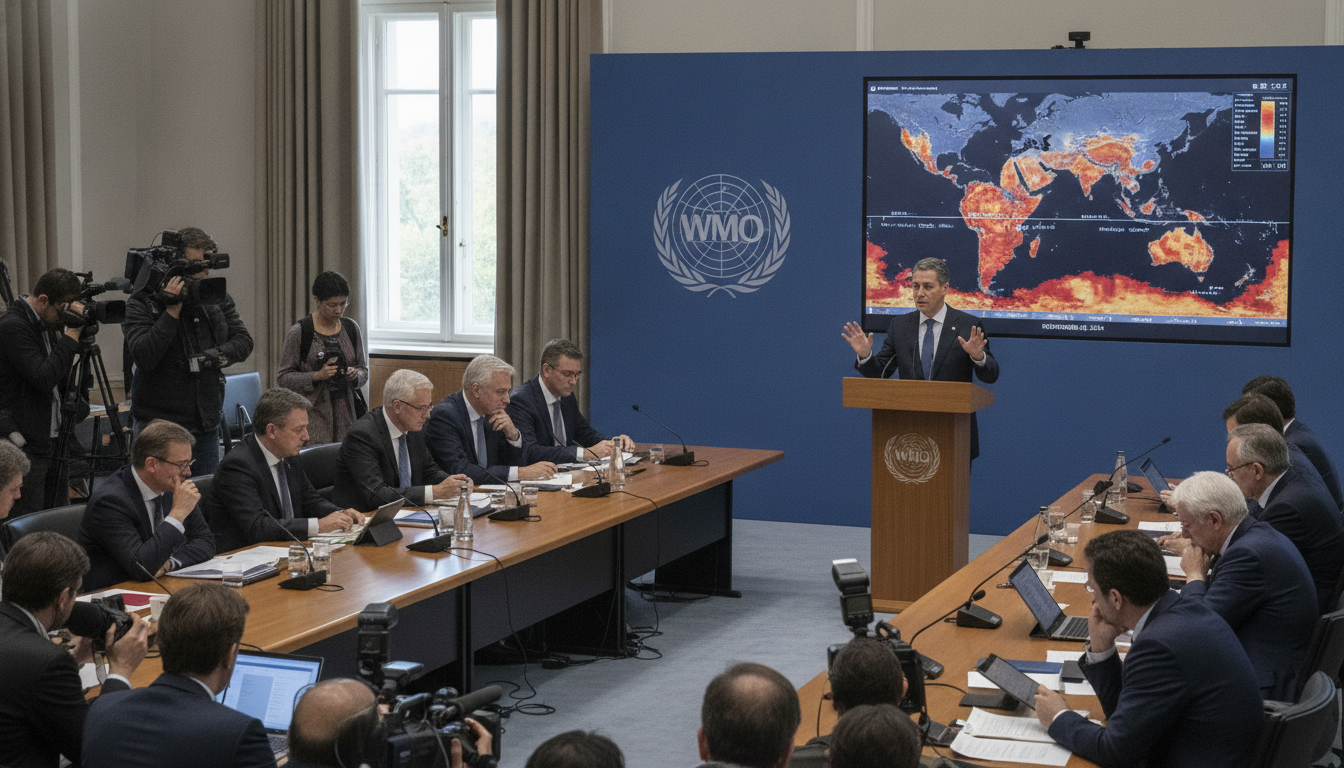
WMO Warns Exceptional El Nino to Intensify, Raising Risk of Heat, Drought and Floods into Early 2027
WMO warns an exceptional El Nino will intensify and likely persist into early 2027, raising risks of heat, drought and floods worldwide, including Canada.
El Nino is firmly established and forecast to strengthen to an exceptional level in the coming months, the World Meteorological Organization said, with a near‑100 percent likelihood it will continue through February 2027. The WMO said the event is expected to peak late this year and could push global temperatures and weather extremes higher during 2027. Officials warned governments, emergency services and climate‑sensitive sectors to prepare for an elevated risk of drought, floods and extreme heat.
WMO issues near‑certain forecast for El Nino
The United Nations weather agency described its latest update as the strongest level of certainty it has ever given for an El Nino or La Niña outlook. Forecast models now indicate nearly a 100 percent chance the El Nino will persist through February, a probability rarely seen in previous updates. WMO Secretary‑General statements and briefing material emphasize that the forecast window extends into early 2027, meaning lingering climate effects will continue well beyond the peak.
Ocean measurements show exceptionally warm Pacific
WMO reports point to unusually high sea surface temperature anomalies across the central and eastern tropical Pacific, a hallmark of El Nino development. The index that measures that warming averaged about 1.5°C above normal between May and July, with weekly values rising to between roughly 2.2°C and 2.6°C above average in late July and mid‑August. In some places the subsurface ocean was more than 8°C above normal during July and early August, indicating a deep reservoir of heat that can release slowly into the atmosphere.
Global climate impacts expected to strengthen
The WMO says a very strong El Nino will alter winds, pressure and rainfall patterns worldwide, amplifying existing climate stresses caused by long‑term warming. Historically strong events have coincided with temperature records and contributed to years of heightened extreme weather, the agency noted. UN Secretary‑General António Guterres said, “El Nino is being supersized before our eyes,” underscoring the compound threat of natural variability on a warming planet.
Regions likely to face droughts, floods and disrupted monsoons
While every El Nino has unique features, the WMO highlighted familiar patterns associated with major events. Drought risk typically rises in parts of the Amazon, Indonesia and Australia, while the Indian monsoon and other tropical rainfall systems can be disrupted. Conversely, some regions face increased flooding risk where atmospheric circulation shifts bring heavier rains, and elevated ocean temperatures can drive more powerful marine heat and related impacts.
Warnings to governments, sectors and disaster agencies
WMO officials urged readiness across disaster management, agriculture, water, energy and health sectors, saying “no time to lose” in taking preventive steps. The agency warned that the exceptional nature of the current El Nino could deliver “a massive blow to communities and economies” if preparedness is insufficient. Authorities were urged to review water storage and irrigation plans, update heat‑health action plans, and bolster emergency response capacity ahead of the seasonal changes.
Implications for Canada and northern communities
Canadian officials and experts will be watching for higher‑than‑normal temperatures and altered precipitation patterns across much of the country, particularly through the September–November seasonal window. El Nino years often mean reduced snowpack in some western watersheds, elevated wildfire risk in summer and early autumn, and shifts in agricultural growing conditions in key regions. Energy and water utilities, Indigenous communities and provincial governments are being encouraged to assess supply vulnerabilities and emergency readiness in light of the WMO forecast.
Looking ahead, the WMO classifies El Nino events as weak, moderate, strong or very strong, and the current signal is projected to reach the highest category. Scientists emphasise that while El Nino itself is a natural cycle, its effects are unfolding on top of a steadily warming climate driven by fossil fuel emissions, making extreme outcomes more severe. That combined influence means countries must accelerate preparedness and early warning actions to reduce risks to people, infrastructure and economies.
The WMO advises that communities and sectors most sensitive to climate variability take immediate steps to monitor conditions and implement contingency plans, while national meteorological services continue to refine and communicate forecasts as the event evolves.
