
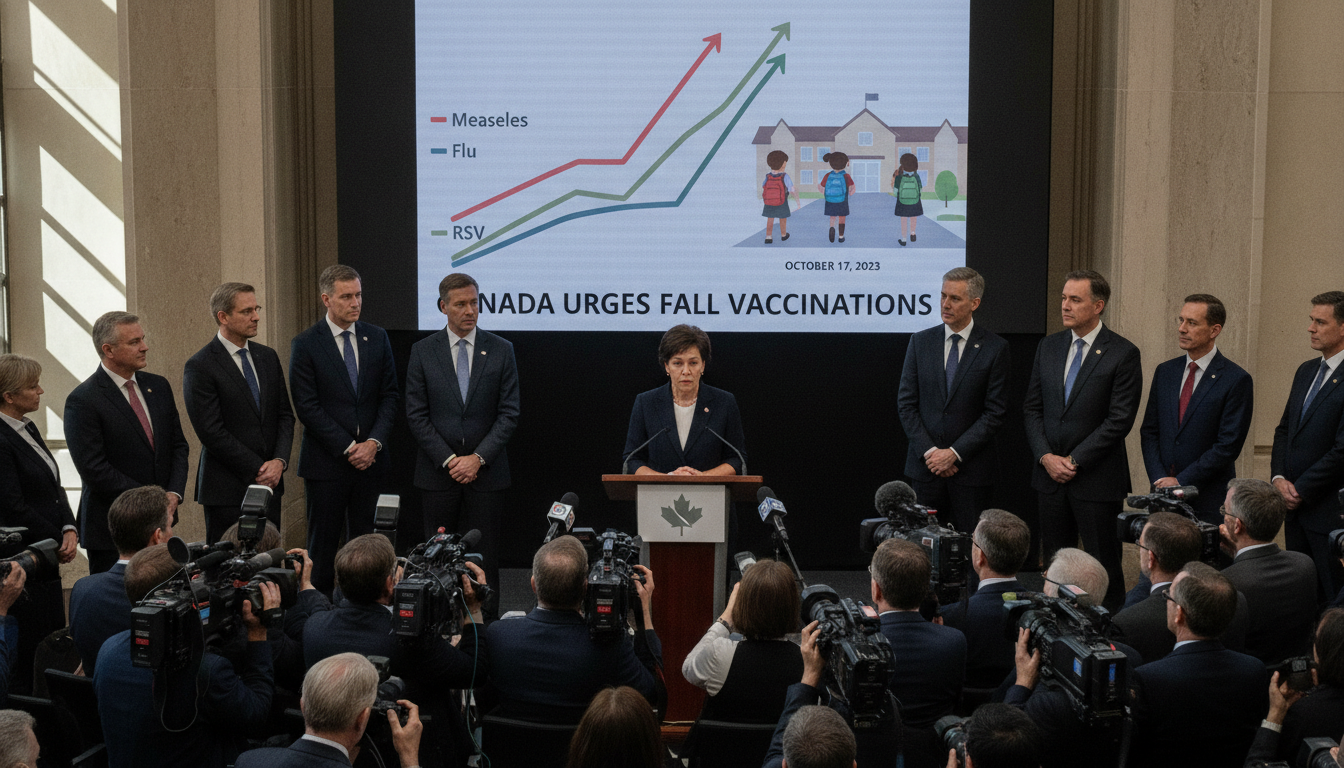
Fall vaccines urged as experts warn of looming surge in flu, COVID-19, RSV and measles
Experts urge Canadians to get fall vaccines, including flu, COVID-19 and RSV, as measles resurges and respiratory infections are expected to rise this season.
Strong early warning from public-health surveillance
With schools reopening and temperatures dropping, federal surveillance indicates low current circulation of influenza, COVID-19 and respiratory syncytial virus (RSV), but public-health officials say that calm is likely temporary.
Medical experts warn that increased time indoors during the colder months typically accelerates transmission of respiratory pathogens and leads to higher emergency department visits and hospital admissions.
Pediatric and immunology specialists are urging families to consider fall vaccines now so immune responses are established before cases begin to climb.
Timely vaccination, they say, is a practical step to reduce severe illness and strain on health services when seasonal viruses rebound.
Why timing matters for immune protection
Immunologists stress that vaccines require time for the body to develop optimal protection, typically several weeks after administration.
Last year’s influenza season produced an unusually early peak, underscoring the need for people to be vaccinated in the fall rather than waiting until midwinter.
That early surge is a reminder that vaccination schedules should be proactive, not reactive, especially for routine and seasonal immunizations.
Experts advise planning now to ensure children, older adults and medically vulnerable Canadians have time to mount an immune response before exposure increases.
Which vaccines public-health authorities recommend this autumn
Canada’s national advisory committees continue to recommend annual influenza vaccination for everyone aged six months and older, with additional COVID-19 doses advised for higher-risk groups.
Public-health guidance identifies older adults aged 65 and up, pregnant people and individuals with underlying medical conditions as priority groups for updated COVID-19 immunization.
RSV immunization programs now target older adults and offer maternal vaccination options to protect newborns through passive antibody transfer.
Clinicians point to real-world evidence showing maternal RSV vaccination substantially lowers the risk of infant hospitalization for severe RSV disease.
Resurgence of measles and gaps in routine coverage
Federal data show routine childhood vaccine coverage has fallen in recent years, leaving gaps that have contributed to a resurgence of measles across Canada and the United States.
Only about 85 per cent of two-year-olds in Canada were fully immunized against measles, mumps and rubella by the end of 2025, well below the roughly 95 per cent threshold experts say is needed to maintain population immunity.
That decline has coincided with outbreaks: public-health officials reported Canada lost its measles elimination status last November after recording thousands of infections since late 2024.
Health authorities emphasize that even a small drop in vaccine uptake can permit highly contagious infections like measles to re-establish community transmission.
Impact on children, hospitals and community health
Pediatricians note that children are particularly affected when respiratory viruses circulate together, with increased emergency visits and more hospital admissions for young patients.
Clinicians in provinces experiencing outbreaks have reported that many hospitalized children were unvaccinated, highlighting preventable risk.
Hospitals and emergency departments may face higher caseloads this fall if multiple respiratory illnesses surge at the same time.
Public-health planners are urging families and primary-care providers to coordinate vaccination and infection-control steps to reduce pressure on acute-care services.
Practical steps for families and caregivers this season
Health experts recommend that families review vaccine records and book fall immunizations for influenza, and, where eligible, COVID-19 and RSV protection.
Parents of infants are encouraged to discuss maternal RSV vaccination with prenatal care teams and to ensure children receive routine childhood immunizations on schedule.
Beyond vaccination, public-health advisers suggest maintaining sensible precautions such as staying home when ill, practicing hand hygiene, and using masks in crowded indoor settings when transmission is high.
Employers, schools and childcare programs are being asked to support vaccination access and to reinforce policies that reduce onward spread.
Equity and program access considerations across provinces
Advocates and clinicians point out that access to newer vaccines, such as maternal RSV immunization, varies by province and may require out-of-pocket payment in some jurisdictions.
Calls are growing for broader publicly funded programs to ensure equitable protection for infants and older adults regardless of family income or region.
Provincial decisions on funding and delivery affect uptake and community protection, and public-health groups say consistent national coverage would bolster efforts to prevent severe disease.
Policymakers must weigh program costs against the potential reduction in hospital admissions and long-term health impacts.
Balancing multiple vaccine messages in primary care
Primary-care providers face the practical challenge of presenting multiple vaccination options to patients during a single autumn visit.
Clinicians advise prioritizing vaccines for those at highest risk while emphasizing that receiving several vaccines at once is generally safe and effective.
Clear guidance from public-health authorities can help clinicians schedule and co-administer influenza, COVID-19 and other recommended immunizations.
Effective patient communication about benefits, timing and expected side effects is key to improving uptake before seasonal transmission ramps up.
Monitoring and preparing for variable seasonality
Epidemiologists caution that the timing and severity of respiratory seasons can vary from year to year, influenced by factors such as travel, viral evolution and population immunity.
Surveillance systems will be watched closely for early signals of rising influenza, RSV or COVID-19 activity, allowing public-health responses to be adjusted in near real time.
Hospitals and community health services are advised to review surge plans and vaccination clinics to ensure rapid scale-up if case counts increase.
Families and clinicians alike should be prepared to adapt to changing local epidemiology as the fall progresses.
This autumn’s public-health focus rests on prevention through timely vaccination and pragmatic infection-control measures, especially as children return to school and community mixing increases.
Clinicians and public-health officials urge Canadians to use the fall window to update routine and seasonal immunizations, prioritize protection for infants and older adults, and stay attentive to local guidance as respiratory viruses begin to circulate.
