
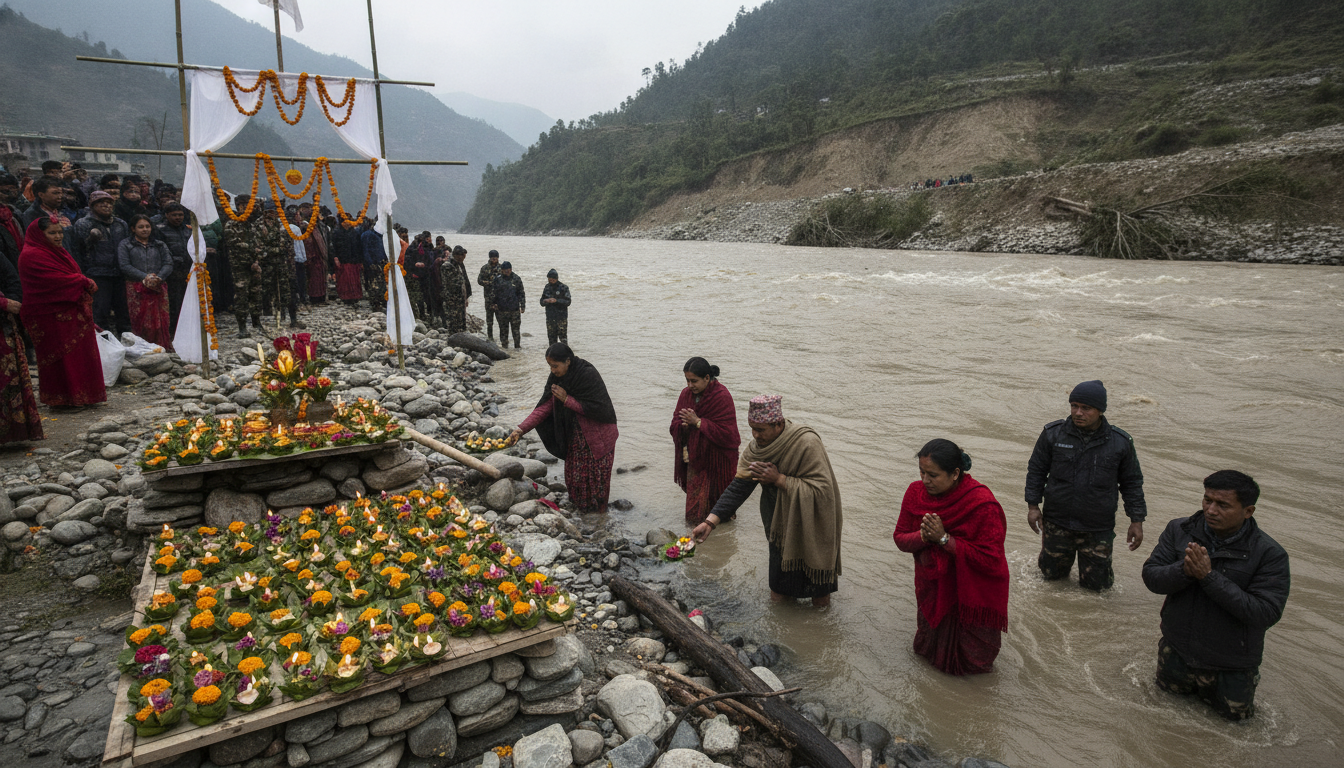
Nepal flash flood leaves families performing symbolic funerals as identification work continues
Families hold symbolic cremations while authorities preserve DNA and photos to identify victims of the August 26 Nepal flash flood, which killed and displaced thousands.
The August 26 Nepal flash flood has prompted grieving families to hold symbolic funerals for relatives still listed as missing after a massive wave of mud and debris swept through Himalayan towns. Families performed cremation rites without remains, seeking spiritual closure under Hindu tradition as authorities continue recovery and identification operations. More than 1,200 people have been reported killed and roughly 4,750 remain missing across Nepal and China’s Tibet region, according to local tallies following the disaster. The scale of the destruction — including damaged roads, bridges and hydropower installations — has compounded recovery efforts and deepened the humanitarian crisis.
Families Hold Symbolic Funerals for Missing Relatives
Several communities in affected districts staged ritual cremations for loved ones presumed dead but not recovered, performing full funeral rites to release souls in accordance with Hindu custom. Relatives said completing the cremation, even without a body, provided a measure of emotional and spiritual relief amid prolonged uncertainty. Priests and local leaders helped families adapt rites where physical remains were absent, balancing religious obligations with the realities of an ongoing recovery. These symbolic ceremonies have become a way for communities to publicly acknowledge loss and begin mourning together.
Authorities Use Temporary Graves and Forensic Steps
Officials have been interring recovered remains in temporary graves when immediate identification is not possible, following protocols to preserve dignity while awaiting confirmatory tests. Forensic teams are collecting DNA samples, photographing distinguishing features and recording clothing and personal effects to build identification files. Authorities said these measures aim to expedite matching when relatives provide genetic samples or other identifying information. Temporary burial also preserves remains from further damage while investigators work to establish identities.
Casualty and Missing Figures from the August 26 Flood
The August 26 event is one of the deadliest disasters to hit the Himalayan region in recent years, with official counts placing deaths above 1,200 and missing persons in the thousands. The disaster struck both Nepal and parts of China’s Tibet, sweeping away homes, vehicles and critical infrastructure in its path. Local governments and relief agencies have warned that numbers may change as search operations continue and more remote areas are reached. Emergency responders face steep terrain and continued risk from unstable slopes and weather as they try to complete rescue and recovery missions.
Identification and Forensic Work Intensifies
Forensic teams deployed to the hardest-hit districts have prioritized DNA collection and photographic documentation to create a reliable system for matching remains to missing-person reports. Officials are cataloguing distinctive features, dental records when available, and any personal items recovered with bodies to assist families and expedite identification. Mobile units and laboratory facilities have been set up near staging areas to process samples as quickly as possible under challenging field conditions. Families have been urged to provide blood or cheek swab samples to local authorities to speed up reconciliation with recovered remains.
Infrastructure Damage Disrupts Recovery and Power Supply
The flash flood destroyed several hydropower dams, severed roads and collapsed bridges, leaving many communities cut off and complicating relief deliveries. Damage to hydropower facilities has had immediate impacts on local electricity supply and raised concerns about longer-term energy and economic consequences. Repairing access routes and stabilizing riverbanks are immediate priorities to allow heavier equipment and forensic teams to reach isolated sites. Emergency engineering teams are coordinating with local authorities to assess structural risks and prioritize repairs to restore critical services and facilitate recovery.
Religious Rites, Community Support and Mental Health Needs
Religious leaders and community volunteers have played a central role in organizing ceremonies and providing psychosocial support to grieving families. The lack of recovered bodies has led many to turn to ritual practices as a culturally recognized way to process loss and mark the end of uncertain waiting. Mental health professionals and humanitarian organizations have begun outreach to offer counselling and support for trauma, especially where families have lost multiple relatives or their homes. Community-based networks are also coordinating food, shelter and legal assistance for those displaced by the flood.
Rescue teams and local officials emphasize that identification efforts remain a top priority as families await word about missing loved ones, and they acknowledge the deep distress caused by prolonged uncertainty. International aid agencies and neighboring provinces have pledged logistical support, but officials warn that recovery will be slow and contingent on weather and access. As symbolic funerals continue, authorities say they will maintain systematic records and continue DNA and photographic archiving to ensure that, whenever remains are found or identified, they can be returned to families with dignity.
