
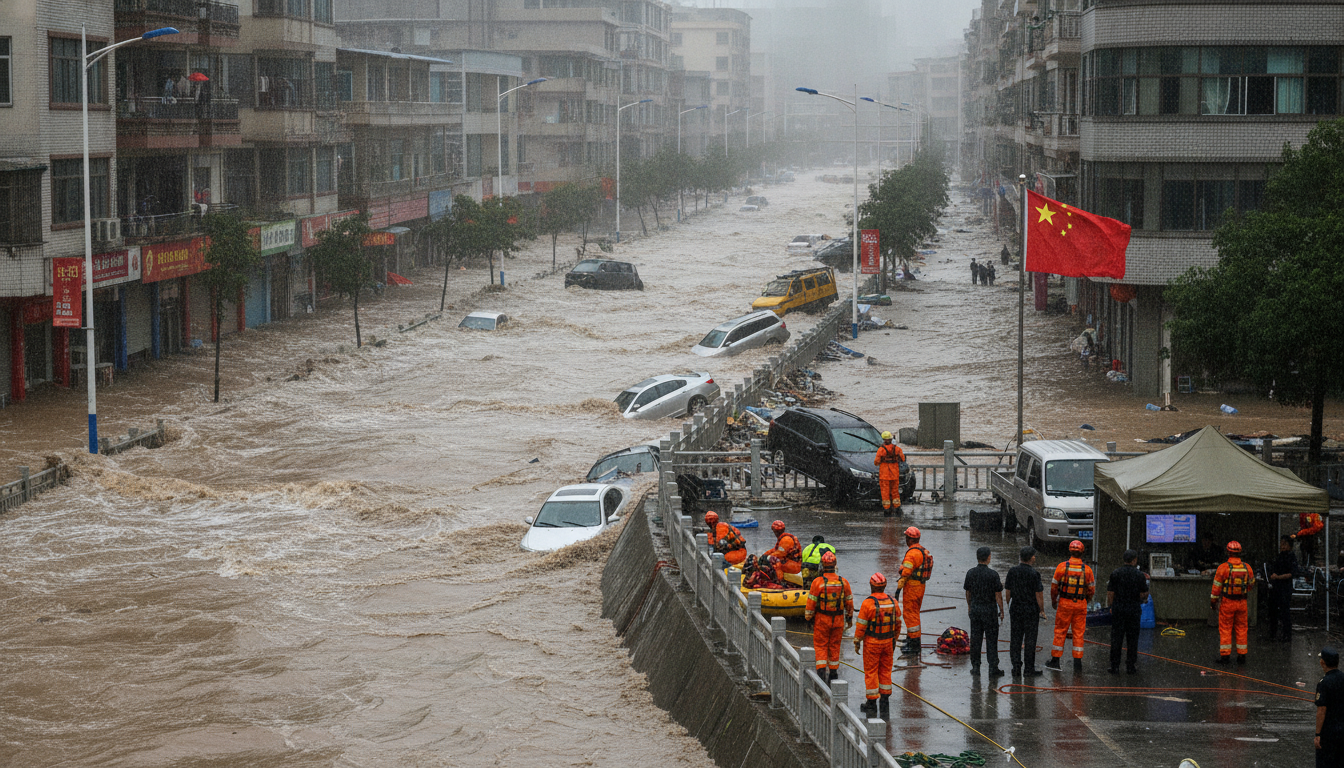
Eastern China floods: Torrential rain sweeps cars away as authorities raise emergency to highest level
On Sept. 3, 2026 torrential rain triggered severe eastern China floods, sweeping vehicles from streets and forcing authorities to declare the highest emergency response after some stations recorded more than 50 cm of rainfall.
Rainfall and emergency response
A weather station in the affected region recorded more than half a metre of rain overnight, a deluge that overwhelmed drainage systems and sent water charging down urban thoroughfares. In response, provincial emergency management agencies elevated their alert level to the highest classification and mobilized rescue teams and heavy equipment. Officials warned residents to avoid low-lying areas and to follow evacuation orders where they were issued. The rapid escalation reflected concerns about further rainfall and the limited time available to move people to safety.
Streets turned into rivers
Video and eyewitness accounts showed streets transformed into powerful torrents that swept cars off roads and stalled public transport. Authorities reported multiple vehicles carried away by fast-moving water, and emergency crews were seen working to pull people from submerged cars and buildings. Residents described scenes of sudden flooding that left little time to react, particularly in older neighbourhoods where drainage is inadequate. Local hospitals treated people for hypothermia, non-life-threatening injuries and shock.
Rescue operations and evacuations
Rescue teams, including personnel from local fire departments and volunteer groups, concentrated on evacuating residents trapped on upper floors and in stranded vehicles. Boats and high-clearance vehicles were deployed to reach neighbourhoods cut off by floodwaters, while temporary shelters were opened in schools and municipal buildings. Officials said priority was being given to the elderly, people with disabilities and families with young children. Coordination between municipal and provincial agencies aimed to speed relief to the hardest-hit communities.
Impact on transport and infrastructure
Flooding closed key highways and disrupted rail services, sending commuters scrambling and delaying freight movement in a region that is a major manufacturing hub. Local authorities ordered the shutdown of some metro lines where stations flooded and urged residents to postpone nonessential travel. Utilities faced strain as heavy rain caused power outages in scattered districts and damaged road surfaces, bridges and drainage channels. Engineers inspected infrastructure for structural damage and identified sections of roads and embankments requiring immediate repair.
Meteorological context and forecasts
Meteorological officials linked the extreme downpour to a slow-moving weather system that stalled over parts of eastern China, producing concentrated bands of heavy rain. Forecasts warned that intermittent showers could continue in the coming days, raising the risk of additional flash floods and landslides in hilly terrain. Experts highlighted that saturated soil and swollen rivers would magnify runoff and extend the period during which communities remain vulnerable. Authorities urged vigilance and advised residents in flood-prone zones to prepare for further evacuations if conditions worsen.
Government statements and relief measures
Provincial leaders called for rapid deployment of emergency resources and ordered inspections of flood defenses and water-control structures. State and local agencies announced measures to provide temporary housing, food and medical aid to displaced families, and pledged to subsidize immediate repairs to damaged public facilities. Public messaging stressed adherence to safety instructions and directed people to official channels for assistance and information. Officials also committed to assessing economic losses and coordinating with national authorities to secure additional funding for recovery.
Rescue teams continued search and recovery efforts into the evening as water levels slowly began to recede in some neighbourhoods, but authorities cautioned that risks remained while rivers and drainage systems adjusted to the sudden influx. Local disaster-management centres urged residents to report missing persons and to stay away from flooded rivers and unstable embankments. Emergency hotlines were activated to centralize requests for rescue and relief, and volunteers were being registered to assist with shelter operations.
Relief organisations and community groups mobilized to distribute blankets, dry clothing and hygiene supplies to those displaced by the flooding, while medical teams conducted disease-prevention checks in temporary shelters. Schools in affected districts were closed pending safety inspections, and businesses assessing damage began cataloguing losses to insurance providers and local authorities. Recovery planners emphasized the need for swift debris removal and restoration of essential services to prevent secondary health and economic impacts.
Officials said a full assessment of the human and material toll would follow once waters receded and access to all affected areas was secured, with priority given to restoring safe housing and critical infrastructure. Engineers and hydrologists will review flood-control systems to identify weaknesses and inform longer-term mitigation measures. Families returning to damaged homes were advised to document losses for relief claims and to avoid re-entering buildings until they have been declared safe.
Authorities reiterated that residents should remain alert to official advisories and weather updates, especially in districts with a history of flooding. The rapid emergency escalation and large rain totals underscored continuing vulnerabilities in urban drainage and river management during intense weather events. As recovery begins, officials and community groups face the task of restoring normalcy while preparing for the possibility of additional heavy rain in the days ahead.
