
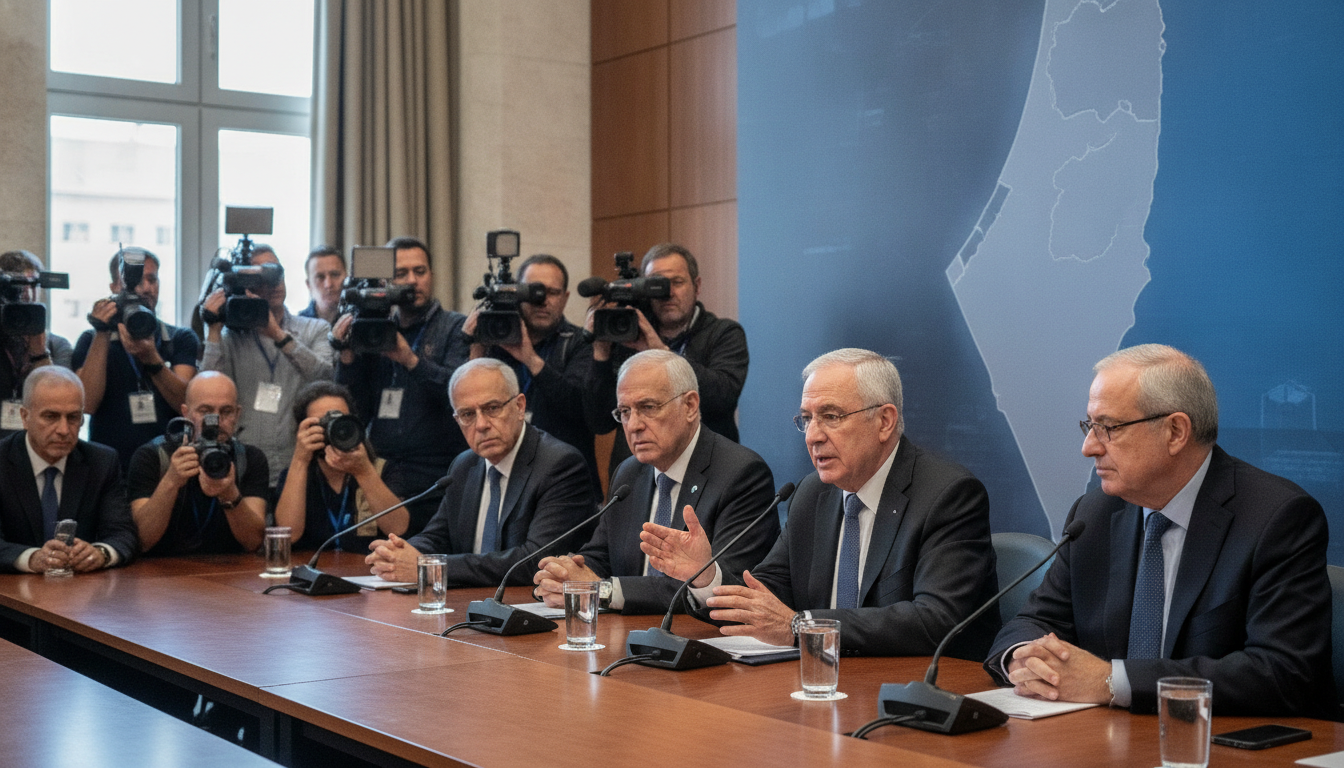
Former Israeli Security Leaders Warn of West Bank Ethnic Cleansing by Settlers
Top Israeli security figures and former prime ministers accuse West Bank settlers of ethnic cleansing with alleged government support, prompting legal alarm.
A growing contingent of former Israeli generals, intelligence officials and ex-prime ministers has publicly accused West Bank settlers of engaging in actions that amount to ethnic cleansing, and they say those actions are receiving tacit or explicit backing from parts of the government. The allegations, voiced in recent statements and interviews, argue that a pattern of violence, displacement and policy choices is creating conditions that target Palestinian communities. Once-fragile norms of restraint and rule of law are central to the former officials’ warnings.
Ex-generals and officials issue public warnings
A number of former senior security figures have stepped forward in unprecedented public criticism, framing settler conduct in the West Bank as part of a systemic campaign. They say that what had been isolated incidents are now part of a broader pattern that risks altering the demographic and political reality on the ground.
Those who spoke to reporters and in public fora include retired chiefs of military and intelligence services and former heads of government, who argue their national security experience gives weight to their assessment. Their unanimous refrain is that the issue is not solely a matter of law enforcement but one of strategy and long-term national consequence.
Allegations of settler violence and institutional backing
The accusations focus on violent attacks, intimidation, property seizures and the removal of Palestinians from villages and farmland. Former officials say these practices, when coupled with lax enforcement or favorable policy decisions by authorities, amount to a coordinated process of displacement.
They note specific practices such as settlement expansion, revocation or non-enforcement of permits for Palestinian residents, and selective policing that leaves civilians vulnerable. Together, these actions are described as creating conditions that systematically disadvantage and push out Palestinian residents.
Security leaders frame the threat in stark terms
Senior security voices have used strong language to convey the severity of the situation, warning that societal collapse can follow when violence and exclusion become normalized. “Once a society behaves this way,” one former general said, “that society is doomed,” a warning aimed at both the political class and the public.
Those former officials caution that the erosion of legal and ethical barriers within a democracy carries long-term security costs. They argue that normalizing collective punishment or impunity undermines the legitimacy of state institutions and the ability of the military and police to operate under public trust.
Legal and international implications raised
Legal scholars and human rights observers have noted that the allegations raise questions under international humanitarian and human rights law, including prohibitions against forced displacement. The former officials’ statements have prompted calls for investigations and for international bodies to monitor developments more closely.
Diplomatic sources and advocacy organizations warn that sustained patterns of displacement could expose Israel to heightened global scrutiny and potential legal proceedings. Former leaders stress that adherence to domestic law and international treaties is not only a moral obligation but a strategic imperative.
Political reaction and government stance
The public denunciations have put pressure on current political leaders to respond, though reactions have varied across the political spectrum. Some ministers have dismissed the accusations as politically motivated, while others have pledged to examine specific incidents and ensure enforcement of the law.
Political analysts say the debate reflects deeper fractures within Israeli society over settlement policy, security priorities and the nature of the state’s responsibilities in occupied territories. The tension is evident in parliamentary debates, court petitions and street-level protests that have followed the statements.
On-the-ground conditions and reports of displacement
Field reports from human rights groups and journalists describe a mix of confrontations, demolitions, and restrictions that Palestinians say limit access to water, grazing lands and agricultural livelihoods. Residents recount instances of coercion and forced movement that they say are accelerating demographic changes in parts of the West Bank.
Former security officials point to these eyewitness accounts as corroboration of the pattern they describe, urging independent documentation and for law enforcement to intervene where crimes are alleged. They emphasize that failing to act creates a permissive environment for further abuses.
The broad chorus of alarm from retired leaders and politicians has focused attention on irregular enforcement, settler violence, and the policy choices that enable both. Their warnings combine moral concern with pragmatic security analysis, arguing that the trajectory they describe threatens the fabric of the state.
Ultimately, the former officials are urging swift, transparent investigation of allegations and a reaffirmation of the rule of law to prevent further displacement and instability. They contend that safeguarding democratic institutions and protecting civilians—both Palestinian and Israeli—remain essential to national security and to maintaining international standing.
