
Let’s Talk Alberta bus pushes Alberta independence through southern towns ahead of referendum
Let’s Talk Alberta bus tours southern towns promoting Alberta independence before the Oct. 19 referendum, spotlighting rural backing and targeting city voters.
Strong start on rural highways
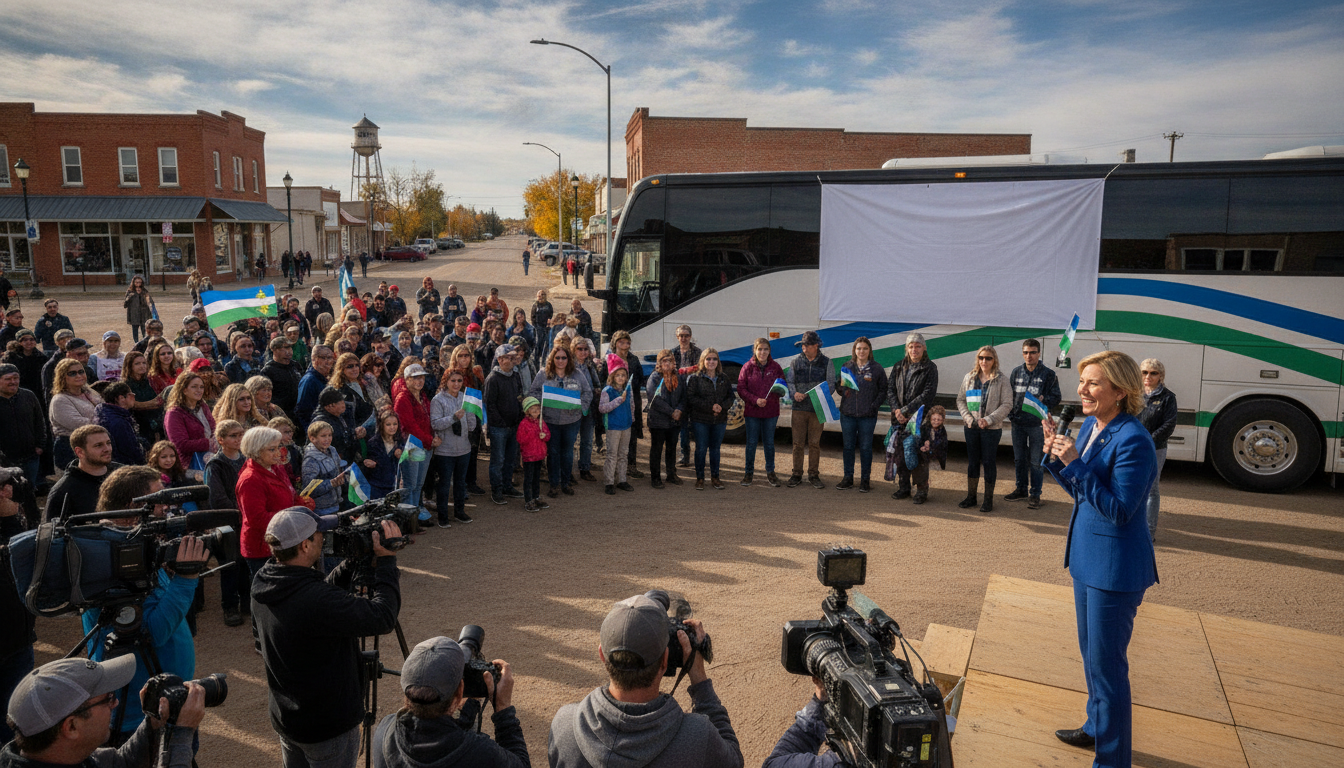
Chris Scott drove a motorhome emblazoned with "Let’s Talk Alberta" through southern Alberta last week, stopping at small towns to promote Alberta independence ahead of the Oct. 19 referendum.
The bus tour, organized by a group of independence supporters, visited multiple communities to hand out lawn signs, meet residents and recruit signatures for their campaign.
Passengers and organizers described the trip as a grassroots effort to mobilize voters whose disaffection with federal policies they say has not been addressed.
The vehicle itself became part of the message, wrapped with prairie vistas and provincial landmarks intended to evoke a distinct Alberta identity.
Inside, the coach showed signs of long travel: aging upholstery and loose cabinet latches underscored the improvised, volunteer-driven nature of the tour.
Those details were presented as symbolic by several passengers, who likened care for the vehicle to what they say the province needs politically.
Organizers framed the tour as conversational rather than confrontational, aiming to open dialogue in communities they believe will be receptive.
But the trip also reflected the high stakes of the coming referendum, with activists noting that voter mobilization efforts will intensify as the Oct. 19 date approaches.
The bus moved deliberately through rural corridors where, organizers said, support for Alberta independence is strongest.
Driver and organizer Chris Scott frames the campaign
Chris Scott, a restaurant owner who rose to broader notice during the pandemic, purchased and outfitted the motorhome to carry the campaign across the province.
Scott has been vocal about government measures he opposed during COVID-19 and said that experience motivated him to take a more active role in provincial politics.
He told supporters that the bus tour is a way to raise awareness, spark conversation and register the depth of dissatisfaction he sees with federal governance.
Scott described the tour as an extension of his belief that citizens must stand up when they perceive rights or regional interests are being undermined.
He framed the effort as practical politics rather than symbolic theatrics, pointing to the need for direct conversations with voters in small towns.
Supporters around him often referenced his past legal challenges during the pandemic as a credential that resonated with like-minded residents.
The tour’s itinerary included multiple stops each day, a schedule Scott said was designed to maximize contact with ordinary residents.
With a shower and sleeping area on board, Scott and some team members can remain on the road for extended stretches, a logistical advantage he emphasized.
He also acknowledged the limits of a small, volunteer-driven campaign and said the next phase would include a push into urban centres.
Passengers outline motivations for Alberta independence
The people riding the bus represented a mix of long-time residents and recent converts to the movement, each describing different reasons for supporting Alberta independence.
Some identified enduring grievances such as the federal equalization formula and perceptions of Ottawa’s handling of resource and firearms policy.
Others spoke more broadly about cultural and religious concerns, saying national legislation they view as hostile to traditional values has widened a political divide.
Among passengers was Jasper Smit, who runs a social media channel and traveled from the Netherlands to assist the tour; his presence illustrated how the campaign has drawn attention beyond provincial borders.
Sandy Duguay, who grew up in Montreal and later lived on Vancouver Island, said experiences with past referendums and pandemic-era politics galvanized her to take part full time.
Patti Vold, a grandmother who joined the campaign team, said she wanted to bring faith-based perspectives more directly into public life.
Passengers described town-hall-style conversations, one-on-one chats outside arenas and small gatherings at local parks as their primary outreach tactics.
They emphasized listening as much as persuading, saying many residents they met wanted to discuss concrete problems rather than ideological theory.
The group’s arguments were tailored to local concerns, from municipal infrastructure to provincial fiscal autonomy.
Religious freedom and Bill C-9 surface as recurring grievances
Several passengers and supporters cited recent federal legislative changes as evidence they believe Ottawa is overreaching on cultural matters.
Bill C-9, the federal law that amended hate-speech provisions and removed a religious exemption, was frequently mentioned as a cited example of what they describe as threats to religious freedom.
Some supporters argued that such measures signal a broader trend that marginalizes faith-based voices in public policy.
Those views were often discussed alongside historical grievances about national identity and cultural shifts perceived to be at odds with traditional Alberta values.
While some riders framed their concerns in explicitly religious terms, others couched them in broader cultural or constitutional language, arguing for more provincial control over social policy.
Debates on board the bus reflected a range of opinions, with at least one passenger cautioning against privileging any single faith tradition in public governance.
Organizers said they want to ensure the referendum campaign addresses questions about rights and values, alongside fiscal and constitutional issues.
They suggested that even if a formal separation were not immediately viable, a strong showing in the referendum could force federal attention to Alberta-specific concerns.
Opponents of that view argue such legislative debates are complex and influenced by judicial interpretation, but supporters on the tour remained focused on messaging that resonates with their base.
Confrontation in Strathmore over public property use
At a stop in Strathmore, a dispute erupted when town officials asked the bus group to leave municipal property where they had gathered.
Town staff told the organizers that while peaceful expression is permitted, the group could not occupy certain areas, prompting a tense exchange with Scott.
An on-site peace officer and other municipal representatives were present during the standoff, which briefly drew a crowd of supporters and critics.
The situation escalated when some attendees began livestreaming the confrontation, amplifying the incident to wider audiences in real time.
After several minutes, the town determined the group could remain, with officials later stating the municipality respects peaceful democratic expression.
The episode underscored how local-level interactions can become focal points for broader political tensions as the referendum approaches.
Organizers said the Strathmore incident highlighted the need to clarify rules around the use of public spaces for political activity.
They also said the confrontation reinforced their narrative that provincial voices are being sidelined by municipal or federal authorities.
Town officials maintained their requests were procedural and aimed at balancing freedom of expression with municipal regulations and other park users’ rights.
Rural receptions stronger than city outreach, organizers say
The bus tour encountered generally welcoming crowds in smaller towns, where residents turned out for lawn signs and short conversations.
Organizers acknowledged polling patterns that show higher support for Alberta independence in rural regions and designed their early routing accordingly.
Volunteers said the familiarity of small communities and the ability to speak one-on-one made it easier to build rapport than in larger urban settings.
Still, those involved stressed that winning a binding referendum would require broader urban gains, prompting plans to shift the focus to cities in September and October.
Passengers said the urban phase will demand different tactics, including targeted canvassing and events designed to engage diverse populations.
They noted the demographic and cultural complexity of Alberta cities and said they recognize the challenge of translating rural enthusiasm into metropolitan support.
Critics argue that rural displays of support may not reflect wider provincial sentiment, and point to differences in political priorities and demographics between towns and cities.
Organizers counter that their outreach in cities will aim to bridge cultural divides by focusing on shared economic and governance concerns.
For now, however, the bus’s southern tour offered a snapshot of the grassroots energy organizers say they will need to sustain into the fall.
Plans to intensify city campaigning before Oct. 19 referendum
With the Oct. 19 referendum date on the calendar, the campaign’s next phase is a concentrated effort to engage urban voters.
Passengers and organizers described plans for a weeks-long schedule of appearances, events and door-knocking intended to bring their message to metropolitan areas.
They said messaging will be calibrated to address local concerns while maintaining the broader themes of provincial autonomy and cultural preservation.
Organizers emphasized the importance of volunteer recruitment, digital outreach and partnerships with sympathetic community groups to scale up operations in cities.
They acknowledged the financial and logistical challenges of urban campaigning, including the need for permits, venues and volunteer coordination across larger populations.
Several passengers predicted that September and October will be a decisive period in which the movement’s ability to persuade city voters will be tested.
Opponents of Alberta independence have already been active in cities, organizing pro-Canada events and volunteers to counter separatist messaging.
Both sides appear set to intensify advertising, rallies and voter contact as the referendum draws near, raising the prospect of heightened polarization.
How that dynamic plays out in urban precincts will be a central factor in determining the referendum’s outcome.
People on the bus said they believe the referendum will force federal leaders to take Alberta’s grievances more seriously, regardless of the result.
They argued a strong turnout and a clear showing of dissatisfaction could reshape negotiations over federal transfers, resource development and provincial jurisdiction.
As the campaign moves toward cities, organizers and opponents alike are preparing for a sustained, high-intensity period of political engagement leading up to Oct. 19.
The motorhome continued westward after the tour’s final scheduled stops, its occupants focused on expanding conversations beyond the rural heartland and into Alberta’s urban centres.
