
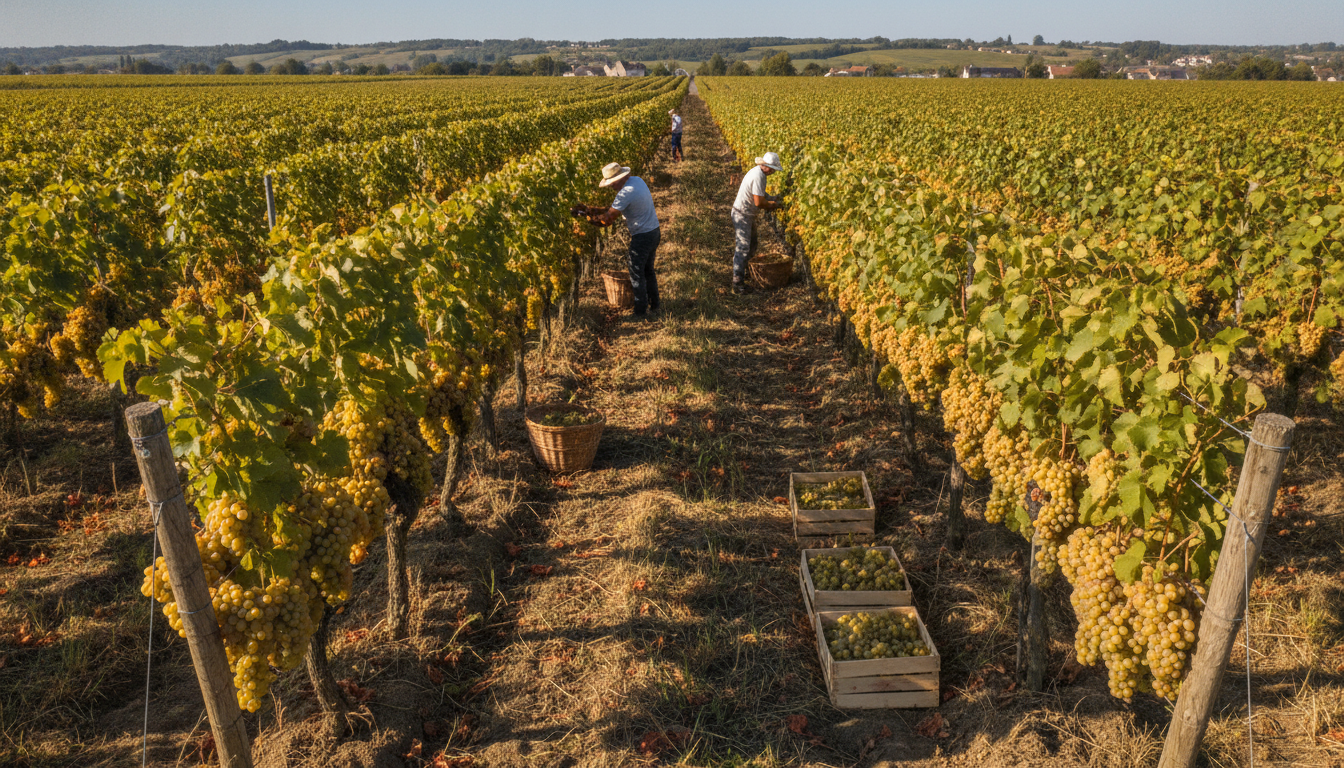
Champagne grapes ripen 3–4 weeks early after blistering summer, growers say
Champagne grapes ripened three to four weeks ahead of schedule this year after an exceptionally hot summer, forcing growers to accelerate harvests and adapt winemaking plans for the coming vintage.
Early Ripening Recorded Across Vineyards
Vineyards across the Champagne region reported unusually early véraison and ripening, with many parcels reaching harvest readiness weeks sooner than typical. Local winemakers described a uniform shift across several sub-regions, noting that the pattern followed sustained high temperatures and limited rainfall during critical growth stages. The accelerated timeline required rapid adjustments to sampling and quality assessments that traditionally guide harvest dates.
Vintners Report Three to Four Week Advance
Growers and cellar masters said the main clusters reached ideal sugar levels roughly three to four weeks earlier than the long-term average for the region. That advance compressed the usual staggered harvest window and prompted many estates to bring forward picking decisions to avoid overripening. Several producers emphasized that while early ripeness can yield concentrated flavors, it also raises questions about acid balance and phenolic development.
Effects on Grape Composition and Wine Style
Champagne grapes that ripen faster under heat typically accumulate sugars more quickly, which can lead to higher potential alcohol in the base wines. At the same time, acidity can fall sooner than tannins and aromatic precursors fully develop, creating additional pressure on winemakers to preserve freshness. Cellar teams are already discussing adjustments in pressing, fermentation temperatures, and blending strategies to retain the bright acidity associated with classic Champagne style.
Harvest Logistics and Workforce Strain
An earlier harvest compressed the timeframe for picking crews and mechanical harvesters, straining logistics that are usually planned months in advance. Cooperatives and larger houses scrambled to coordinate labor, equipment and transport as more parcels reached maturity simultaneously. The timing also affected on-site facilities, with pressing schedules and tank capacity needing rapid recalibration to handle an unexpected surge in fruit.
Growers Cite Long-Term Accelerating Trend
While earlier harvests have been reported in Champagne for several years, growers say the pace of advancement has accelerated recently and is now more pronounced in many plots. Viticulturists pointed to shifting seasonal patterns — notably hotter summers and warmer springs — as factors that are changing the rhythm of the vineyard calendar. Several producers noted that younger vine material and adjusted canopy management have moderated the impact in some sites, but the overall trend remains clear to those working across the region.
Implications for the 2026 Vintage and Market
The early ripening will shape the 2026 vintage profile, with the potential for wines that show ripe fruit concentration balanced against winemakers’ efforts to maintain acidity and finesse. Champagne houses accustomed to blending across plots and reserve stocks are likely to deploy those tools to preserve house style and consistency. Analysts and merchants say market reaction will depend on tasting results and reports once fermentations are completed and presses are tasted.
The accelerated harvest has underscored how sensitive Champagne grapes are to short-term weather extremes and recurring seasonal shifts, prompting renewed discussion among growers about long-term adaptation. Vineyard practices such as altering row orientation, changing training systems, and updating irrigation and cover-crop strategies are being reviewed more actively than in previous years. Producers say these measures, combined with cellar-level interventions, can help manage vintage variability but cannot entirely remove climate-driven risk.
Winemakers stressed that final judgment on the vintage will depend on cellar work and the blending decisions that follow fermentation. Early indications from juice and must analyses will guide choices about reserve wines and the extent to which acidity adjustments, lees ageing and dosage strategies are used to achieve balance. Observers caution that while high ripeness can produce appealing aromatics and structure, maintaining the trademark vibrancy of Champagne will be the central challenge.
As picking continues and fermentations proceed, vintners and merchants will closely monitor laboratory metrics and tasting notes to forecast the character of forthcoming releases. Critics and industry bodies are expected to taste early pressings in the months ahead, providing the first public indicators of how this unusually early harvest will translate into bottles on the market.
The 2026 harvest in Champagne will be watched closely by producers and consumers alike as a bellwether for how the region adapts to accelerating seasonal changes and preserves the balance that defines its sparkling wines.
