
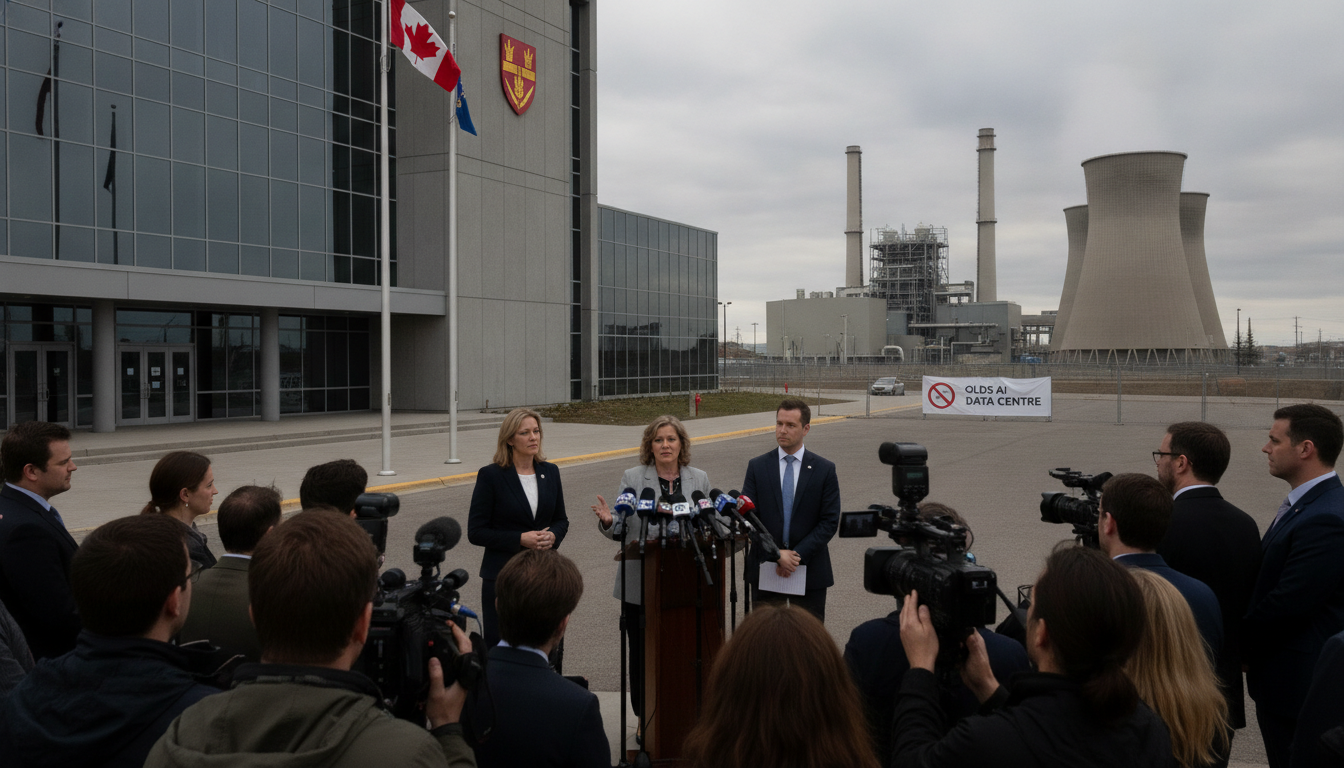
Alberta regulator rejects Olds AI data centre proposal over proximity to homes
Alberta regulator rejects Synapse’s Olds AI data centre and 1.4 GW power plant on Aug 17, 2026, citing proximity to homes and inadequate justification.
A provincial regulator has refused a proposal to build a large-scale Olds AI data centre and a 1,400-megawatt gas-fired power plant after finding the site unsuitable and too close to residential neighbourhoods. The Alberta Utilities Commission issued its ruling on Monday, August 17, 2026, concluding the developer had not provided sufficient reasons to locate the facility in the northeast quadrant of Olds. The decision ends the current application from Synapse Real Estate Corp. and reflects extensive public participation in the regulatory process.
Regulator rules site unsuitable
The Alberta Utilities Commission determined the proposed power plant and associated infrastructure were not appropriate for the chosen location, saying Synapse failed to demonstrate a compelling justification for selecting that site. The commission noted both technical and locational deficiencies in the filing and concluded the scale of the development would conflict with the adjacent community. Nearly 1,500 individuals and organizations filed statements of interest in the proceeding, and 919 parties were granted formal standing, underscoring the breadth of public concern.
Project size and local footprint
Synapse’s application envisioned a combined data campus and power generation complex valued at roughly $10 billion and encompassing about 10 per cent of Olds’s municipal footprint. The development would have required a gas-fired generation plant capable of producing approximately 1.4 gigawatts to power the campus, a scale that prompted scrutiny over land use and municipal impacts. Regulators highlighted how the proposed build would have dominated the northeast corner of the town and placed significant industrial infrastructure within close proximity to residential areas.
Residents raised environmental and quality-of-life worries
Community submissions to the commission emphasized worries about noise, water consumption, air emissions and other environmental consequences connected to a large thermal power plant adjacent to homes. Local residents and municipal representatives also questioned the long-term implications for property values, health concerns and the adequacy of emergency planning around a facility of that size. Those concerns, combined with technical shortcomings in Synapse’s application, informed the commission’s view that the development was inconsistent with nearby land uses.
Minister frames decision as proof of process
Alberta’s minister of technology and innovation, Nate Glubish, said the AUC ruling demonstrates the province can both approve data centre investments and reject proposals that fail to meet siting, zoning or technical standards. He emphasized that responsible development requires proper site selection and appropriate zoning, and he contrasted the failed Olds proposal with other projects deemed more suitable. The minister reiterated that regulatory safeguards and public engagement are central to the province’s approach to attracting digital infrastructure while protecting communities.
Power plant denial effectively blocks the data centre
Because the utilities commission does not directly regulate data centres but does regulate power generation, the rejection of the gas-fired plant had the practical effect of blocking the planned Olds AI data centre. Synapse’s model relied on on-site generation rather than a simple grid connection, and regulators found the proposed generation facility to be the critical, and flawed, element of the submission. Officials noted that without an approved source of generation tied to the application, the planned campus could not proceed under the terms presented.
Comparison with other large-scale investments in Alberta
The ruling comes as Alberta continues to court major cloud and AI investments, including a separate, multi-billion-dollar campus announced for northern Alberta that relies on existing industrial zoning and infrastructure farther from dense population centres. Provincial officials have pointed to siting in established industrial areas and appropriate municipal alignment as reasons such projects can be successful. The contrast between the Olds proposal and investments located in well-zoned, remote industrial districts informed both public commentary and ministerial statements after the commission’s decision.
Next steps for the town and provincial engagement
The province has scheduled a series of town halls in the coming weeks to discuss data centre policy, siting guidelines, and community impacts, and municipal leaders say those sessions will be an opportunity to refine local input into future proposals. Synapse did not immediately offer comment in response to the commission’s ruling, and it remains unclear whether the company will seek to revise its plans or appeal the decision. Meanwhile, local officials and residents will watch for any follow-up filings and engage with provincial outreach on digital infrastructure policy.
The AUC ruling marks a decisive moment in Alberta’s push to balance large-scale tech investment with local land-use planning, and it highlights the regulatory and community hurdles developers must clear when proposing power-dependent AI campuses near residential areas.
