
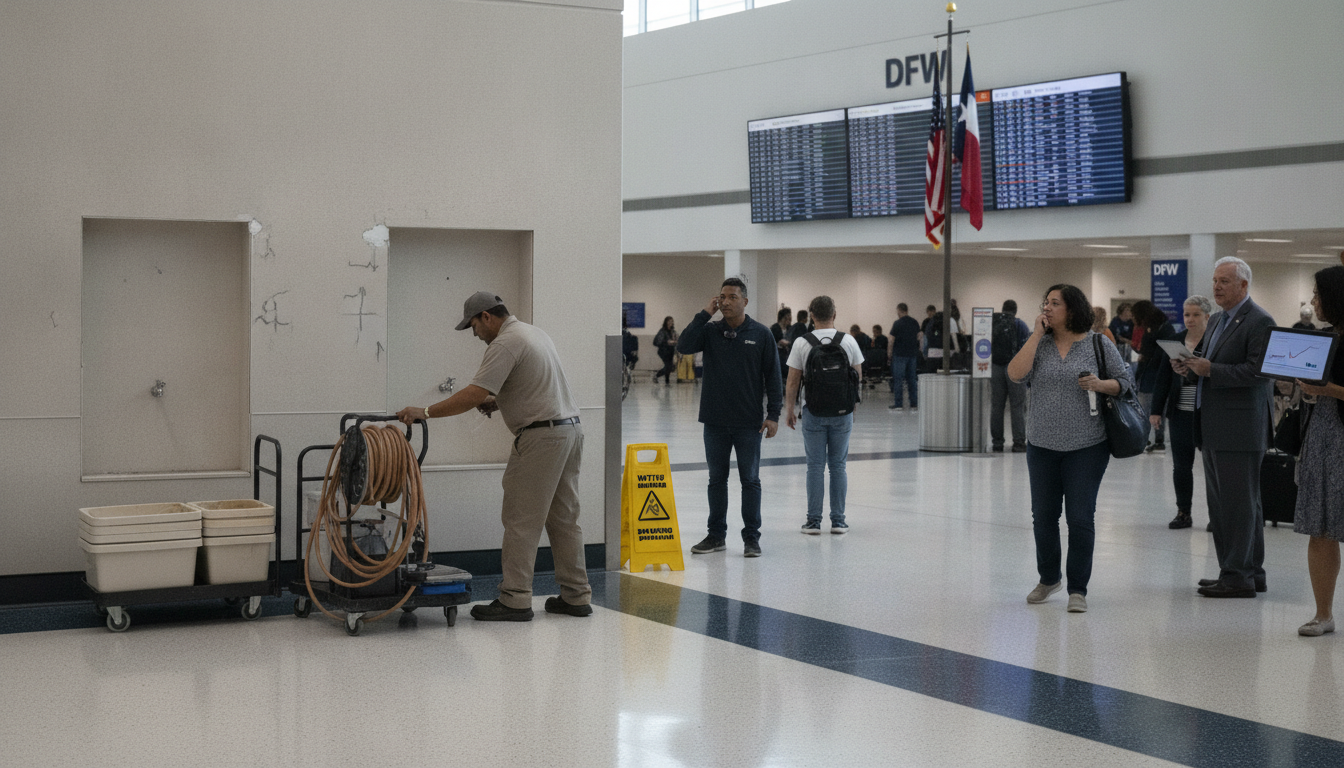
DFW Cancels Wudu Stations After Governor Abbott Threatens to Withdraw State Funding
DFW cancels planned wudu stations after Texas Gov. Greg Abbott threatened to revoke state grants; civil rights groups say the move is discriminatory amid debate
Airport halts plans after state funding threat
Dallas-Fort Worth International Airport announced it will not proceed with planned wudu stations after accelerating its review in response to intense public scrutiny and a state-level funding threat. The decision followed a directive from Texas Governor Greg Abbott to review active state grants to DFW and George Bush Intercontinental Airport in Houston. Airport officials said the project, which would have installed sinks and faucets for pre‑prayer ablutions, would not deliver the operational benefits originally anticipated.
The keyword wudu stations appears at the centre of the dispute, which has sparked criticism from civil rights groups and debate over religious accommodation at publicly owned transport hubs. The airport framed its reversal as an operational decision informed by an expedited evaluation rather than a statement on religious practice. Local and national advocacy groups dispute that rationale and have decried the governor’s intervention.
Governor Abbott orders grant review and referrals
Governor Abbott publicly called for a review of state grants to both airports, asserting that the facilities could amount to government endorsement of a single religion. He referred the matter to federal agencies for investigation and signalled his willingness to revoke active state funding if officials determined facilities violated constitutional prohibitions. Abbott’s office said the review was necessary because airports are government‑owned properties and must not favour one faith over another.
State officials framed the move as a constitutional compliance check, but opponents characterized it as a targeted political response. The governor’s statements intensified scrutiny and forced the airports to accelerate internal assessments that had been planned as routine project reviews.
DFW explains operational evaluation and decision
In its public statement, DFW emphasised that proposed changes undergo assessments of operational benefits, customer service impacts, risks and costs. The airport said heightened public interest prompted an accelerated timeline and that, after review, it concluded the project would not achieve the projected operational outcomes. DFW did not describe specific technical shortcomings but indicated the decision was based on that expedited assessment.
Airport leaders also noted that existing washrooms and multi‑use facilities are available to travellers and that any new amenity must demonstrate clear, measurable advantages. The statement aimed to place the decision within standard airport project governance rather than the centre of a legal or religious controversy.
Civil rights groups call the move discriminatory
The Council on American–Islamic Relations condemned the governor’s intervention, calling it an anti‑Muslim political stunt and arguing that wudu stations are open to all travellers. CAIR and other advocates noted that the proposed stations would have been standard sinks and faucets accessible to any passenger, akin to interfaith prayer rooms or bidets found at other international airports. They argue that accommodation of religious practice in public facilities does not constitute government endorsement.
CAIR also pointed to recent Texas education policies and other actions they say reflect a pattern of privileging specific religious traditions. The group urged state leaders to focus on broader public policy challenges rather than singling out Muslim travellers.
Legal perspectives and constitutional arguments
Legal experts interviewed after the announcement underscored the tension between the Establishment Clause and reasonable religious accommodation. Constitutional law scholars say the government cannot formally adopt a religion, but routine accommodations—such as prayer rooms, meal options or medical exemptions—have generally been upheld when they serve a secular purpose and are broadly accessible. The key legal question often hinges on whether a government action advances or merely accommodates private religious practice.
Analysts noted that airports routinely provide amenities that benefit particular user groups without running afoul of the law, but they cautioned that each case turns on specific facts, intent and implementation. The referral to federal agencies means the issue could receive formal scrutiny beyond political debate.
Broader context: politics and incidents cited by advocates
The controversy has unfolded amid a broader national conversation about Islamophobia and political rhetoric, with advocacy groups tying the airport decision to escalating anti‑Muslim statements by some public figures. Supporters of the governor say the focus is on equal treatment under the law and preventing government facilitation of religious practices. Opponents say the intervention is selective and undermines routine, inclusive services that airports often provide.
Recent criminal incidents and electoral campaigns cited by civil liberties organisations have intensified sensitivity around public accommodations and the treatment of Muslim communities. Those groups argue that policy choices at state level can have far‑reaching effects on perceptions of belonging and safety for minority travellers.
The airports’ reversal and the governor’s review reflect an unresolved debate about the limits of religious accommodation in public spaces and the role of political actors in shaping administrative decisions. The dispute is likely to remain active as civil rights organisations consider legal and advocacy options and as state and federal agencies examine whether any statutes or constitutional provisions were violated.
