
West Bank annexation debate intensifies after Israeli order to transfer civilian policing
Israel orders military to plan transfer of civilian law enforcement in the occupied West Bank to police, a move critics warn advances West Bank annexation and escalates settler violence.
Order from Defence Ministry
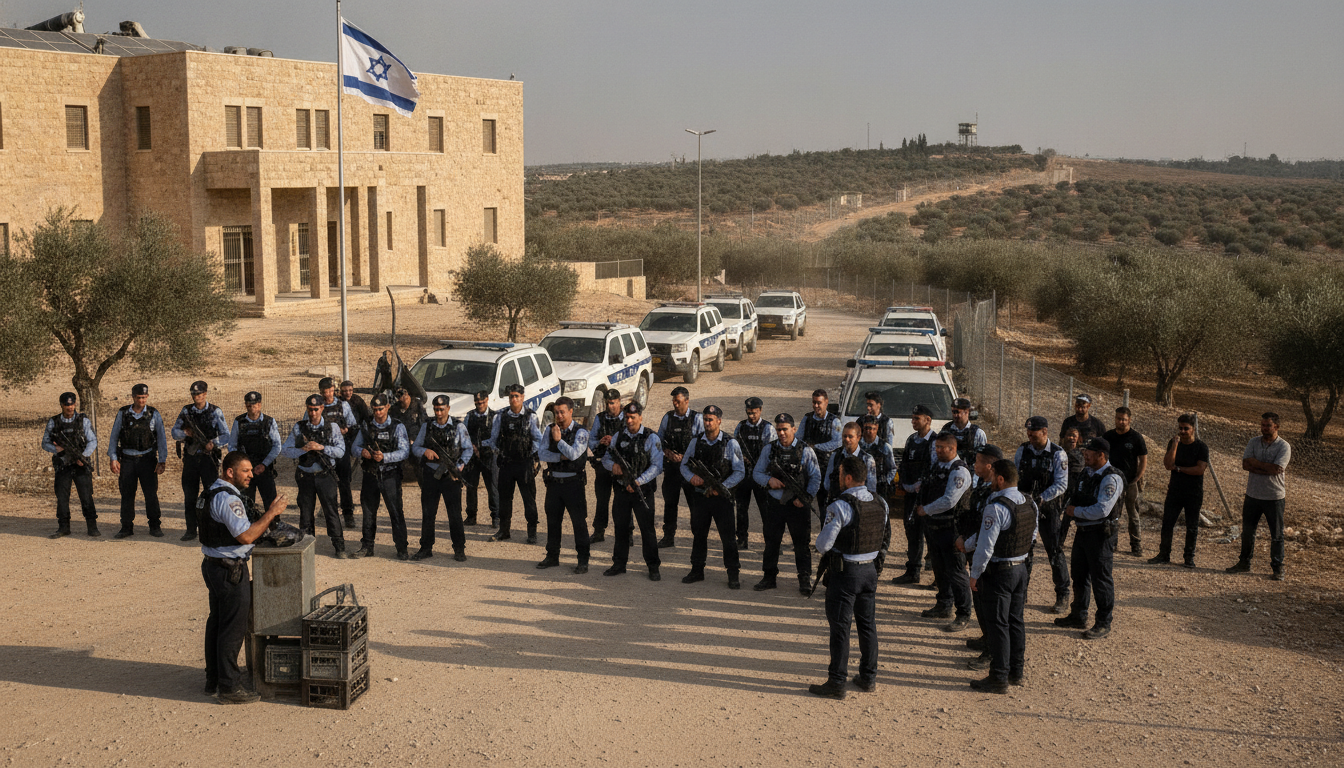
Israel’s defence minister, Israel Katz, has instructed the military to prepare a plan to transfer civilian law enforcement responsibilities in the occupied West Bank to the Israeli police. The decision, announced after criticism of the army’s response to settler action in Qusra, shifts day-to-day policing away from military authorities to a civilian force overseen by National Security Minister Itamar Ben-Gvir.
The Defence Ministry said the police would create a dedicated unit to handle these civilian matters, arguing the army should focus on counterterrorism rather than policing settlers. Supporters within the government describe the move as an administrative adjustment; opponents call it a sweeping policy change with far-reaching legal consequences.
Palestinian leaders call it de facto annexation
Palestinian officials, including senior Palestine Liberation Organization figures, condemned the order as an attempt to impose Israeli sovereignty across the West Bank. Hussein al-Sheikh described the measure as a direct violation of international agreements and an effort to institutionalize Israeli law and control over occupied territory.
Hamas and other Palestinian groups warned the decision provides legal cover for expanded settler protection and strengthens what they call a trajectory toward permanent annexation. Mustafa Barghouti and other political leaders framed the decision as part of a broader strategy to Judaize contested areas and displace Palestinian communities.
Legal scholars warn of altered status
Academic analysts and legal experts say transferring civilian law enforcement to Israel’s domestic police would fundamentally change the legal regime in the West Bank. Observers argue that replacing military occupation law with Israeli civilian mechanisms would erase the line between occupation and domestic jurisdiction, amounting to de facto annexation.
Experts caution that such a shift could relieve the military of obligations under international humanitarian law and subject Palestinians to a dual legal system. Several analysts suggest the change would complicate international responses and raise fresh questions about the applicability of Israeli civil law beyond recognized borders.
Settler violence and militia concerns
The policy shift follows incidents in which Israeli settlers besieged Palestinian homes and clashed with residents, prompting criticism of military restraint. Palestinian and Israeli commentators alike have accused elements within the security establishment of tolerating or enabling settler aggression, and some describe modern settler formations as quasi-militia groups.
Critics say placing policing powers in the hands of authorities aligned with far-right ministers risks formalizing protection for settlers and effectively deputizing violent actors. Those concerns are heightened by the prominent roles of ministers who have previously championed settlement expansion and hardline security measures.
Segregation and displacement worries
Human rights researchers and regional analysts warn that a civilian-policing model could entrench a dual legal framework in which different populations live under separate rules. They argue this could accelerate segregation, restrict Palestinian movement, and increase pressure on communities facing home demolitions and land appropriation.
Some experts use the term apartheid to describe the potential outcome, saying the combination of civilian law for settlers and occupation-era rules for Palestinians would create deeply unequal governance. Others say the policy may force many Palestinians to consider migration as their communities become isolated and access to services diminishes.
International reaction and diplomatic stakes
International responses have been mixed, with public condemnations of settler violence from several governments juxtaposed against continued diplomatic and security cooperation. Former United Nations officials and advocacy groups called the planned transfer illegal and urged concrete measures, including sanctions, should Israel proceed.
Analysts note the United States and other key partners play a central role in shaping outcomes, and they question whether verbal criticism will translate into actions that could alter Israeli policy. Calls for stronger international intervention reflect concern that piecemeal administrative changes on the ground will solidify a new political reality.
Possible legal and political outcomes
If implemented, the policing transfer could trigger legal challenges in Israeli courts and escalate tensions on the ground in the West Bank. Palestinian leaders have indicated they will raise the issue with international bodies and seek broader diplomatic pressure to reverse the policy.
Within Israel, the measure may deepen domestic political divides and prompt debate over the balance between security, civilian oversight, and settlement policy. The practicalities of policing mixed and highly contested areas, as well as the response of Palestinian communities, will shape whether the plan becomes a lasting change or a contested, reversible step.
The coming weeks will be crucial as plans are drafted and political actors on all sides weigh responses; observers stress the need for clear legal guidance and international attention to prevent further deterioration of the situation and to protect civilians.
