
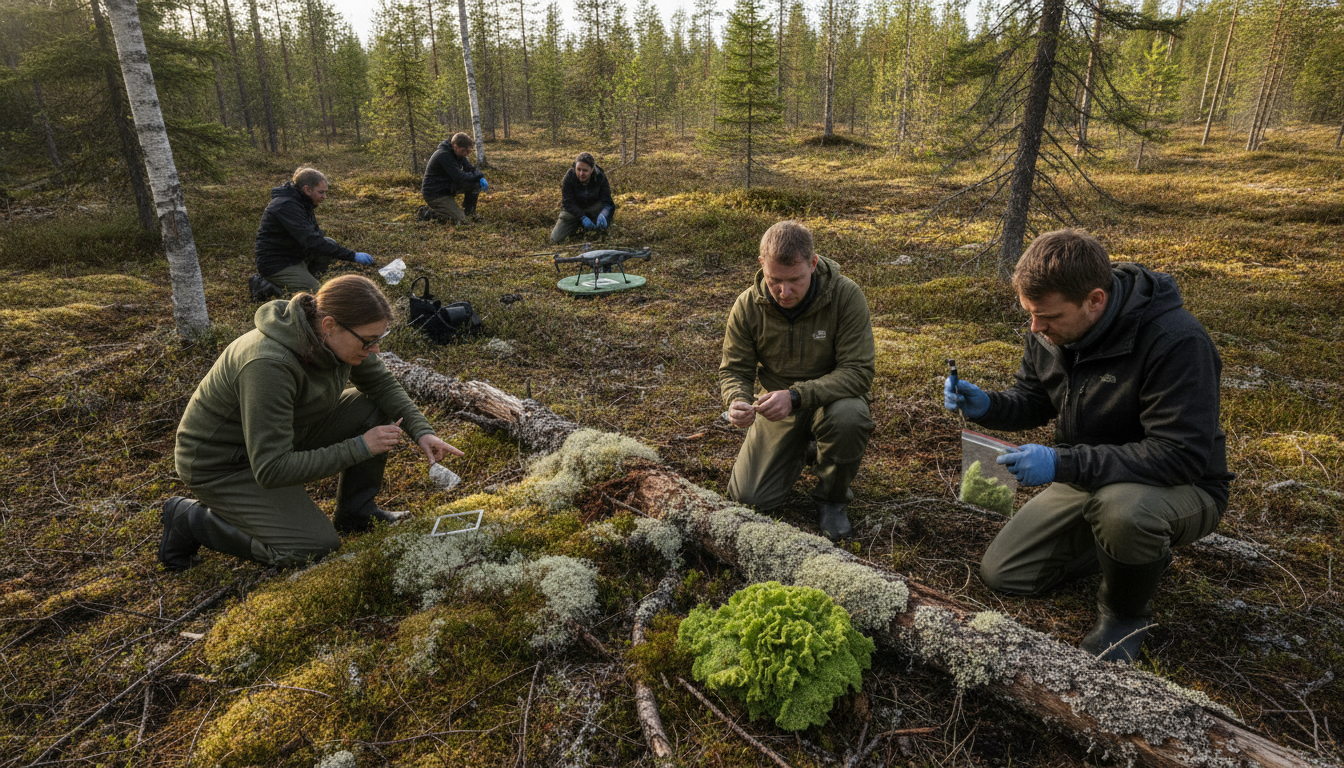
Missing species in restored forests reveal decades-long recovery gaps
Small mosses, lichens, algae and fungi are often still missing decades after habitat restoration, new research shows — a problem for ecosystem recovery.
A recent international analysis led by botanists including Ellen Macdonald finds that while tree cover and larger plants can return within decades, many of the smallest inhabitants remain scarce or absent for much longer. The phrase missing species in restored forests captures a growing concern among ecologists that regrown woodlands and replanted wetlands can look healthy while critical understory and microbial diversity lags far behind. Researchers warn the absence of these cryptic species can alter nutrient cycles, wildlife food webs and the long-term resilience of restored landscapes.
Study finds long lag for understory species recovery
The new synthesis reviewed data from boreal forests and comparable ecosystems to compare recovery trajectories after clearcutting and other disturbances. It found that broadleaf-dominated stands such as birch and aspen tended to regain much of their original plant community within about 25 years.
By contrast, conifer-dominated forests showed markedly slower recovery for understory organisms. Lichens, mosses and liverworts — groups collectively referred to as cryptogams — often required 85 years or more to approach pre-disturbance levels, and in some cases did not recover within the century of available records.
Lead researchers, including University of Alberta scientists, emphasized that the visible return of trees and birds can mask deep and long-lasting shortfalls in below-canopy biodiversity. The study highlights that standard metrics of recovery focused on canopy structure may overestimate how fully an ecosystem has been restored.
Researchers report hidden losses across restored habitats
The pattern of missing species in restored forests mirrors findings in other habitat types, including wetlands that have been drained and later rewet. Botanists who have examined restored bogs and marshes report robust bird and plant returns at the surface, but a persistent shortfall in microscopic and low-profile taxa such as desmid algae.
Scientists have coined terms like “dark diversity” to describe species that are expected in a site based on regional pools but are absent locally. Researchers warn that dark diversity can reflect local extirpations rather than simple sampling gaps, meaning that species once common in an area may no longer be present to recolonize restored habitat.
Field biologists report the contrast vividly: a restored wetland may teem with visible life — dragonflies, carnivorous plants, sphagnum mats — while the microscopic communities that underpin primary production and water chemistry remain impoverished.
Small organisms underpin ecosystem processes
Although diminutive and often overlooked, mosses, lichens, algae and fungi perform foundational functions in forest and wetland ecosystems. Algae and photosynthetic microbes contribute substantially to global primary production and are major drivers of oxygen and carbon fluxes in aquatic and terrestrial systems.
Mosses and liverworts regulate moisture and soil temperature, influence seedling microhabitats, and trap nutrients that support higher plants and invertebrates. Lichens provide food and nesting materials for wildlife and contribute to the slow release of essential minerals through weathering processes.
Fungi and microbial communities mediate decomposition and nutrient cycling, forming symbiotic relationships with tree roots that affect tree health, drought tolerance and carbon storage. When these groups are missing or simplified, ecosystem functions can shift, with cascading effects on food webs and landscape services.
Why many species fail to recolonize quickly
Several ecological and practical factors combine to make the return of small species slow and uncertain. Dispersal limitation is key: many cryptogams and microbes produce propagules that move only short distances, or rely on specific vectors that are absent or reduced in fragmented landscapes.
Habitat structure matters deeply. Old-growth features such as large-diameter trunks, deep shade, decaying coarse woody debris and complex bark textures create niches that take generations to recreate. After clearcutting or major hydrological alteration, those structural elements are often gone, leaving restored sites structurally unsuitable for specialists.
Microclimate and soil conditions also shift after disturbance. Ground temperature, humidity and light regimes can remain altered for decades, inhibiting establishment of species adapted to stable, cool, and shaded microhabitats. Changes in soil chemistry and loss of specialized mycorrhizal or bacterial partners further reduce the prospects for natural recolonization.
Missing species may slow broader recovery
The absence of cryptic taxa does not only represent a loss of biodiversity on paper — it can slow or change the course of ecosystem recovery. Reduced diversity among algae and microbial communities can alter primary production rates, oxygen availability and nutrient turnover in soils and waters.
That, in turn, affects food availability for invertebrates and the prey base for birds and amphibians, and it can change decomposition dynamics that influence carbon sequestration. Researchers caution that relying on canopy recovery as the sole indicator of restoration success risks underestimating the time and management needed to restore full ecological functionality.
Moreover, localized extinctions of small, specialized species reduce the regional pool available for recolonization elsewhere, potentially increasing the scale and permanence of biodiversity loss across landscapes.
Management options to reduce long-term gaps
The research points to several actionable changes in how forests and wetlands are managed to reduce the number of missing species in restored forests. Retention forestry practices — keeping patches of older trees and standing deadwood at the time of harvest — can preserve microhabitats and inocula for cryptogams and fungi.
Longer rotation periods and partial or selective harvests allow structural complexity to persist and rebuild, shortening the time required for habitat features that many small species depend on. In wetland restoration, prioritizing the re-establishment of natural hydrological regimes and substrate heterogeneity helps recreate the conditions desmid algae and other specialized taxa need.
Active translocation and assisted colonization have been proposed in cases where natural dispersal is unlikely to restore populations on reasonable timescales. Managers should weigh the ecological risks and benefits, and deploy such measures where evidence and monitoring indicate they can be effective.
Ex situ collections and targeted recovery efforts
Where in situ recovery is unlikely or too slow, scientists are expanding ex situ conservation efforts for microscopic and cryptic species. Culture collections and seed banks for algae, fungi and bryophytes act as living repositories that can be used for research and targeted reintroductions.
One large-scale initiative described by algal biologists maintains thousands of strains to preserve taxonomic and functional diversity that would otherwise be vulnerable to habitat loss. These resources offer a way to guard against outright extinction and to provide source material for restoration experiments.
However, reintroducing cultured organisms into the wild poses practical challenges, including ensuring genetic diversity, avoiding unintended ecological impacts, and matching organisms to appropriate microhabitats. Conservationists stress that ex situ work complements rather than replaces efforts to protect and manage intact habitats.
Research and monitoring priorities for resilient restoration
The findings underline the need to broaden restoration targets beyond visible vegetation and vertebrate fauna. Monitoring programs should include surveys of bryophytes, lichens, algae, fungi and soil microbes to generate a fuller picture of recovery trajectories.
Long-term studies are essential; cryptic groups often exhibit slow dynamics that short-term projects miss. Incorporating microhabitat metrics — deadwood volume, bark complexity, soil moisture regimes — into restoration planning helps predict which sites will support full biodiversity recovery and which will require intervention.
Funding agencies and land managers are being urged to support multidisciplinary research that bridges taxonomy, ecology and restoration practice. Improved baselines, regional species pools and clearer targets for cryptic biodiversity will help managers set realistic timelines and actions.
Restoring a forest or wetland that looks green and alive is a major achievement, but the work does not end when trees reach a target height or water returns to a marsh. Persistent gaps in the return of mosses, lichens, algae and fungi mean that many restored landscapes remain incomplete for decades, and that conservation strategies must account for the smallest species if recovery is to be truly successful.
The challenge is both technical and political: it requires changes in harvesting practices, long-term monitoring, targeted interventions where appropriate, and a willingness to value biodiversity beyond what is immediately visible. Only by addressing the missing species in restored forests and other habitats can restoration deliver the full suite of ecological services and the resilience that people expect from regenerated landscapes.
