
Alberta town halls set to face fierce public pushback over AI data centres
Albertans will press provincial town halls on AI data centres, citing concerns about Meta’s $13-billion Sturgeon County project, water use, power and consultation
A growing movement of residents and activists says it will make its presence felt at a pair of provincial town halls this month to protest AI data centres planned in Alberta.
Organizers led by a University of Alberta student say they intend to use the meetings to demand a halt to approvals and fuller public consultation before large-scale facilities proceed.
The dispute centers on a recently announced Meta facility in Sturgeon County and broader questions about water, electricity, environmental oversight and how the province is courting hyperscale developers.
Protesters plan to ‘flood’ the Sturgeon County hearing
Organizers are urging residents to attend the Aug. 20 hearing in Sturgeon County to voice opposition to the Meta project and other planned data centres.
The group’s leader described plans to occupy open-mic opportunities at the town hall and press elected officials and ministers for clearer answers.
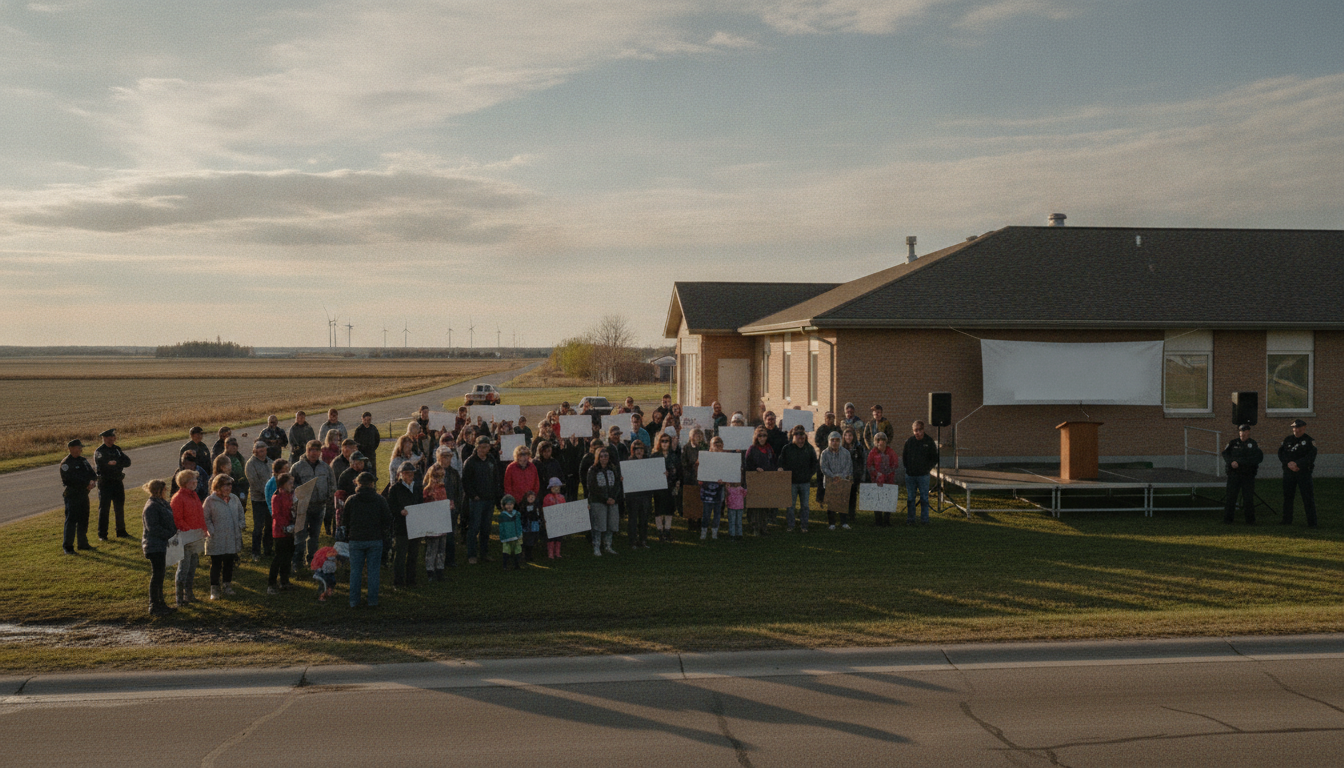
A rally earlier this month outside the county office drew several hundred people who said they felt blindsided by the approvals and short on meaningful consultation.
Many at that rally expressed frustration that approvals appeared to precede community engagement, and they want any remaining decisions paused until concerns are addressed.
Residents raise water, utility and noise concerns around Meta site
Local residents have pointed to the resource demands of hyperscale data centres, noting water and electricity as the main sources of anxiety.
Protesters worry that large cooling systems and continuous power draws will lead to higher utility bills for households and greater strain on local infrastructure.
The government has described Meta’s proposed facility as a more-than-one-gigawatt, $13-billion investment and has sought to reassure communities that environmental and resource reviews will be enforced.
Still, for many residents the explanations offered so far have not alleviated fears about changing local service costs or about daytime and nighttime noise associated with large mechanical operations.
Government frames town halls as fact-based outreach on data centres
The provincial government says the town halls, one of which is scheduled for Aug. 19 in Ponoka, are intended to answer questions about how data centres operate and what benefits they bring.
Technology officials have released online material explaining how facilities source power, manage water and undergo regulatory assessments prior to approval.
The minister hosting the events stressed that the sessions will let Albertans ask questions directly and receive information on grid impacts, local employment opportunities and possible community investments.
Authorities have also pointed to provincial processes such as reviews by the Alberta Utilities Commission for supporting infrastructure like power plants and transmission lines.
Economic pitch for hyperscale investment and the ‘concierge’ approach
The provincial government has created a so-called concierge service to help hyperscale developers navigate regulations and encourage them to choose Alberta.
Officials argue that the scale of investment offers jobs and could anchor long-term tech-sector growth in the province.
Supporters say on-site energy and planned connections to surplus grid power can make projects financially viable and attractive to global companies.
Critics counter that economic promises must be weighed against environmental costs and community consent, and that the public deserves a transparent accounting of projected local benefits versus long-term obligations.
Political response and opposition consultations escalate the debate
The Opposition NDP has launched its own consultation tour, arguing that the government has not sufficiently listened to local concerns.
The opposition says major projects must be clearly in the public interest, transparent and supported by affected communities before proceeding.
That stance highlights a widening political debate over how provincial authorities balance economic development with environmental stewardship and democratic engagement.
Premier-level support for the Meta announcement has intensified scrutiny from both municipal leaders and provincial critics, who say procedural shortcomings risk public trust.
Regulatory safeguards, environmental assessments and water licensing
Alberta officials emphasize that every proposed data centre will be subject to environmental assessments and conventional resource licensing prior to approval.
The government notes that water draws for industrial projects are reviewed under the Water Act, and that newly issued industrial licences are junior in priority within a basin.
Regulators also oversee utility proposals, including any new power plants, transmission lines or pipelines necessary to support a facility’s operations.
Questions remain, however, about how assessments will account for cumulative impacts across multiple centres and how long-term water and energy demands will be managed under drought or supply-constrained conditions.
The tech sector and some industry observers point to design choices that reduce local impacts, including closed-loop cooling systems that recycle water and hybrid energy sourcing that pairs on-site generation with grid supply.
For the Meta project, the government has said the company will use surplus grid power until a new natural gas-fired plant, identified as the Greenlight Electricity Centre, is scheduled to begin supplying power in 2030.
That arrangement has raised further questions about the timeline for new thermal generation and the role of emissions-intensive interim supply in enabling hyperscale facilities to come online.
Independent analyses have also noted that the global footprint of data centres is already substantial, prompting calls for comprehensive provincial strategies that address efficiency, emissions and resource resilience.
Community leaders say they want more than technical explanations; they are calling for binding commitments and clear monitoring mechanisms.
Residents seeking reassurances say they want legally enforceable conditions on water use, emissions limits, noise control and community benefit agreements.
Some municipalities have asked for revenue-sharing arrangements or local investment guarantees in exchange for hosting large facilities, arguing that long-term costs must be balanced by tangible local gains.
Others remain skeptical that such agreements can fully offset the perceived risks to rural landscapes and traditional land uses.
The University of Alberta student organizing protests has framed public engagement as a test of democratic process.
He and fellow activists say that genuine consultation should occur before approvals are granted, not after projects are effectively assured funding and political backing.
Organizers are pushing for a moratorium on further approvals until communities receive full information and time to evaluate trade-offs.
Whether provincial ministers will consider such a pause is a central question going into the town halls.
Industry proponents emphasize that hyperscale data centres can generate direct jobs during construction and operational roles afterward, in addition to indirect economic activity.
They also argue that hosting major facilities can position Alberta as a node in global digital infrastructure, attracting related investment and innovation.
The debate over local impact versus economic opportunity is likely to shape municipal decisions and provincial policy discussions in the months ahead.
For some local councils, the immediate challenge is how to reconcile constituent concerns with the prospect of substantial private capital entering their regions.
Environmental groups and some national researchers have drawn attention to the international scale of data-centre growth and the need for policy frameworks that account for energy and water footprints.
A recent academic study noted that Alberta has become a focal point for such development, amplifying the stakes of provincial decision-making.
That context has encouraged calls for regional planning that integrates resource constraints, conservation targets and contingencies for extreme weather events.
Advocates for stronger oversight say piecemeal approvals could produce cumulative effects that exceed the scope of single-project assessments.
As the town halls approach, both sides are preparing to make their cases to a skeptical public.
Organizers of protests plan to attend en masse and use open-mic time to press ministers for commitments, while government officials plan to present technical briefs and answer detailed questions.
Municipal and provincial officials will be watched closely for any sign that approvals could be revisited or adjusted in response to public input.
The outcome of the meetings may influence how future projects are proposed, reviewed and communicated to communities across Alberta.
Community sentiment suggests that the issue is about more than a single site; it reflects broader tensions over governance, resource allocation and how rural areas are integrated into a rapidly digitizing economy.
For many residents, the decision process feels like a referendum on who has a say in local futures and what trade-offs are acceptable in the name of economic development.
Going forward, transparent timelines for assessments, clear disclosure of projected resource use and binding local protections appear central to restoring public confidence.
How provincial leaders respond at the town halls will likely shape the immediate political and regulatory trajectory for AI data centres in Alberta.
Public hearings will offer details and may prompt further legal or municipal responses if residents believe processes have been flawed.
Observers say the government’s ability to demonstrate that approvals are based on robust evidence and genuine engagement will be crucial to easing tensions.
If widespread opposition persists, municipalities and stakeholders may pursue formal reviews or requests for additional safeguards through provincial regulators.
For now, the town halls will serve as the next public forum where the competing priorities of economic development, environmental stewardship and community consent are being contested.
The coming weeks will show whether dialogue at the town halls can bridge gaps between provincial plans and local expectations, or whether the protests will harden positions on both sides.
What is clear is that AI data centres are no longer only a technical or industry story; they have become a local governance and public-policy battleground in Alberta.
Stakeholders on all sides say their interests are serious, and they are preparing to press them in public forums and through regulatory channels.
How the province reconciles those interests could set a precedent for how Canada manages large-scale digital infrastructure in communities across the country.
