
Malawi qualify for first FIFA Women’s World Cup after 2-1 WAFCON quarterfinal win over Ghana
Rank outsiders Malawi qualify for their first FIFA World Cup after a 2-1 WAFCON quarterfinal win over Ghana; Cameroon eliminate defending champions Nigeria 1-0.
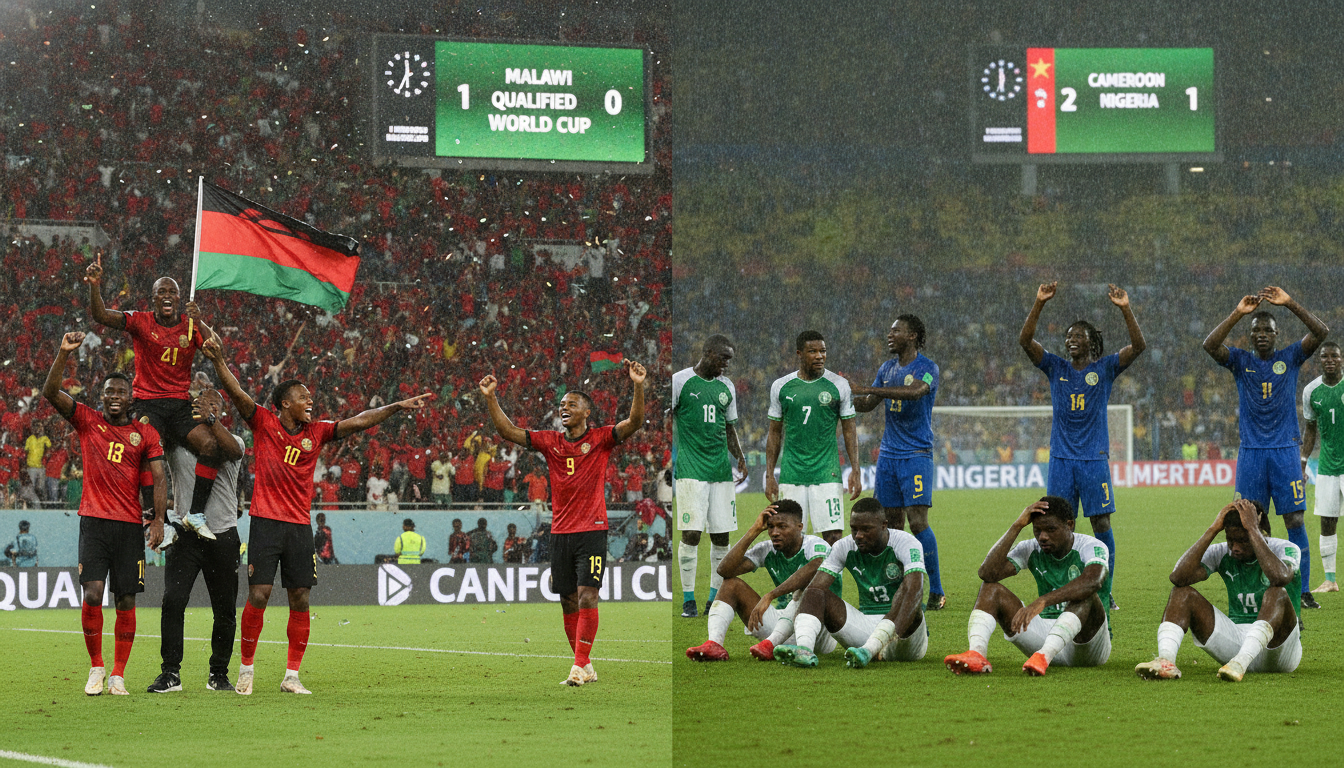
Malawi qualify for their maiden FIFA World Cup after a dramatic 2-1 victory over Ghana in Rabat on Sunday, securing a place in the Women’s Africa Cup of Nations semifinals and a spot at the 2027 tournament in Brazil. The result followed an early strike from Ghana but was overturned by a quick Temwa Chawinga equaliser and a late winner from Rose Kadzere in the 79th minute. The surprise win capped a remarkable run for a side ranked far below their opponents and guaranteed all four semifinalists automatic qualification for next year’s World Cup. Cameroon compounded the shock results in Casablanca, eliminating defending champions Nigeria 1-0 to join Malawi, Algeria and hosts Morocco in the last four.
Match turning points in Rabat
Malawi fell behind after seven minutes when Chantelle Boye-Hlorkah volleyed Ghana into an early lead, a confidence-boosting start for the higher-ranked side. Five minutes later the match was levelled when Temwa Chawinga’s shot took a deflection and crept over the line, erasing Ghana’s advantage and shifting momentum. The game settled into a tense midfield battle until the decisive moment arrived in the 79th minute. Rose Kadzere seized a chance on the edge of the area, broke into the box and fired past goalkeeper Cynthia Konlan to register what proved to be the winner.
Malawi’s unlikely WAFCON journey
Before the tournament many saw Malawi as rank outsiders, having been untested at this level and holding a low world ranking. Their group stage performance was a mix of highs and lows: a shock victory over 10-time WAFCON champions Nigeria, a win against Egypt and a defeat by Zambia, yet they advanced thanks to goals scored. That resilience and capacity to upset established teams proved decisive in the quarterfinal, where composure late in the match enabled them to take the prize. The result marks the country’s first qualification for a FIFA Women’s World Cup and a milestone for Malawian football development.
Cameroon halt Nigeria’s title defence in Casablanca
In Casablanca earlier on Sunday, Cameroon produced an upset by beating defending champions Nigeria 1-0, courtesy of a 19-year-old Myriam Nyadjou free-kick. Nyadjou’s rising strike blazed past Chiamaka Nnadozie and into the corner, settling a tight game in the first half. Nigeria pushed hard for an equaliser late on but were repeatedly denied by the Cameroonian goalkeeper Michaely Bihina, whose saves preserved the narrow lead. The defeat ends Nigeria’s bid to retain the continental crown and hands Cameroon a rare victory over the Super Falcons in WAFCON history.
Implications for World Cup qualification
All four teams remaining in the semifinals — Malawi, Algeria, Morocco and Cameroon — now clinch places at the 2027 FIFA Women’s World Cup in Brazil. That automatic qualification raises the stakes at this WAFCON stage, as the quarterfinal winners ensured both continental glory and the chance to compete on football’s biggest stage. Teams eliminated at the quarterfinal stage will not be out of contention entirely; they will enter African and inter-continental playoff routes that offer another pathway to the World Cup. For Malawi, this direct route secures their place among the global elite and promises increased investment and attention back home.
Tactical observations and key performers
Malawi’s approach combined defensive organisation with rapid transitions, allowing threats like Chawinga and Kadzere to capitalise on limited chances. The early equaliser silenced Ghana’s momentum and forced the West Africans to alter their game plan, while Malawi became more adventurous as the match progressed. In the Cameroon–Nigeria match, set-piece execution proved decisive, with Nyadjou converting from a dead-ball situation and Bihina producing several critical saves. Nigeria’s late substitution of high-profile striker Asisat Oshoala failed to change the outcome, highlighting the narrow margins at this stage.
Next steps: semifinals and broader fallout
Malawi will travel to Casablanca to face Algeria in Wednesday’s semifinal, while hosts Morocco are scheduled to meet Cameroon in Rabat on the same day. Both fixtures will not only decide who plays in the WAFCON final but also shape preparations and seedings ahead of next year’s World Cup. For Malawi, the immediate priorities will be recovery, tactical refinement and managing expectations as attention turns to the continental showpiece. For Ghana and Nigeria, the focus shifts to regrouping and exploring the playoff avenues that remain open to them.
Supporters in Malawi and across the region are likely to celebrate this unexpected breakthrough, and football authorities will monitor the potential boost to participation and funding. The WAFCON quarterfinals produced two significant upsets that reshuffle the continental order and underline the growing competitiveness of African women’s football. The semifinal matchups will test whether these recent shocks herald a wider shift or are singular moments in an otherwise familiar hierarchy.
The stage is set for a high-stakes semifinal round that carries both continental silverware and World Cup dreams, with Malawi’s historic qualification standing out as one of the tournament’s defining stories.
