
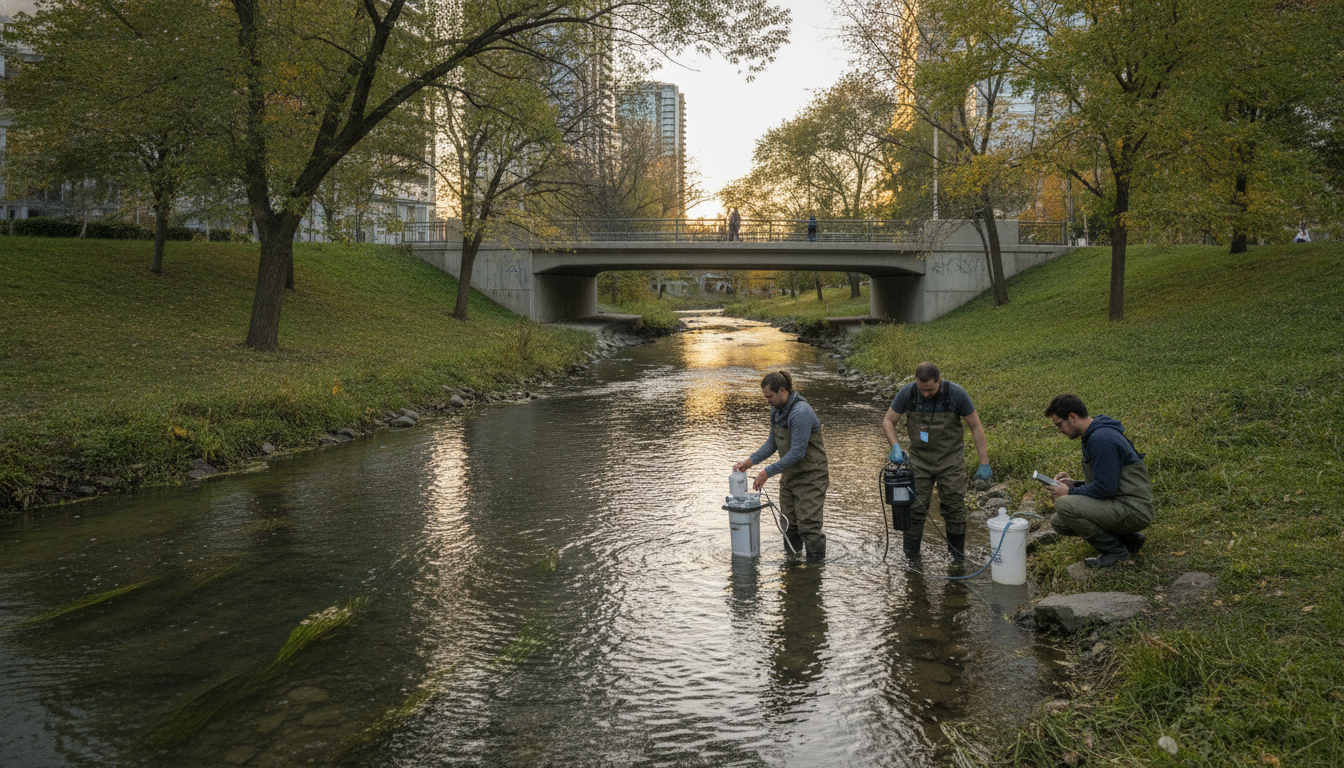
New surveys reveal hidden freshwater biodiversity in Ontario’s urban creeks
New DNA and electrofishing surveys uncover freshwater biodiversity in Ontario’s urban streams, revealing rare species, invasives and urgent conservation priorities.
Urban creeks across Ontario are yielding a surprising roster of life as scientists combine environmental DNA sampling and electrofishing to map freshwater biodiversity previously missed by traditional surveys.
Researchers say the work is uncovering hundreds of aquatic invertebrates and dozens of fish species — including rare and endangered animals — in waterways running through suburbs and city parks.
The findings highlight both the richness of life in these small rivers and the urgency of targeted conservation measures to arrest declines hidden beneath the water’s surface.
Scientists document hidden freshwater biodiversity in Ontario creeks
A recent survey led by researchers at the University of Guelph used environmental DNA, or eDNA, to sample water at multiple sites across Ontario rivers and detected a far broader array of aquatic organisms than standard methods did.
eDNA analysis reads genetic traces organisms shed into water and allowed the team to identify hundreds of invertebrate species that had not appeared in conventional netting or visual surveys.
Field teams working with conservation groups also used electrofishing to temporarily stun and count fish in urban streams, producing complementary data on species presence and abundance.
DNA and electrofishing reveal more species than standard methods
Environmental DNA and electrofishing are proving to be powerful, complementary tools for assessing stream life because they capture different parts of the ecosystem.
eDNA can detect small, cryptic and transient organisms from a single water sample while electrofishing provides live, measurable specimens to validate species identity and population structure.
In the Ontario survey, only a small number of species found by traditional methods were missed by the DNA tests, underscoring how much diversity can be overlooked when surveys rely solely on hands-on collection.
Urban streams host endangered dace, reintroduced salmon and surprising residents
Contrary to common assumptions, creeks running beside roads and subdivisions often host sensitive and at-risk species that conservationists consider priorities for protection.
Field teams documented species such as small-bodied dace and mottled sculpins in streams that appear unremarkable from the bank, and municipal restoration programs are even reintroducing Atlantic salmon to waters where they were locally extirpated a century ago.
These findings emphasize that urban and suburban waterways are not biologically vacant corridors but can be refuges for species that survive despite human pressures.
Scientists warn of a ‘silent’ mass extinction in freshwater systems
Researchers compiling global freshwater data have concluded that a substantial portion of aquatic animals face elevated extinction risk, a trend experts describe as largely out of sight and out of mind.
Freshwater species are declining at rates that, in some analyses, exceed those of terrestrial animals, driven by pollution, habitat fragmentation, invasive species and hydrological changes.
Regional specialists note that North America has already recorded many historical extinctions and that hundreds more freshwater mussels, fishes, crayfishes and amphibians remain at risk without focused monitoring and management.
Ecosystem roles of mussels, insects and crayfish explained
Scientists stress that each species lost from rivers and lakes takes a functional role with it, and those losses can cascade through food webs and water quality processes.
Native freshwater mussels act as natural filters and help oxygenate sediments, while insect larvae such as mayflies and caddisflies are an essential food source for fish during critical life stages.
Crayfish and other benthic animals recycle nutrients and shape habitat structure, making the presence or absence of these groups a direct indicator of stream health and resilience.
New methods make freshwater life measurable and manageable
One of the central messages from researchers is that conservation cannot advance without accurate information about what lives where and in what numbers.
eDNA provides a scalable approach for broad inventories, allowing managers to detect rare or localized species with relatively little field time, while electrofishing offers the demographic and physiological data needed to assess population condition.
Together, these techniques let conservationists identify priority sites for protection, track the success of restoration actions and detect the spread of invasive organisms before they become entrenched.
Invasive species, pollution and dams remain the dominant threats
Local scientists point to a familiar suite of pressures that have driven freshwater declines for decades: polluted runoff from urban and agricultural land, the spread of non-native species, and river fragmentation caused by dams and culverts.
In many waters, native crayfish and mussels are being supplanted by invasive relatives or by zebra and quagga mussels that alter food webs and substrate conditions.
The cumulative effect of these stressors often goes unnoticed by communities because surface waters can appear intact even as species composition shifts dramatically beneath the surface.
Conservation success stories and policy measures offer a roadmap
There are tangible examples where active intervention has reversed declines or improved connectivity, showing what is possible with coordinated action.
Removal of obsolete dams has restored migratory routes for fish in several watersheds, and tighter controls on ballast water and other pathways have reduced introductions of new invasive species in the Great Lakes region.
Reintroduction projects for mussels and targeted restoration of spawning habitat for fish demonstrate that recovery can occur when science, funding and community engagement align.
Municipal and community actions that protect freshwater biodiversity
Local governments and watershed groups can reduce runoff pollution through green infrastructure, stricter erosion and sediment controls, and by protecting vegetated buffers along streams.
Restoring natural channel form, replacing perched culverts and removing unnecessary barriers improve habitat connectivity and allow fish and other species to access critical life-stage habitats.
Community science programs and public outreach help residents recognize the value of their nearby creeks and can generate volunteer monitoring, invasive-species reporting and stewardship that amplify professional conservation efforts.
Many biologists emphasize that public awareness is central to long-term protection: people who know what lives in nearby water are more likely to support policies and behaviours that reduce harm.
When residents encounter a mottled sculpin or learn that tiny mussels are filtering water on their behalf, abstract environmental values become concrete incentives for local action.
Educational programs tied to eDNA results or electrofishing demonstrations can translate scientific findings into everyday stewardship practices like reducing pesticide use and properly disposing of yard waste.
Monitoring that combines modern genetic tools with traditional field methods also creates early-warning systems for invasions and pollution events.
Rapid eDNA screening can flag new arrivals or declines at a stage when eradication or targeted response is still feasible, while periodic electrofishing surveys track population trends over time.
Integrating these approaches into routine municipal monitoring would give decision-makers better data with which to prioritize investments and adapt management as conditions change.
Funding and policy levers at provincial and federal levels remain important to scale up successful local interventions.
Grants for watershed restoration, incentives for agricultural best practices and regulatory measures to limit toxic runoff can reduce multiple stressors simultaneously.
Coordinated policy combined with clear, location-specific monitoring plans helps ensure that investments yield measurable biodiversity gains rather than merely symbolic improvements.
The science shows both urgency and hope: freshwater biodiversity is under threat but not beyond recovery where political will, community engagement and sound science are applied.
Knowing what lives in rivers and streams is the first step toward protecting those species and the services they provide to people and ecosystems.
As eDNA and electrofishing broaden the lens on urban waterways, conservation planners and citizens alike can make more informed choices to sustain the hidden, vital life beneath the water’s surface.
