
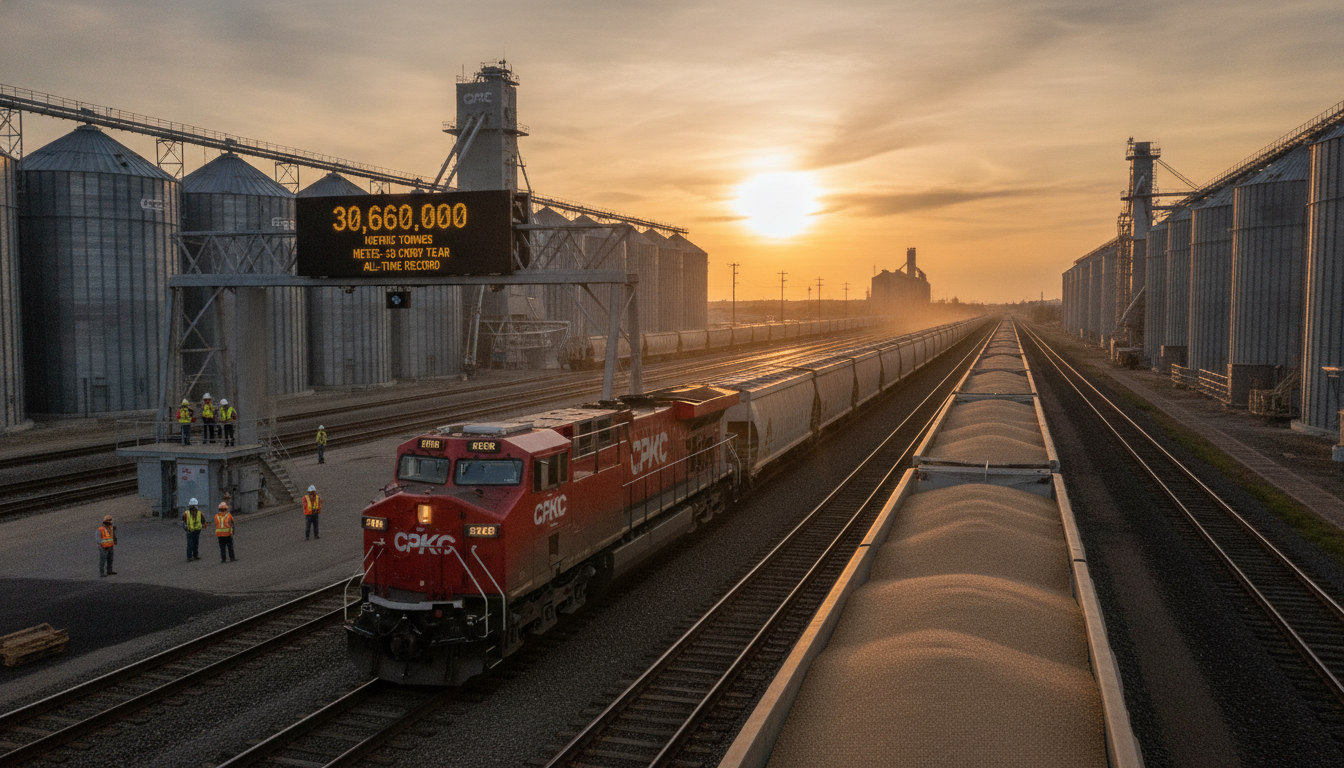
CPKC sets new record, hauling 30.66 million tonnes of Canadian grain in 2025–26
CPKC reported hauling 30.66 million metric tonnes of Canadian grain in the 2025–26 crop year, surpassing the 2020–21 record and marking a 20% increase over the five-year average.
Record Figures and Context
Canadian Pacific Kansas City recorded 30.66 million metric tonnes of grain and grain products moved during the 2025–26 crop year, the railway said, exceeding the previous 2020–21 high by roughly 72,500 tonnes.
The company described the total as about 20 percent above its five-year average, underlining a notable uptick in volume handled across its network.
Monthly throughput reached new highs in several months, with CPKC noting best-ever performances in January, February, April, May and June of the crop year.
Those consecutive monthly gains helped drive the annual total and signaled a sustained operational momentum through the season.
Operational Drivers Behind the Record
CPKC attributed the larger volumes to improved train efficiency and greater system capacity that allowed longer and fuller trains to move grain more consistently.
The railway cited coordinated investments across the supply chain—particularly in facilities capable of handling 8,500-foot trains—as a key factor in unlocking throughput gains.
Upgrades to track, signalling and terminal operations also supported higher daily handling rates, the company said, reducing bottlenecks that have historically constrained grain flows.
Combined, those operational changes shortened dwell times and increased the amount of grain each train could deliver to export terminals and domestic markets.
Shipper and Elevator Upgrades
Grain handlers and elevator operators were singled out as central to the increase, with new or retrofitted terminals allowing larger trains to load and depart more quickly.
CPKC pointed to customer investments in 8,500-foot-capable elevators as a principal enabler of the record haul, reflecting a broader industry shift toward infrastructure that supports longer, higher-capacity movements.
Those elevator improvements permit more efficient unit trains and reduce the number of daily train cycles needed to move the same volume, easing pressure on car supply and terminal congestion.
Industry observers say the alignment of rail and elevator capacity is critical to sustaining higher export volumes, particularly during peak shipping windows.
Capital Commitments for 2026–27
In its July 31, 2026 grain service outlook, CPKC outlined multi-year capital plans aimed at expanding capacity further for the 2026–27 crop year and beyond.
The railway has committed to purchasing more than $500 million in high-capacity hopper cars and over $1 billion in new locomotives as part of the program, investments intended to increase the availability of equipment and improve reliability.
The equipment purchases are designed to support longer trains and more continuous service, addressing both car and motive-power constraints that can slow grain cycles.
CPKC said the new assets will be phased into operations under a planned rollout intended to limit disruption while increasing fleet capability.
Route Expansion and Market Access Measures
Alongside rolling stock purchases, the company said it is broadening route options and market access for Canadian grain shippers in the upcoming crop year.
Expanded routings and scheduling flexibility are intended to connect producers and processors with a wider set of domestic and export terminals, offering alternative paths when congestion or demand spikes occur.
The strategy reflects a focus on resiliency, with multiple corridors and terminal access points helping to smooth seasonal surges and reroute traffic when necessary.
Rail executives described the changes as part of a longer-term plan to diversify service offerings and support agricultural customers’ access to competitive markets.
Implications for Canadian Agriculture and Exports
Rail haul records can translate into faster deliveries to ports and processors, potentially improving Canada’s competitiveness in global grain markets when combined with port handling capacity.
However, capacity gains on rail must be matched by terminal and maritime capacity to ensure the full supply chain benefits are realized and cargoes move to vessel without delay.
Producers stand to benefit from reduced transit times and more predictable service windows, which can lower storage costs and improve pricing opportunities during the marketing year.
Stakeholders caution that sustained performance will require continued coordination across railways, grain handlers, ports and exporters to manage seasonal peaks and equipment cycles.
CPKC’s announcement marks a significant operational milestone for the railway and its agricultural customers, and it sets a baseline for the company’s planned investments to support the 2026–27 crop year.
The railway’s reported performance underscores how targeted capital spending and coordinated infrastructure upgrades can increase throughput, but the ultimate test will be how those investments perform across a full shipping season when export demand and terminal operations are both operating at scale.
