
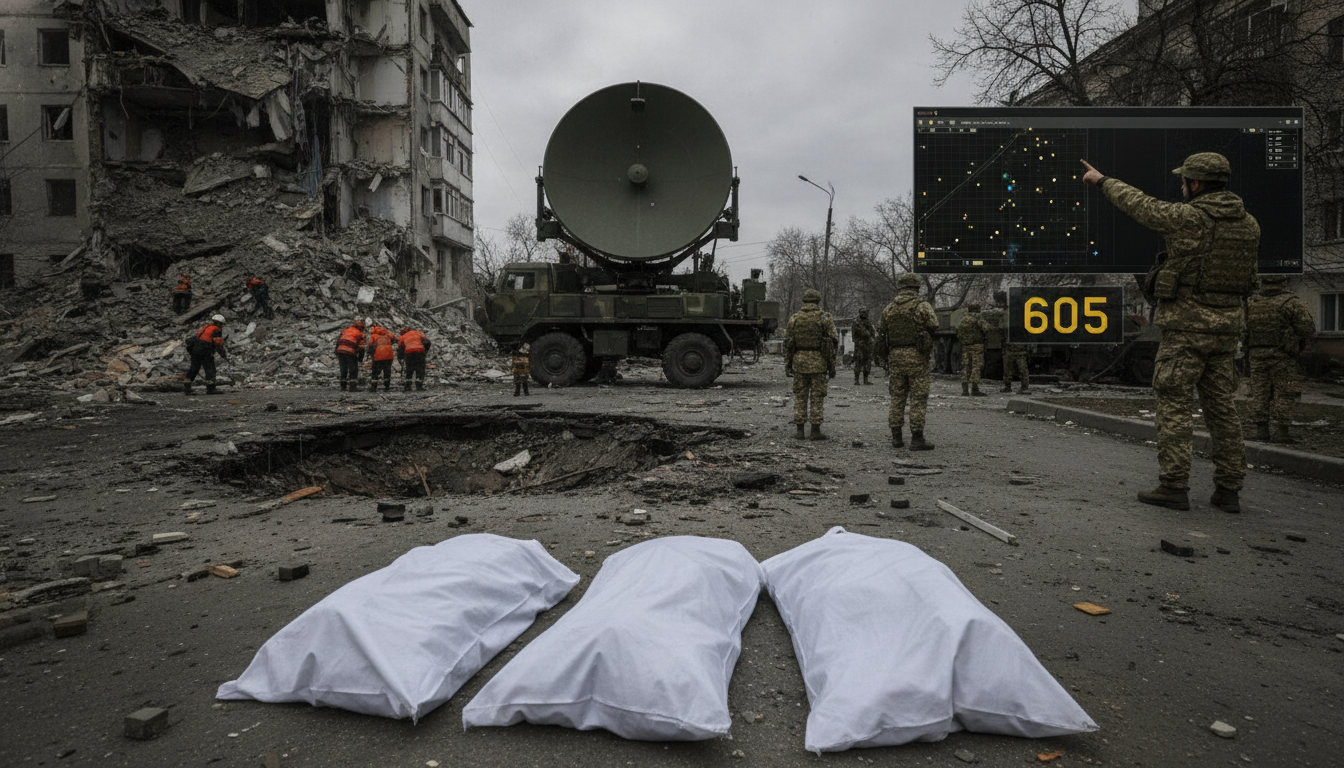
Three killed in Russian strikes on Balaklia as Moscow reports downing 605 drones
Three killed in Russian strikes on Balaklia, Kharkiv region, as Moscow says it shot down 605 Ukrainian drones and reports minor damage to a Wildberries logistics site.
Three people were killed in Russian bombardments overnight in Balaklia, a town in Ukraine’s Kharkiv region, local officials said, as Moscow reported it had shot down 605 Ukrainian drones across its territory. Vitalii Karabanov, head of Balaklia’s military administration, posted on Telegram that a woman was killed when a strike hit a private house and that rescuers were clearing debris and battling a fire. He added that a separate strike nearby killed a man and a woman close to another house, bringing the confirmed death toll to three. The attacks come amid intensified cross-border strikes that have increased civilian casualties on both sides of an otherwise static front.
Details of the Balaklia strikes
A first strike struck a private residence in Balaklia, setting the building alight and prompting an immediate response from local emergency teams. Karabanov said that firefighters and rescue crews were on the scene, extinguishing the blaze and searching for survivors amid scattered debris. The second impact occurred near another individual house and resulted in two additional fatalities, according to the local administration. Officials have not released the identities of the victims pending family notifications.
Emergency response and local impact
Emergency services in the Kharkiv region reported deploying teams to secure the sites and provide medical aid to those injured in the overnight strikes. Roads around the affected neighbourhoods were cordoned off while investigators documented the damage and cleared unexploded ordnance. Local authorities warned residents to remain vigilant as aftershocks from nearby strikes and unexploded munitions posed ongoing risks. Relief efforts have focused on temporary shelter and basic needs for those displaced by the incursions.
Russian defence ministry statement on drones
Separately, the Russian defence ministry said its air-defence systems had intercepted and destroyed 605 Ukrainian drones overnight over more than 20 of its regions and the annexed Crimean Peninsula. The ministry’s statement said the drones were shot down before causing significant damage, a claim that Moscow routinely repeats after drone and missile incidents. Independent verification of the total number of intercepted UAVs is difficult amid the fog of war and competing narratives from Ukrainian and Russian sources. The tally, if accurate, would mark one of the largest single-night drone engagements reported by Russian authorities during the conflict.
Reported damage to Wildberries logistics centre in Tver
Among the sites Moscow cited as being affected was a logistics hub belonging to Wildberries, the Russian e-commerce giant, in the Tver region northwest of Moscow. Regional officials, including governor Vitali Koroliov, wrote on Telegram that debris from a downed drone caused slight damage to the facility’s façade and that there were no reported injuries. The company’s logistics operations in the area were described as only minimally affected in preliminary local statements. Such claims of damage to commercial infrastructure have been increasingly invoked by both sides as justification for strikes and counter-strikes.
Widening pattern of strikes on infrastructure
Ukrainian officials have acknowledged an intensification of operations targeting facilities inside Russia and in occupied territories, including logistics sites and energy infrastructure, as Kyiv seeks to degrade supply and command links. Analysts say that while the ground front has largely stabilized, attacks and counterattacks by long-range fires, missiles, and drones have grown in frequency and scale. Civilian infrastructure and non-military facilities have repeatedly suffered collateral harm in these exchanges, raising concerns from humanitarian groups. Both sides continue to present differing accounts of intent and targets, complicating independent assessments.
Humanitarian concerns and civilian toll
More than four years into the conflict, the civilian toll continues to mount as both Ukrainian and Russian forces exchange long-range strikes across front lines and into rear areas. Local officials and aid organisations warn that repeated bombardments hamper emergency response and increase hardship for civilians already displaced by earlier fighting. Health and social services in border regions such as Kharkiv face strains from repeated surges in casualties and damage to housing stock. International agencies have repeatedly called for respect for the laws of armed conflict, citing rising civilian deaths and infrastructure damage.
The situation in Balaklia underscores the persistent dangers facing towns near the front and the wider risks created by escalating drone and missile use on both sides. Authorities in the Kharkiv region continue rescue and recovery operations while monitoring for further attacks, and Moscow’s claims of mass drone interceptions add a new element to the ongoing confrontation. As investigations proceed and official tallies are updated, humanitarian and security implications for civilians in the region are likely to remain acute.
