
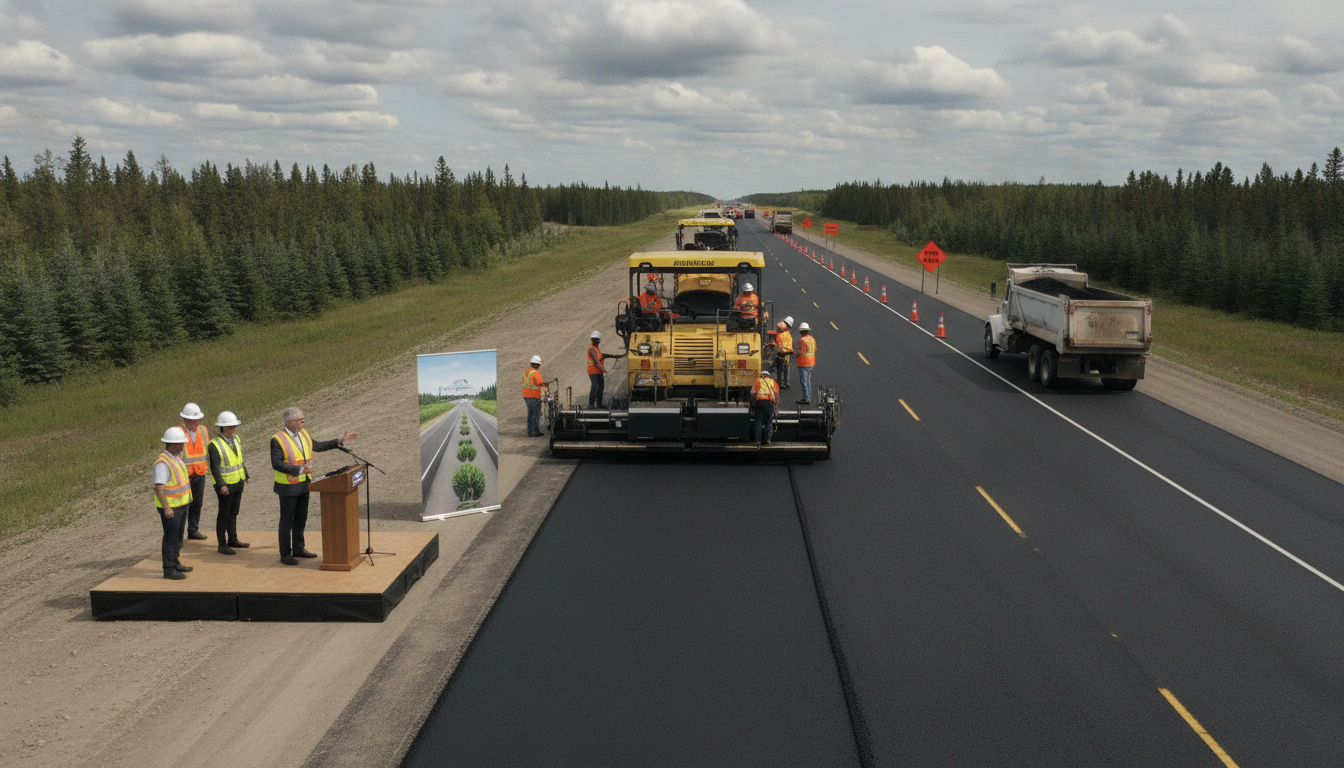
Paving begins on 10-km stretch of Highway 63 as $15M repair plan moves to action
Paving has started on a 10-km stretch of Highway 63 near Fort McMurray, the first step in a $15-million repair program aimed at improving safety and road conditions.
Work crews began resurfacing on Monday, August 3, 2026, marking the first visible action from a provincial commitment made in July 2026 to address long-standing deterioration along the 434-kilometre corridor between Fort McMurray and Edmonton. The targeted paving project covers about 10 kilometres and is expected to be completed within two weeks, with daily construction hours from 9 a.m. to 9 p.m.
Paving work begins on 10-kilometre stretch of Highway 63
Contractors mobilized on site at the start of the week to lay new asphalt and repair failing pavement sections that had prompted mounting public concern. Officials said crews will work in both directions through Fort McMurray between Beacon Hill Drive and the north side of the Confederation Way interchange. Drivers should expect lane shifts and temporary closures as resurfacing and associated preparatory work proceed.
Scope, schedule and traffic impacts
The 10-kilometre paving effort is limited in scope but intended as a rapid response to visible surface damage that has compromised travel safety and comfort. Work will run daily for approximately two weeks, with the contractor operating within the 9 a.m. to 9 p.m. window to balance progress and local traffic needs. Motorists are being warned about delays and advised to allow extra travel time, obey traffic controls and watch for reduced speed limits through the work zone.
$15-million commitment behind the work
The paving is the first phase of a broader $15-million provincial investment announced in July 2026 aimed at repairing and maintaining Highway 63. Officials described the funds as targeted maintenance to address urgent pavement repairs and safety concerns while longer-term planning for comprehensive upgrades continues. The allocation follows months of public pressure and local-organized repair efforts calling attention to chronic road degradation.
Community response and social media reaction
Residents and commercial drivers expressed relief as crews moved in, sharing photos and praise on local social media channels. One Fort McMurray resident posted on Facebook that the sight of active crews was "long overdue" and reflected months of frustration from people who rely on the highway for work and family travel. Commercial operators and local businesses have emphasized the importance of a reliable route for heavy industrial traffic supporting the regional economy.
Safety history and the ‘highway of death’ label
Highway 63 has carried a reputation for danger for more than two decades, a grim reputation shaped by several fatal collisions and repeated calls for safety improvements. The road earned the moniker "highway of death" in the early 2000s after multiple deadly crashes, and memorial events have continued to remind officials and the public of lives lost. Safety advocates say resurfacing is a necessary step but must be followed by investments in passing lanes, guardrails, signage and long-term pavement rehabilitation.
Public protests, pothole repairs and political pressure
Residents organized a community pothole repair effort in June 2026 that underscored local impatience with the pace of government action. That grassroots response, along with media coverage and political advocacy, helped accelerate the province’s pledge of funding and the rapid deployment of crews in August. Municipal leaders have urged the provincial government to produce a multi-year maintenance plan for the entire 434-kilometre corridor to prevent recurring deterioration.
What motorists and industry should expect in the coming weeks
Travelers should prepare for intermittent delays and obey posted detours as crews complete paving, line painting and shoulder repairs along the work segment. Heavy industrial traffic, including trucks serving the oilsands, will continue to use the corridor and may be subject to restrictions or temporary reroutes to protect workers and equipment. Motorists are advised to drive cautiously through active work zones and to anticipate changing traffic patterns, especially during peak commute periods.
Final paving on this initial segment is slated to wrap up in roughly two weeks from the August 3 start date, after which officials say they will evaluate results and plan follow-up maintenance. Residents and regional leaders say they will continue to press for sustained investment across Highway 63 to address safety, capacity and long-term pavement resilience.
