
Airbus investment accelerates Landing Zones’ Alberta drone expansion
Airbus investment accelerates Landing Zones’ Alberta drone expansion, scaling production of the Eagle supersonic target drone and promising jobs, exports and defence partnerships.
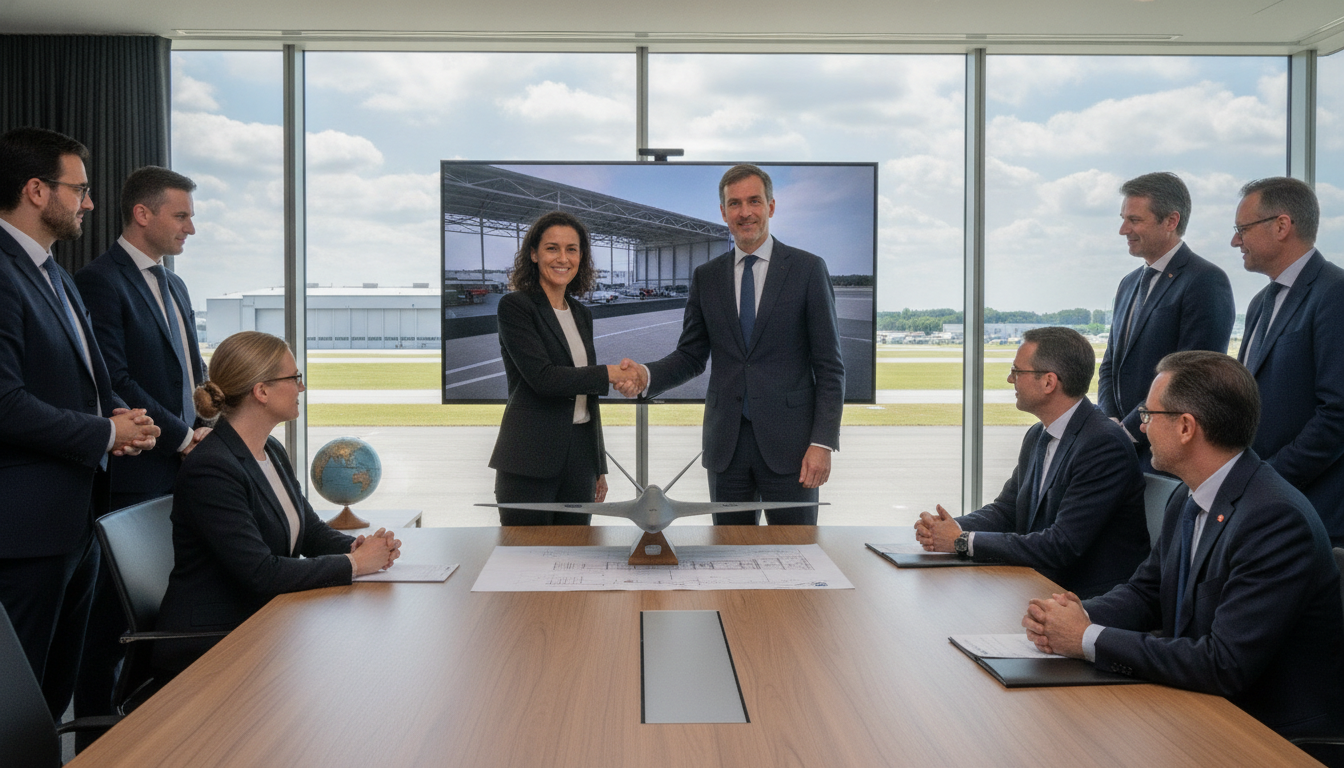
Landing Zones, a Medicine Hat-based drone manufacturer, announced a strategic partnership with Airbus that will expand the company’s capacity to produce high-speed target drones used in weapons-system testing. The deal, whose financial terms were not disclosed, gives Airbus a board seat and immediate access to Landing Zones’ technology and customer channels. Company executives say the partnership will rapidly increase staff and accelerate new variants of the Eagle drone.
Airbus deal and company growth
Landing Zones said the Airbus agreement will enable a major ramp-up in operations and workforce in southern Alberta over the next two to three years. Officials expect headcount to rise substantially, with management describing a likely move past 100 employees within a year as realistic. Details about exact investment figures and program timelines were withheld from public disclosure for security and commercial reasons.
Airbus will take a governance role through a board seat, which Landing Zones expects will deepen ties to multinational customers and fast-track procurement conversations. The partnership follows recent support from Canada’s defence-focused StrongNorth Fund and reflects rising investor interest in the province’s aerospace and defence ecosystem.
Eagle drone capabilities and mission profile
Landing Zones’ flagship Eagle drone is designed to simulate high-speed airborne threats for defence testing and training. Company sources describe the vehicle as capable of approaching and, in some configurations, exceeding transonic speeds to mimic fast-moving targets and munitions. The platform is tailored to validate ship‑ and land‑based defensive systems under realistic threat profiles.
Defence customers use such target drones to exercise integrated air and missile defence suites and to verify the performance of on-board ship sensors and interceptors before they are deployed operationally. Landing Zones has positioned the Eagle as a tool for navies and allied forces to ensure multi-billion-dollar platforms perform as intended under stress.
Why Medicine Hat matters for testing
Landing Zones is headquartered in Medicine Hat, Alberta, a choice company leaders say is strategic rather than incidental. Proximity to Canada’s Suffield Research Centre and expansive testing ranges gives the firm access to airspace and instrumentation required for high‑speed trials. That local testing infrastructure has been a key factor in the company’s product development and exportability.
Executives argue that Alberta’s physical testing assets, combined with regional engineering expertise, create conditions not commonly found in larger urban centres. The result is a cluster effect: smaller firms, research facilities and military ranges coalescing to support iterative development of advanced unmanned systems.
Export customers and international demand
Since its founding in 2022, Landing Zones has exported systems to several NATO members and allied partners, with confirmed sales in countries across Europe and Asia. Company representatives say their drones have been purchased by customers in Japan, Sweden, Norway and South Korea, among others. These sales underline persistent international demand for realistic targets to evaluate modern air-defence systems.
Industry observers note that a European aerospace heavyweight taking an equity or partnership stake typically signals both market validation and a pathway to broader procurement pipelines. For Landing Zones, the Airbus relationship could open doors to programs in markets where Airbus already has established defence and government contracts.
Regional industry response and investment climate
Alberta’s aviation and defence community welcomed the deal as part of a string of recent investments by major incumbents. Local industry groups and private investors described the move as evidence that global aerospace firms are increasingly looking to Alberta for autonomous systems and defence innovation. Past announcements, such as collaborations involving other international defence primes, are seen as contributing to a maturing provincial cluster.
The partnership comes as Ottawa continues to elevate defence spending levels and expand industrial funding mechanisms intended to grow domestic capacity. That broader policy shift has given Canadian suppliers new leverage when engaging with multinational integrators and export customers.
Civilian applications and product diversification
While the Airbus partnership is aimed squarely at defence workflows, Landing Zones says some Eagle variants can serve scientific roles, carrying instrumentation for upper‑atmosphere sampling and weather measurements. Company leaders portray the platform as versatile enough to support both national security and civilian science missions, which may broaden market opportunity and revenue stability.
Executives also emphasized that faster commercial development cycles and increased manufacturing scale will allow the firm to introduce new models and payload options more quickly. That capability could make the company a more attractive partner for government agencies and research institutions as well as defence purchasers.
Landing Zones’ deal with Airbus marks a milestone for the Medicine Hat firm and signals an intensified focus on domestically developed drones that can meet allied testing needs. With increased production, international customer access and enhanced testing capacity, Landing Zones aims to translate the partnership into sustained growth, deeper defence ties and diversified applications over the coming years.
