
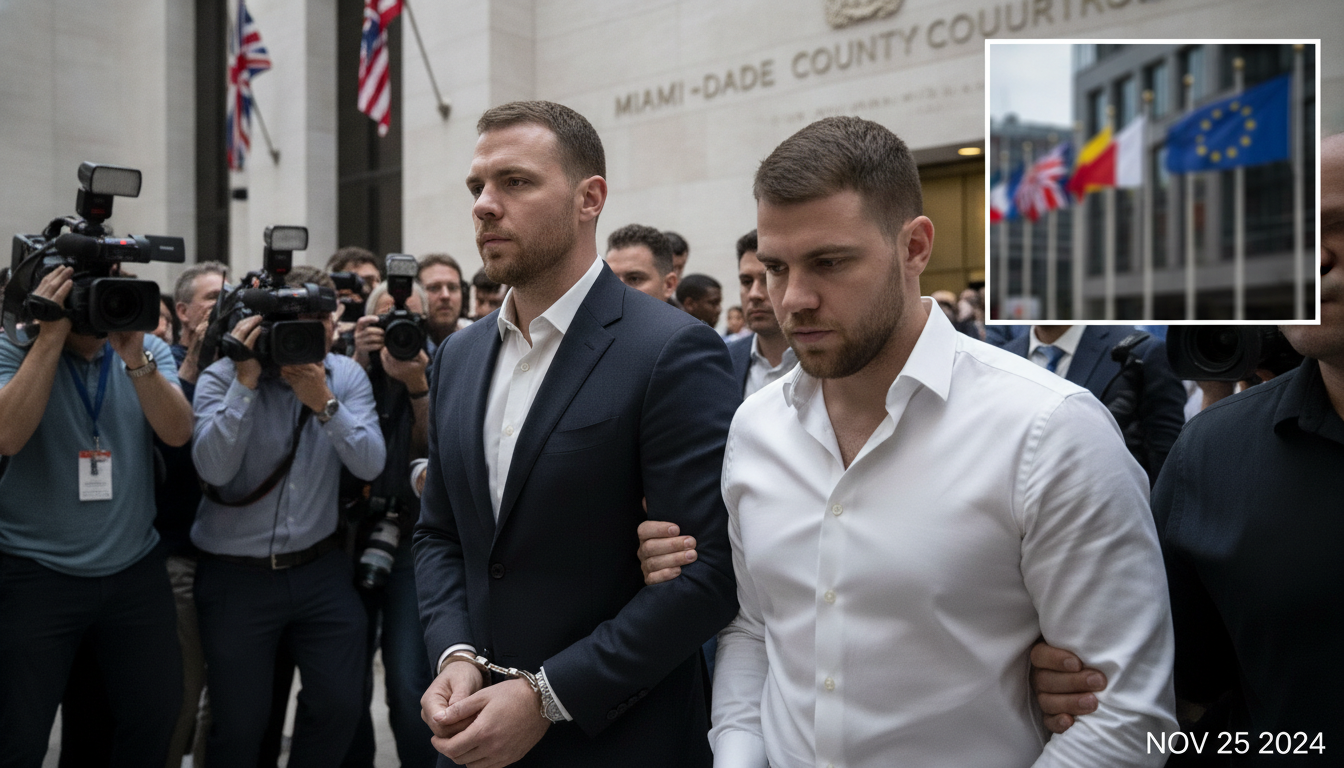
Tate brothers extradition in Miami prompts retreat from U.S. conservative allies
Tate brothers extradition in Miami leaves U.S. allies distancing themselves as federal prosecutors press Britain’s request and courts weigh legal standards.
The Tate brothers extradition case in Miami has pushed once-enthusiastic American allies to the margins as federal prosecutors represent Britain’s request and a judge prepares to review the legal threshold. Andrew and Tristan Tate remain detained in a federal facility in Florida as the courts consider whether the British charges—ranging from rape and sex trafficking to allegations involving indecent images—meet the standard for transfer. As of July 23, 2026, the development has forced a recalculation among political figures who previously courted the Tates’ large online following.
Arrests and the British extradition request
The brothers were taken into custody in Florida after British authorities submitted a formal extradition request that accuses them of multiple offences alleged to have occurred between 2010 and 2017. British prosecutors have lodged dozens of charges, and U.S. federal agents acted on that request by arresting the pair at a public event in Miami. The Tates have denied the allegations and characterized the move as politically motivated, a claim that will be tested through the U.S. legal process.
Federal prosecutors to argue Britain’s case in Miami
Under the extradition framework, federal prosecutors are tasked with presenting Britain’s case in a Miami courtroom, examining whether the evidence satisfies the statutory criteria for surrender. A federal judge will decide whether the legal threshold for extradition has been met, a process that could extend for months and involve detailed evidentiary review. If the judge approves, the matter will proceed to the Secretary of State, who has final administrative authority over the transfer.
White House stance and internal distancing
The White House has signalled non-intervention in the case; the administration’s spokesperson stated that the president does not intend to become involved. That posture, coupled with the Department of Justice’s role in court, has prompted several figures within the president’s orbit to adopt more cautious public positions. Some officials who once associated with the Tates have either stepped back or explicitly severed ties, reflecting concern about political and legal exposure while the case unfolds.
Shifting support among conservative personalities
High-profile conservatives who previously amplified the Tates’ message have shown a mix of silence and selective defense since the arrests. A handful remain outspoken, framing the arrests as part of a broader political narrative, while others have withdrawn public support or declined comment. The sudden shift underscores tensions within the right between fringe influencers who champion the brothers and mainstream conservative voices troubled by the allegations and the optics of association.
Parallel investigations and international dimensions
The extradition request intersects with long-running probes in Romania and Britain that predate the Miami arrests. Romanian authorities began investigating the brothers in 2022, and British prosecutors later brought criminal charges; the countries had coordinated aspects of those inquiries. The interplay of multiple jurisdictions raises questions about which proceedings take priority and how concurrent inquiries will affect evidence sharing, witness availability, and prosecutorial strategy.
Legal strategy from the Tates and reaction from accusers
Lawyers for the Tates say their focus is on defeating the extradition bid in U.S. courts rather than appealing for political intervention, and they have disputed media accounts about outreach to former allies. At the same time, some women who have accused the brothers have welcomed the British request as a step toward accountability. Advocacy groups and legal representatives for accusers argue the extradition process could open avenues for testimony and evidence that have been stalled or delayed in other jurisdictions.
Public reaction has been sharply divided: supporters of the brothers decry what they call selective prosecution, while critics and many mainstream conservatives view the allegations as disqualifying and morally unacceptable. This split has translated into reputational consequences for those who had once courted association with the Tates’ large online audience.
As proceedings continue in Miami and diplomatic and prosecutorial channels coordinate across borders, the case is likely to remain a focal point for debates about extradition law, political influence, and the responsibilities of public figures who cultivate large followings. The outcome of the judicial review and any subsequent decision by the Secretary of State will determine whether the brothers are sent to Britain to face the charges there.
