
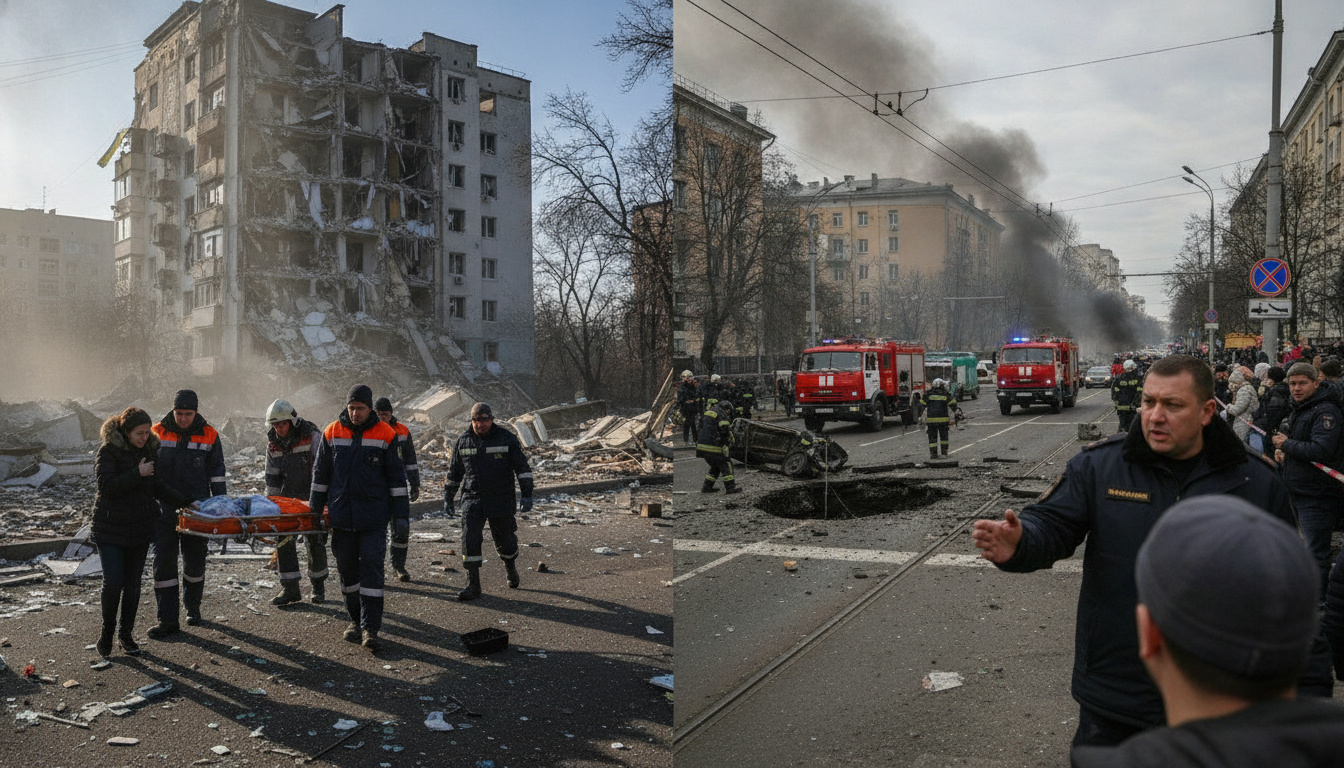
Russia-Ukraine strikes kill at least eight as attacks hit Moscow, Crimea and eastern Ukraine
Russia-Ukraine strikes killed at least eight people on July 23, 2026, as Kyiv and Moscow carried out deep attacks behind each other’s lines, driving civilian casualties upward.
Both sides reported fatalities and injuries in rear-area strikes, with Russian-backed officials saying four people died in Russia and annexed Crimea and Ukrainian authorities reporting four deaths inside Ukraine. The violence came amid a largely stalemated frontline, even as attacks increasingly reached towns and cities far from the main battle zone.
Civilian deaths reported in Voronezh, Belgorod and Crimea
Local Russian officials said Ukrainian strikes on Thursday killed four people in areas inside Russia and in Crimea, including a three-year-old child in the Voronezh region. Voronezh Governor Alexander Gusev said a drone crashed into a home and started a fire that killed the boy and wounded his parents, while another young man was wounded nearby.
In the border Belgorod region, regional authorities reported a Ukrainian drone struck a vehicle, killing one man and wounding another. Moscow-installed officials in Crimea said two people were killed and four wounded in separate attacks on the peninsula that Russia annexed in 2014.
Russian strikes hit Pavlohrad food business and Sumy backyard
Ukrainian authorities described deadly strikes inside Ukraine on the same day, reporting three fatalities and at least 10 wounded after a Russian attack struck a food-processing facility in Pavlohrad in Dnipropetrovsk region. Regional governor Oleksandr Hanzha said the strike caused a large fire and emergency crews were responding to damage at the site.
Separately, Ukraine’s national broadcaster Suspilne reported a 57-year-old man killed by mortar fire in the Sumy region while in his backyard, a case officials said medical teams could not save. Local authorities emphasized that civilians away from frontlines were increasingly at risk from indirect and long-range systems.
Moscow claims territorial gains near Pokrovsk; Kyiv denies concession
The Russian Ministry of Defence issued a statement saying its forces had captured the village of Bilytske, roughly 12 kilometres north of Pokrovsk, a claim that was not immediately confirmed by Ukrainian authorities. Kyiv’s General Staff countered by saying Ukrainian forces had repelled 42 Russian assaults over the previous 24 hours across 19 settlements on the Pokrovsk front, including areas near Bilytske.
Ukrainian officials did not publicly acknowledge the loss of the village in the hours after Moscow’s announcement, reflecting the frequent clash of claims and counterclaims that characterizes reporting from the front. Independent verification of local advances remains difficult amid contested access and information warfare by both sides.
Frontline stalemate but rise in deep strikes on rear areas
Despite limited movement along most of the frontline, both sides have intensified long-range strikes against logistics hubs, towns and infrastructure far from the immediate battle zone. Analysts and officials note the shift in tactics aims to degrade the opponent’s supply lines and morale by targeting rear areas rather than seeking large territorial gains.
The result has been a rising civilian toll in places once considered safer from direct combat, heightening fear among residents and complicating humanitarian assistance. Emergency services in affected regions reported network disruptions and strained response capabilities after successive strikes.
European Union agrees broad 21st sanctions package against Russia
In parallel diplomatic developments, EU envoys approved a 21st package of sanctions targeting Russian individuals and entities, including measures directed at its banking sector and energy-related assets. The measures, disclosed by EU foreign policy officials, name 218 individuals and organisations and aim at more than 100 banks and cryptocurrency operators, dozens of vessels described as part of a “shadow fleet,” and multiple oil refineries.
The package also adds over 50 military-industrial entities to the blacklist, including firms tied to the production of long-range drones, officials said. As part of a compromise with Greece, the EU agreed a one-year exemption allowing EU companies to transfer Russian liquefied natural gas to third countries, with automatic renewal, while imports of Russian LNG into the bloc will be banned from January 1.
Sanctions, energy markets and military supply implications
EU diplomats signalled the package balances punitive measures with practical concerns about energy markets and member-state interests, particularly those of Greece, a major operator of LNG carriers. Officials warned that exemptions could shift trade patterns without necessarily reducing Russian revenue, a tension that shaped the final text.
Beyond economic pressure, the sanctions seek to constrain Russia’s ability to finance and equip long-range strike systems that have been used to target rear areas on both sides. Western partners said they hoped the measures would close loopholes in finance and shipping that have allowed Moscow to sustain its war economy.
The renewed cycle of strikes and counterstrikes underscores a war that, after five years, remains far from resolution and continues to exact a toll on civilians and infrastructure. International diplomatic moves, including the EU package, aim to squeeze Moscow’s resources, even as battlefield actions and mutual accusations persist.
