
T-Mobile US Executive Pay Vote Draws Record-Low Approval in Shareholder Rebuke
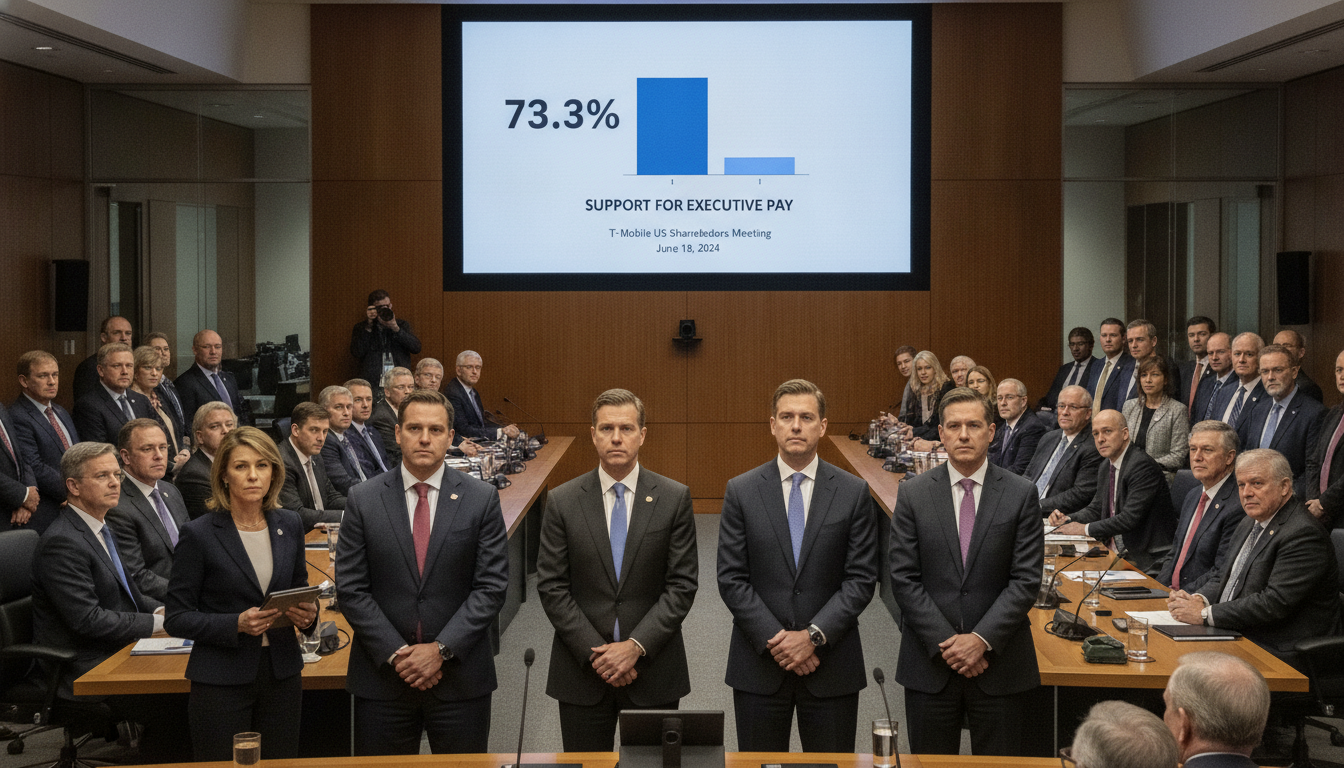
T-Mobile US executive pay vote drew only 73.3% approval, the lowest since the advisory measure began in 2014, signaling investor dissatisfaction with compensation practices.
Shareholders Deliver Strong Rebuke on Say-on-Pay
Only 73.3 percent of votes cast backed the company’s executive compensation plan, marking a sharp drop from last year’s overwhelming approval. The advisory "say-on-pay" result represents the weakest endorsement since the non-binding vote was introduced in 2014.
The outcome signals clear discomfort among a meaningful portion of the shareholder base despite the advisory nature of the ballot. Investors used the vote to register dissatisfaction and to pressure the board to reassess how pay aligns with performance.
Approval Rate Falls to Record Low Since 2014
By comparison, the proposal won 96.7 percent support at the previous annual vote in 2023, highlighting the abrupt change in investor sentiment. Even during the 2020 controversy over special payments to the then-chief financial officer, approval did not fall below 82 percent.
The 73.3 percent figure therefore stands out as an unusually low level of support for a company that until recently enjoyed near-unanimous backing on compensation matters. That divergence is likely to prompt closer scrutiny of executive pay disclosures and practices.
Investor Concerns Linked to Specific Compensation Decisions
Investor unease has periodically centered on one-off awards and retention arrangements that some see as out of step with long-term shareholder interests. Previous criticism in 2020 about special payments to a senior executive remains part of the record and appears to have contributed to sustained sensitivity around pay decisions.
Proxy advisory firms and vocal institutional investors typically weigh these factors when making voting recommendations. The lower approval rate indicates some investors judged current arrangements insufficiently tied to sustained performance or shareholder value creation.
Board and Management Face Pressure to Engage Investors
Although say-on-pay votes are non-binding, a clear decline in support increases pressure on the board to respond publicly and engage with large shareholders. Companies in similar positions have moved quickly to hold outreach sessions, revise compensation metrics, or provide enhanced disclosures to rebuild trust.
T-Mobile’s board may choose to outline near-term steps to address concerns, such as adjusting incentive structures or clarifying performance targets. How management and the board frame any changes will be important to restoring investor confidence ahead of future votes.
Potential Changes to Compensation Framework Under Consideration
A re-evaluation could include shifting weight among short-term bonuses, long-term equity awards, and performance-based vesting to better align pay with sustained operational and financial results. Investors increasingly expect clear links between compensation outcomes and measurable benchmarks such as subscriber growth, profitability, or cash flow.
Any changes will likely be framed in proxy materials and investor communications so that voters can assess whether the board has acted in response to the rebuke. The timing and substance of reforms are likely to influence voting behavior in the next annual meeting cycle.
Implications for Corporate Governance in the Telecom Sector
The result at T-Mobile echoes a broader trend of shareholders using advisory votes and engagement to shape executive pay norms across the telecommunications industry. Where votes fall notably short of prior levels, peers often take note and reassess their own pay disclosure and governance practices.
A sustained pattern of weaker say-on-pay results can also encourage greater involvement by proxy advisers and trigger more frequent investor dialogues on board-level oversight of compensation. For large carriers facing intense market scrutiny, governance posture and transparency have become central to shareholder relations.
T-Mobile’s lower approval on the executive pay vote is a clear signal that a portion of its investor base wants changes or clearer explanations of how compensation drives long-term value. The coming weeks and months will show whether the company adjusts its pay framework or intensifies outreach to rebuild support ahead of the next shareholder cycle.
