
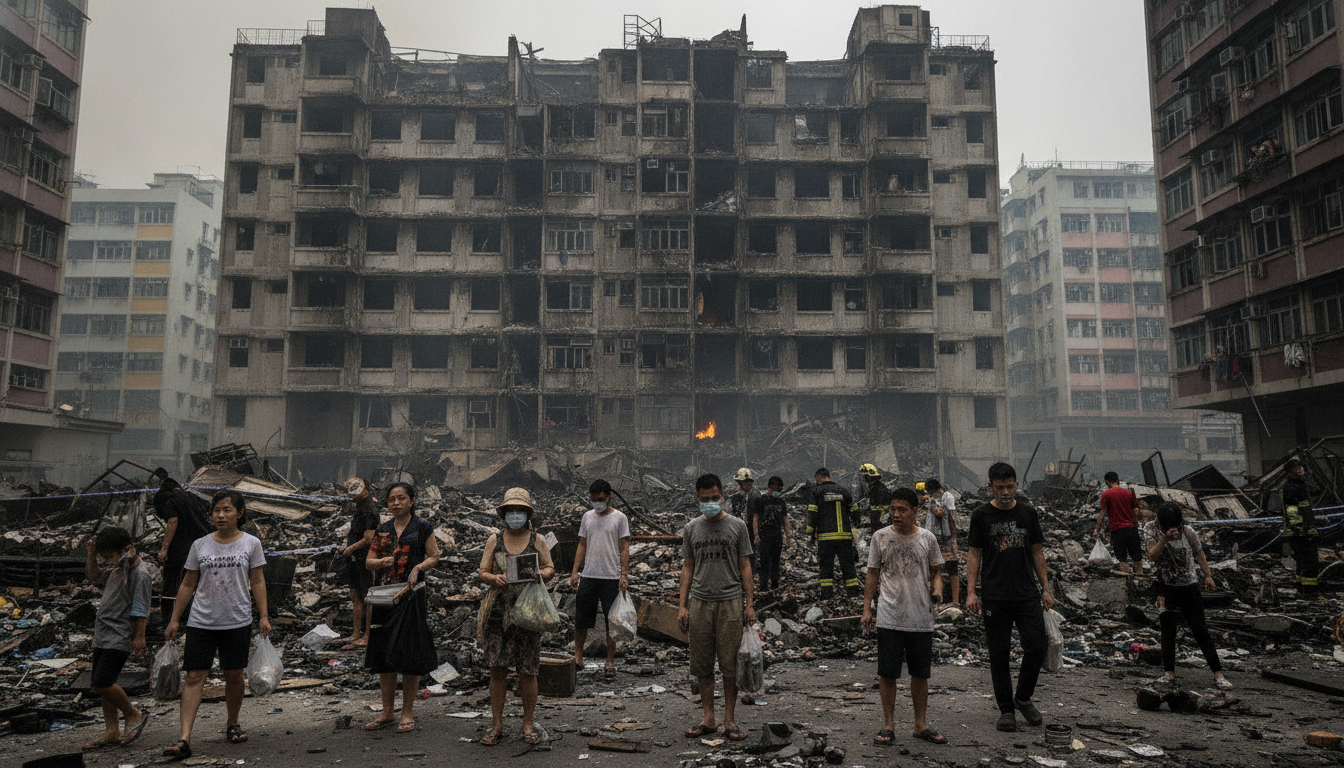
Wang Fuk Court fire leaves 168 dead as residents sift ashes for keepsakes
Families returning to Wang Fuk Court confront charred homes and small mementos that tell the story of lives lost in the deadly blaze.
Residents return to Wang Fuk Court ruins
For months after the devastating Wang Fuk Court fire sealed seven apartment towers, authorities barred access to the complex.
This spring, residents were allowed back into the ruins and found apartments frozen in time — bowls of food left on tables, children’s toys where they had been dropped.
Many moved methodically through ash and rubble with mesh baskets, searching for anything that survived the inferno.
The scene underscored how physical objects have become anchors for grieving families and markers of the scale of the disaster.
Personal items recovered underscore human cost
Among the small belongings salvaged were a mother’s denim vest, a toddler’s pacifier, a pair of glasses and a charred watch bought for a graduation.
These items — intimate, ordinary and irreplaceable — emerged from piles of soot and twisted metal, attracting residents who clung to them as proof that someone they loved had once been there.
A wedding ring and its matching band, a cracked iPad used for drawing, a ceramic pomelo picked up on a family trip and a Snoopy toy for two lost poodles were all recovered.
Each object carried its own story, offering a rare, tangible way to remember the people whose lives were extinguished.
Families recount the people behind the objects
Those who lost family members described them in vivid, personal terms as they sifted through the debris.
One woman spoke of her husband’s love for the erhu and of a daughter who had just graduated from the same university their father had attended.
A retired radio-factory repairman and his wife were remembered for decades of ordinary companionship, argued small domestic quarrels and the quiet rituals of everyday life.
A caregiver who worked long hours for little money was recalled for the meals she made and the comforts she provided to a chronically ill daughter.
Investigations point to construction failings as likely cause
Official accounts and investigators have indicated that the Wang Fuk Court fire was most likely worsened by shoddy materials and cutting corners by contractors.
That assessment has focused public attention on building safety standards, maintenance oversight and enforcement of fire regulations in older residential blocks.
Authorities sealed the complex for months as they examined the scene and pursued inquiries into how the blaze spread.
The findings have prompted calls for tighter scrutiny of renovation work and stronger protections for residents in high-density housing.
Community response, funerals and international ties
Funerals for victims reflected the multicultural and working-class character of the estate, including ceremonies at local mosques and the repatriation of migrant workers’ remains to families abroad.
Relatives described returning belongings to grieving households, and in some cases arranging swift transfers of bodies to Indonesia and other countries to allow families to bury loved ones.
Neighbourhood networks and volunteers helped coordinate searches of apartments and shared information about personal items recovered.
For many, the ritual of laying out salvaged objects and photographs provided a small measure of consolation amid ongoing loss.
Recovery efforts and the long process of rebuilding
Many apartments were left gutted and unsalvageable; some residents said their homes had been completely destroyed and that they would have to start over.
Officials and community groups are assessing needs for rehousing, compensation and mental health support, but the path to normalcy remains uncertain for many families.
Residents described how seeing familiar addresses on official documents — including newly reissued birth certificates — now carries the scar of the disaster and a permanent association with Wang Fuk Court.
As investigations continue and restoration work begins in parts of the complex, families must balance practical rebuilding with the emotional labor of mourning.
In the charred remains of everyday life, small objects have become the last traces of people who loved music, made meals for family members, sewed by hand, built figurines or played with children.
Those keepsakes now sit in hands and on altars as communities of friends, neighbours and officials work through grief while pressing for answers about how the Wang Fuk Court fire could claim so many lives.
