
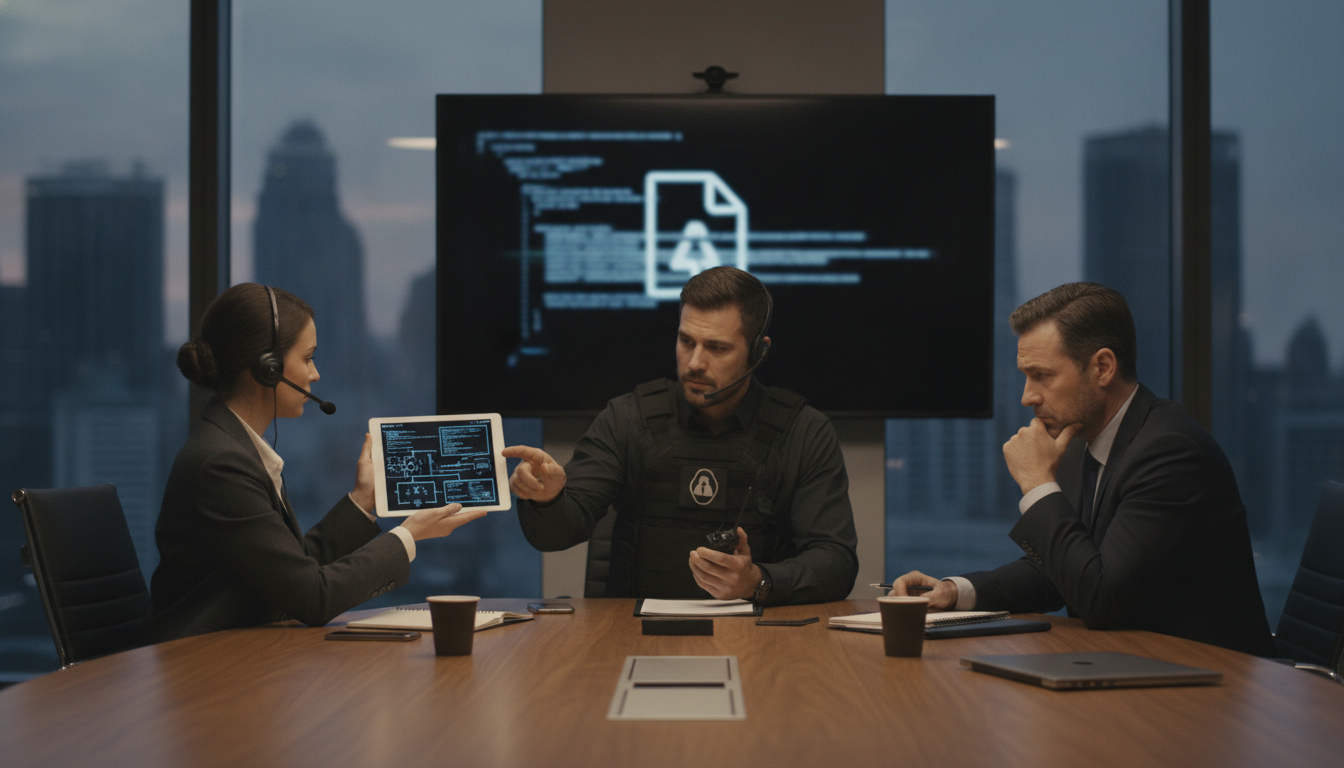
Ransomware attack response: Experts outline first-hour moves and common pitfalls
Companies facing a ransomware attack must act fast to limit damage and regain control, say crisis negotiators Michael Sjøberg and Peter Skovbo. In an interview, the former Danish military hostage negotiator and the head of Swiss firm Delta Crisis stressed that a clear, practiced incident response is the single most important factor in the first hours after an attack. Their guidance focuses on containment, evidence preservation, disciplined communications and measured negotiation tactics to avoid costly mistakes and speed recovery.
Immediate containment priorities set by crisis negotiators
Sjøberg and Skovbo advise treating a ransomware attack like a live crisis that threatens people and critical services, not just data. The first priority is to isolate affected systems to stop lateral movement while preserving volatile evidence for forensic teams.
They recommend activating the incident response plan, assembling the response team, and assigning clear authorities for technical, legal, communications and executive decisions. Quick, centralized command reduces contradictory actions that can worsen the incident.
Actions that preserve forensic value and future recovery options
Experts emphasize that evidence preservation is as important as containment for both recovery and any subsequent legal or regulatory processes. Responders should avoid sweeping or deleting logs, and should take forensically sound disk images before attempting restoration.
Maintaining chain-of-custody and documenting every action lets forensic teams reconstruct the attack vector and helps determine whether data exfiltration occurred, which informs notification obligations and remediation priorities.
Frequent early mistakes that amplify costs
Sjøberg and Skovbo outline the errors that most commonly inflate damage: ad hoc shutdowns, uncontrolled communications, and premature payments. Shutting entire networks off without targeted isolation can destroy evidence and complicate recovery.
Equally damaging is inconsistent internal messaging that confuses employees and partners, or public statements that reveal investigative steps. Rushed decisions to pay ransoms often follow panic; negotiators warn these payoffs can fund future attacks and do not guarantee full restoration.
When and how to involve law enforcement and insurers
Engaging law enforcement early gives responders access to intelligence and legal guidance, while insurers can mobilize preferred forensic and negotiation vendors. Sjøberg and Skovbo say both parties should be notified promptly but coordination must be managed by the incident lead.
Companies should verify policy coverage and follow insurer reporting protocols to preserve claims, but they must also be mindful of legal obligations and the investigative needs of authorities when sharing information.
Negotiation tactics recommended by a former hostage specialist
Drawing on hostage-negotiation principles, Sjøberg advocates for calm, information-led engagement with attackers if negotiation is pursued. That includes establishing a single, trained point of contact, avoiding threats or bluffing, and documenting all exchanges to preserve intelligence.
Negotiation is a tactical decision, not an emotional response. The experts stress that nonpayment recovery pathways—restoration from secure backups and rebuild strategies—should be pursued in parallel while any dialogue with attackers occurs under legal and technical oversight.
Technical recovery steps and operational restoration
After containment and forensics, the emphasis shifts to secure restoration: validate backups, rebuild compromised systems, reset credentials and close identified attack vectors. Skovbo advises phased restoration to reduce the chance of reinfection and to validate systems at each step.
Implementing stronger segmentation and multifactor authentication during rebuilds helps prevent repeat intrusions. Continuous monitoring and a hardened environment are essential components before bringing systems back to full production.
Training, tabletop exercises and governance improvements
Both negotiators underline that preparedness reduces the need for ad hoc decisions during a crisis. Regular tabletop exercises that simulate ransomware scenarios help executive teams, IT staff and legal counsel practice coordinated responses.
Updating governance, assigning decision authorities, and documenting escalation paths create clarity that shortens response time and reduces costly errors when real incidents occur.
Recovery will always be partly technical and partly organizational, and Sjøberg and Skovbo say the best defenses are the ones a company has tested before they are needed. Continuous investment in detection, backups, staff training and clear crisis roles not only limits damage from a ransomware attack but also speeds recovery and preserves trust with customers and regulators.
