
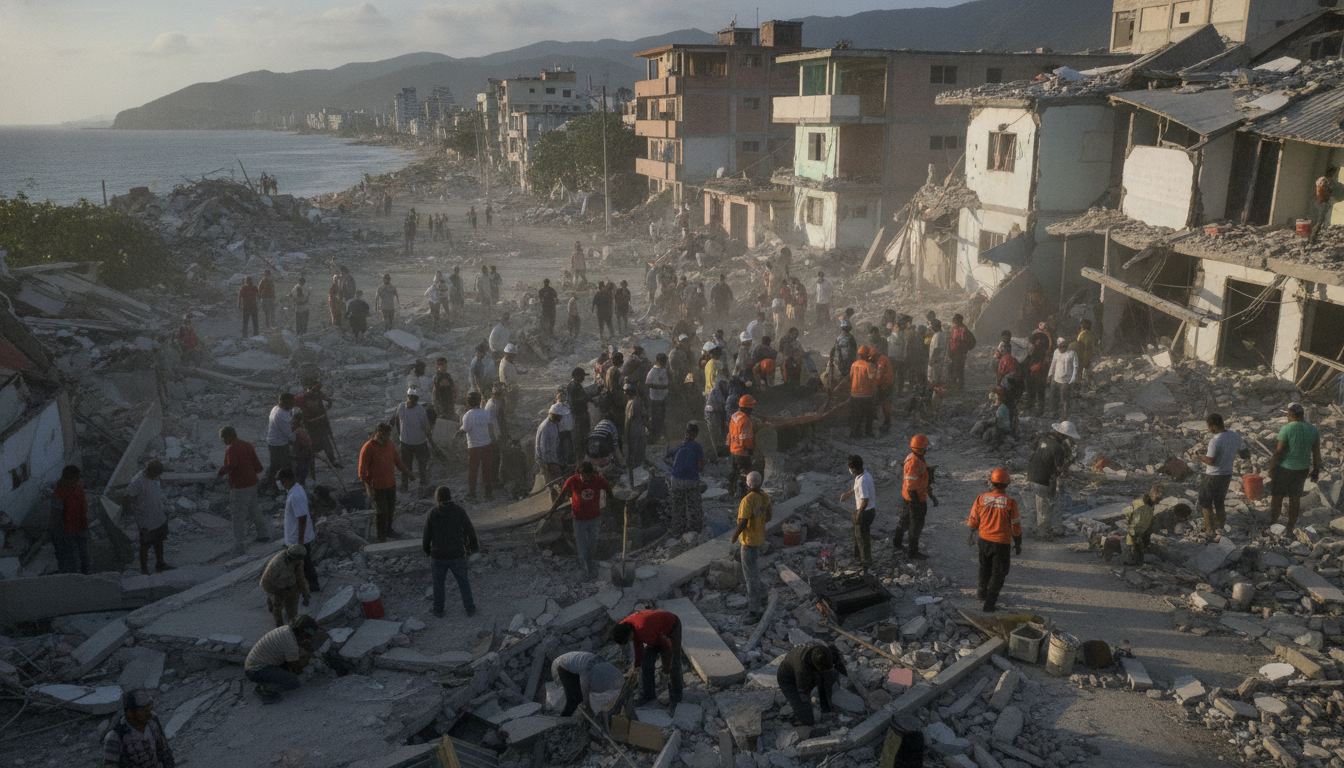
La Guaira earthquake: Volunteers and rescuers dig through rubble as death toll rises
After the La Guaira earthquake, volunteers, paramedics and international brigades dug through rubble amid equipment shortages saving some and recovering victims.
The streets of La Guaira were transformed into a patchwork of rescue teams and grieving families after the La Guaira earthquake flattened seaside towers and left thousands unaccounted for. Neighbourhoods that once hugged the coast became fields of broken concrete, and impromptu bands of volunteers — from retired firefighters to surfers — poured into the city to search for survivors. With official services strained and heavy machinery scarce, civilians and international crews carried out many of the earliest, life-saving efforts.
Volunteers mobilize within hours
Within hours of the first tremors, neighbours and strangers organized on motorcycles, in pickup trucks and through messaging apps to bring supplies and manpower to La Guaira. Groups set up WhatsApp channels to coordinate food, water, blankets and fuel, and chains of volunteers began scouring the most devastated blocks. Many who arrived had little formal training but were driven by urgency and familiarity with the local terrain.
Experienced rescuers and medical personnel also rushed in from nearby states and abroad, joining the civilian effort. Retired firefighters and paramedics reported heading straight to the nearest stations, while physical therapists and students improvised stretchers and first aid. The mixed composition of teams made coordination difficult but increased the sheer number of hands available to clear rubble.
Scenes of destruction and improvisation
Entire residential towers were reduced to low heaps of concrete and twisted metal, forcing searchers to work amid unstable debris and pervasive dust. Volunteers described entering buildings that resembled collapsed shells, where people crawled from under ruins or called for relatives trapped beneath slabs of concrete. Many rescue attempts relied on chisels, pickaxes and bare hands until specialized equipment arrived.
Witnesses said lines of injured people waited for help as responders struggled to prioritize sites and allocate scant resources. Police and fire services were present, but volunteers frequently reported that official teams lacked the equipment and manpower needed for large-scale extrication. That gap pushed community groups to improvise lifting systems and rope-pulley rigs to reach victims.
International brigades and canine units assist
Teams from neighbouring countries and beyond arrived with trained dogs, cutting gear and technical knowledge that complemented local efforts. Search-and-rescue brigades coordinated with Venezuelan volunteers at selected collapse sites, deploying detection dogs and mechanical cutters to access deeper voids. Those specialized crews achieved some of the more complex extractions and provided advice on safety and shoring.
Despite those arrivals, international teams often faced logistical challenges and arrived days after the initial quake, limiting their window to reach survivors. In several operations the number of lives saved by external brigades was small relative to the scale of destruction, underscoring how critical the first 48 hours had been and how much of the response fell on improvised local networks.
Survivor rescues galvanize communities
High-profile rescues became focal points for the city’s resolve and drew more volunteers into the effort. One documented case of a young girl pulled alive after more than a day trapped in debris inspired renewed digging and a surge of donations and reinforcements. Such rescues were hailed as miracles and helped sustain morale among exhausted rescue workers and relatives.
Those moments of success also highlighted the risks taken by volunteers, including people who worked without protective gear and slept only in short shifts. Stories circulated of rescuers pulling both living victims and bodies from the same sites, emphasizing the emotional toll of alternating hope and loss during long shifts without adequate rest.
Fatigue, grief and the limits of capacity
Rescuers reported extreme physical depletion, losing weight from dehydration and prolonged exertion, and many described working on automatic pilot while coping with the grief of families awaiting news. Volunteers said they often had to choose between continuing to search and tending to the many injured who needed immediate care. Psychosocial support was in short supply, and teams alternated brief rest periods with shifts back at the rubble.
The human cost was compounded by the scale of recovery operations: although some survivors were pulled free, rescuers recovered far more bodies than living victims. Local leaders and foreign team members acknowledged that the shortage of heavy machinery and organized logistics limited the scope of rescues in several of the worst-hit buildings.
Solidarity fills systemic shortfalls
Faced with institutional weaknesses, civil society and the diaspora stepped in to provide tools, fuel and basic supplies that sustained the operations. Social media posts listing needs and locations quickly translated into deliveries of shovels, lights and food, while ad hoc medical stations treated the wounded. National and international donations kept volunteer brigades working through the long days.
Military and emergency personnel participated in extractions when possible, but volunteers said the response would have been markedly different without the spontaneous networks of ordinary citizens. Local leaders praised the courage of people who remained on the ground for days, sometimes without returning home to their families.
The La Guaira earthquake left a city in ruins and a nation grappling with rescue, recovery and the immediate humanitarian needs of thousands. As heavy equipment and official resources are mobilized, the mass of volunteers who first answered the call remain a defining feature of the response, their efforts marking the thin line between survival and tragedy in the quake’s aftermath.
