
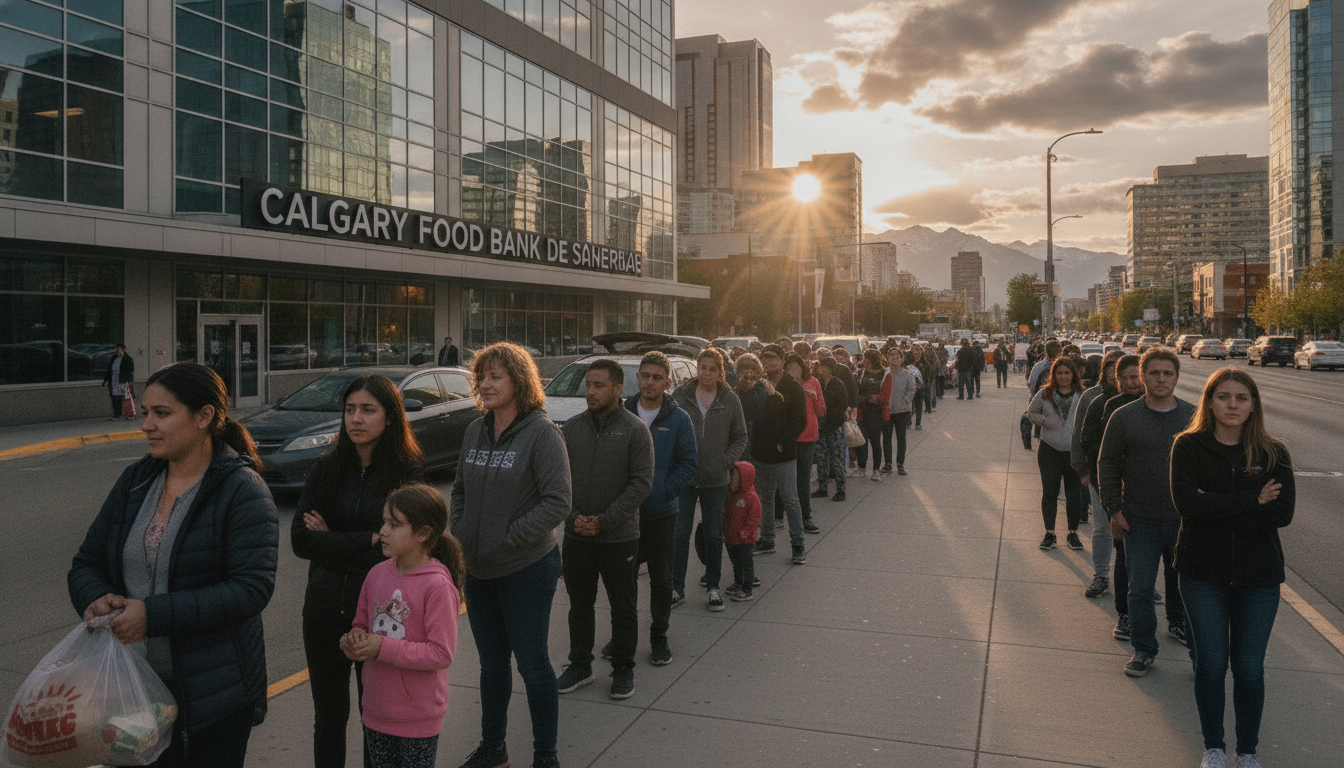
Calgary food insecurity drops overall to 24.9% in 2024, but severe hunger and food bank demand stay high
New data shows Calgary food insecurity fell to 24.9% in 2024 from 31.7% in 2023, but severe hunger and food bank demand remain high amid rising costs.
Calgary food insecurity has declined in broad measures but deep hunger persists, according to recently compiled figures from local anti-poverty groups using Statistics Canada data.
Vibrant Communities Calgary reported that the Enough for All Well-Being Dashboard recorded 24.9 per cent of Calgarians as food insecure in 2024, down from 31.7 per cent the previous year.
The headline improvement masks a stubborn reality: rates of severe food insecurity — where people skip meals or go days without eating because they cannot afford food — did not fall in the same period.
Statistics Canada figures show overall improvement but severe cases unchanged
The Enough for All Well-Being Dashboard, which draws on the most recent Statistics Canada household data, indicates a meaningful drop in measured food insecurity across Calgary between 2023 and 2024.
Policy analysts link part of the improvement to a modest rise in median real incomes and a slowing pace of inflation during that interval, factors that can relieve immediate pressure on household budgets.
However, the data disaggregates moderate and severe food insecurity and shows divergence: while moderate insecurity eased, the most acute levels of deprivation did not decline.
That split suggests early positive movement in income stability for some residents while the city’s most vulnerable households remain trapped in persistent deprivation.
Calgary Food Bank reports surge to 1,000 hampers daily
Front-line relief agencies report a different, more urgent picture of demand on the ground in real time.
The Calgary Food Bank has described a jump in daily distribution from roughly 400 hampers per day in 2023 to an average of 1,000 hampers per day more recently.
Staff and volunteers report carlines and steady foot traffic at distribution sites, signaling pressure that arrives faster than survey data can capture.
Those operational figures underline how emergency food services are being relied upon by a broader cross-section of the city than in past years.
Seniors and the working poor account for growing share of need
Service providers say demographic shifts are changing who turns to food programs for help.
A higher number of older adults are seeking support, joining a rising cohort of people who, despite working full time, do not earn enough to meet basic needs.
Those "working poor" households often face the impossible choice between paying bills and buying food, a dynamic that contributes to repeat use of emergency food services.
Geography and pride also keep some residents from accessing available help, meaning official counts likely understate total need.
Deep poverty remains concentrated and resistant to short-term gains
Analysts emphasize that improvements in headline food insecurity rates do not necessarily translate into relief for people living in the deepest poverty.
Severe food insecurity — measured by skipped meals and prolonged food shortages — remained steady between 2023 and 2024, indicating little progress for those facing the greatest hardship.
That persistence points to structural gaps: income supports, affordable housing, and access to health services are interlinked with food security, and short-term economic improvements do not always reach the lowest-income households.
Experts warn that without targeted interventions, aggregate statistics can obscure entrenched hardship for specific populations.
Data lag and policy changes create uncertainty about future trends
Observers caution that survey-based statistics trail real-world developments, and several emerging policy shifts could alter the trajectory.
Local advocates have noted recent measures and external factors — including changes to provincial disability income programming and international trade actions affecting food prices — that are not yet reflected in the 2024 data.
Those developments have the potential to erode the modest gains recorded last year, particularly for people dependent on fixed incomes or with limited savings.
As a result, agencies are preparing for the possibility that demand for emergency food support will remain elevated or grow further.
Front-line organizations call for long-term solutions and targeted supports
Community groups argue that emergency food distribution is necessary but insufficient to solve food insecurity at scale.
They are calling for policies that boost incomes, protect vulnerable seniors and people with disabilities, and expand access to affordable housing and child care.
Investments in local food infrastructure and partnerships that stabilize supply chains can make food assistance more effective and nutritious.
Service providers stress that coordinated action between municipal, provincial and federal levels will be required to address the root causes of chronic food insecurity.
Calgary’s anti-poverty organizations and emergency food providers are urging residents and policymakers to view the data as both a signal of progress and a prompt for continued action.
They encourage Calgarians to support local food programs through donations and volunteering while advocating for systemic reforms that reduce reliance on charity as the primary response to hunger.
Monitoring both survey results and front-line service metrics will be essential in the months ahead to understand whether the 2024 decline in overall food insecurity consolidates or gives way to renewed pressure on households.
