
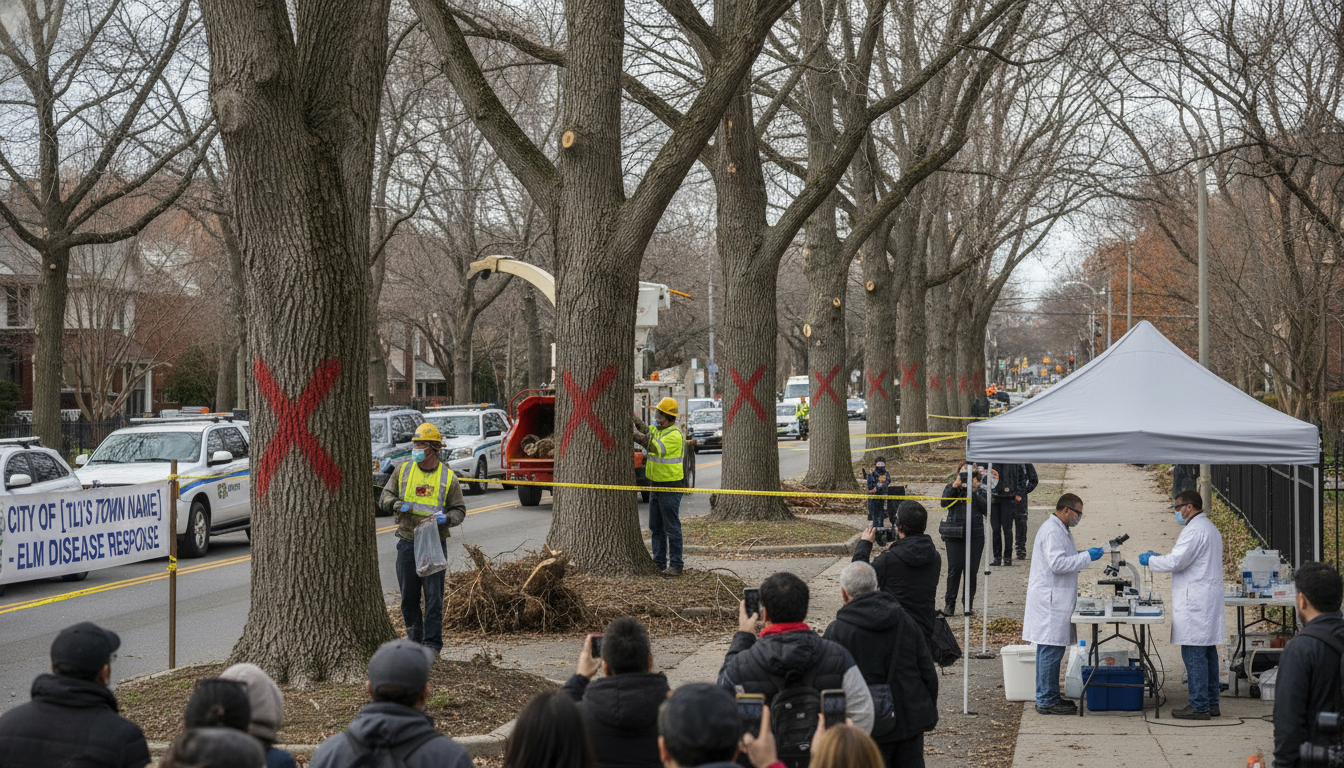
City steps up removals after new elm tree infections identified
City parks crews increase testing and removals after elm tree infections were detected, with officials coordinating surveillance and laboratory work with provincial authorities and the Canadian Food Inspection Agency.
City officials confirmed that new elm tree infections have been identified after intensified surveillance by a multi-disciplinary team, prompting immediate removals and expanded testing across municipal green spaces. Nicole Fraser, acting director of parks and urban forestry, said the cases were found during targeted inspections carried out by arborists, urban foresters and pest-management biologists. The city has moved to ramp up daily assessments of affected blocks while coordinating laboratory testing and response measures with the province and the Canadian Food Inspection Agency. Residents can expect increased activity in parks and along boulevards as crews work to locate, assess and safely remove infected trees.
Detection and initial response
Fraser said the integrated team responsible for tree health was conducting heightened surveillance when the infections were discovered, triggering a citywide response. Crews have started removing trees that show clear signs of infection to prevent further spread, and samples have been submitted for confirmation. The parks department emphasized that removals are being performed with public safety in mind and that staff will prioritize high-traffic areas and trees posing immediate hazards. City officials also noted that follow-up monitoring will continue for weeks as test results are processed and additional cases are searched for.
Where the cases were found
City staff declined to release precise addresses while assessments continue, but confirmed that detections are not confined to a single neighbourhood and have been flagged in multiple sectors. Officials said inspections cover boulevard trees, parks and privately owned trees adjacent to public property where spread risk is highest. The parks department stressed that mapping of affected areas is ongoing and that property owners will be notified directly if their trees are subject to removal or further testing. Municipal crews will focus initial efforts on containment and on preventing movement of infected wood that could carry pathogens or pests.
Testing, quarantine and agency coordination
Samples from symptomatic trees have been sent to provincial laboratories and to the Canadian Food Inspection Agency for definitive diagnosis and potential strain identification. Fraser said the city is coordinating its testing regime and data sharing with provincial plant health authorities and the CFIA to align response measures. Those agencies determine whether quarantine measures or regulated controls are necessary and can issue movement restrictions for elm wood or nursery stock. The partnership is intended to speed confirmation of the pathogen or pest involved and to ensure response steps follow national and provincial protocols.
Public guidance and safety measures
The parks department urged residents not to prune, move or burn elm wood from affected areas, warning that improper handling can accelerate spread. People who notice wilting, sudden leaf yellowing, dead branches or other signs of elm decline are asked to report observations to the city’s tree health hotline or through the municipal service portal. Officials also recommended against transporting firewood and advised homeowners to avoid attempting removals themselves, because infected material can be a hazard and requires professional handling. The city plans to publish guidance for homeowners on safe pruning, disposal and replacement options in the coming days.
Impact on urban canopy and tree replacement plans
City foresters estimated that removals will have a measurable short-term effect on canopy cover in the most affected blocks, and that recovery will require coordinated replanting over several seasons. Officials said a replacement plan is being developed to restore canopy where removals are unavoidable, prioritizing species diversity and disease-resistant varieties. Budget implications for large-scale removals and replacements are under review, and the parks department is exploring provincial or federal support programs that assist municipalities facing pest or disease outbreaks. Long-term urban forest resilience will be a factor in species selection and planting density going forward.
What to watch for and next steps
Residents should look for signs such as branches dying back, discoloured leaves and rapid tree decline, and report any suspect trees to municipal authorities for inspection and testing. The city will continue daily assessments and may expand removals if testing confirms a broader outbreak, Fraser said, adding that officials will provide regular updates as lab results come in. Neighbourhood notifications, work schedules and information about tree replacement programs will be posted on the city website and shared through community channels as plans are finalized.
City forestry staff stressed that early detection and coordinated action are central to limiting the spread of infections among elm trees, and they urged public cooperation while removals and testing continue. The combined effort by municipal crews, provincial laboratories and the Canadian Food Inspection Agency aims to clarify the extent of the problem and set the course for containment, treatment where possible, and long-term recovery of the urban canopy.
