
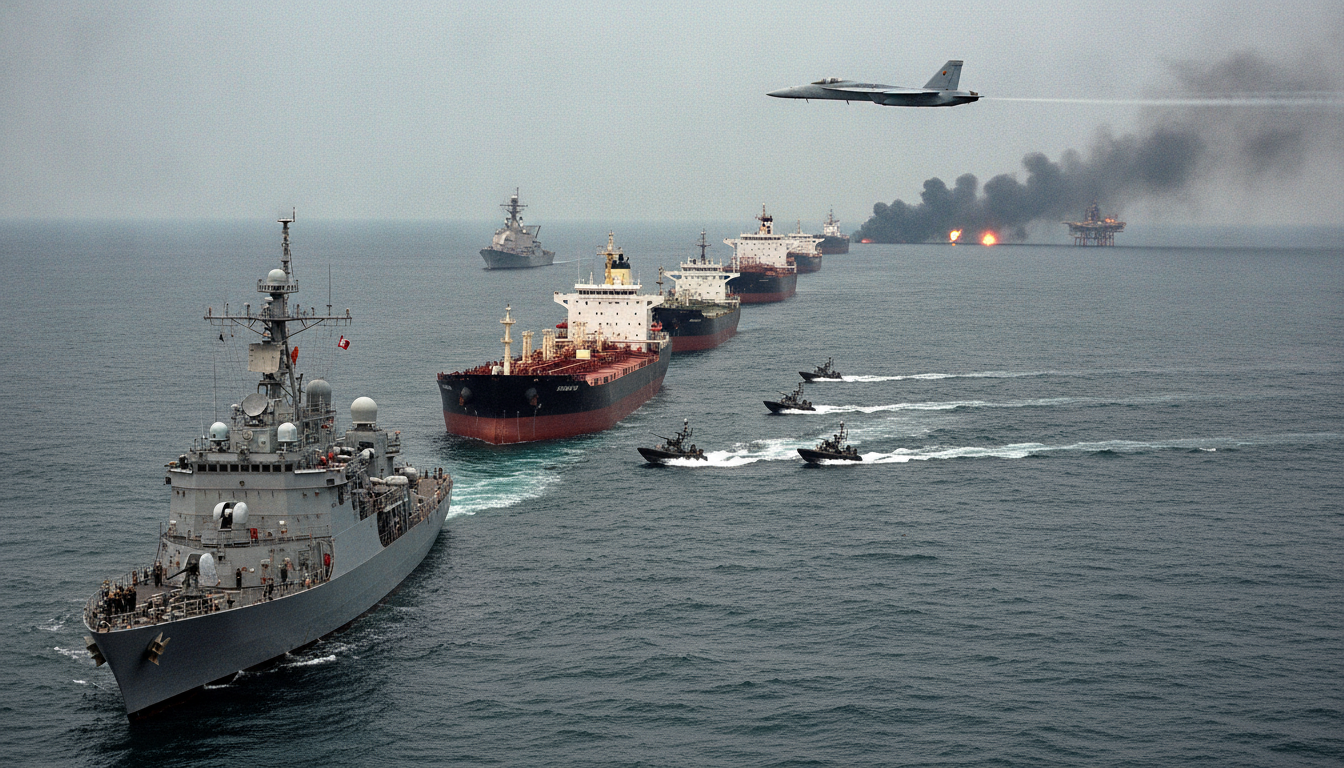
Iran-US strikes escalate as Strait of Hormuz closure and naval blockades deepen regional crisis
Iran-US strikes intensify as US reimposes naval blockade and Iran closes the Strait of Hormuz, disrupting trade and killing dozens amid regional tensions.
For a second consecutive week, Iran-US strikes have intensified across the Gulf, with both sides tightening maritime controls and renewing bombardments that have left dozens dead and commerce disrupted. Tehran says it has closed the Strait of Hormuz and will keep it sealed until what it calls U.S. "aggressions" end, while Washington has reinstated a naval blockade of Iranian ports and resumed air strikes. The resumption of direct military actions has widened the conflict that reignited on July 7 after attacks on vessels in the Gulf attributed to Iran.
U.S. strikes and blockade resumed this week
The United States announced a renewed naval blockade late Tuesday and carried out fresh air strikes on Iranian targets Wednesday, according to U.S. military statements. American operations have included strikes on southern coastal areas and multiple facilities, an escalation intended to pressure Tehran to halt attacks on commercial shipping. U.S. officials say the measures are calibrated to degrade Iran’s capacity to threaten international shipping lanes while avoiding broader regional war.
Iran closes Strait of Hormuz and targets Gulf allies
Iranic authorities say they have closed the Strait of Hormuz—through which roughly one-fifth of the world’s crude oil and LNG normally transit—and have restricted navigation to a single corridor along their coast. The Revolutionary Guard has claimed attacks on sites tied to the U.S. Fifth Fleet in Bahrain and on the Mina Abdullah logistics hub, and has targeted facilities in Bahrain, Kuwait and Jordan. Tehran has warned it could extend shutdowns to other export routes that it says benefit the United States and its partners.
Civilian toll and strikes near Bushehr nuclear site
Iranian government figures report more than 30 civilian deaths since the new round of fighting began, and Tehran said U.S. missiles struck areas near the Bushehr nuclear power plant and in Iranshahr on Wednesday. Iran’s military reported seven soldiers killed in a barracks strike and said it recorded more than a dozen missile impacts. Independent verification of casualty claims is limited amid the chaos, but the strikes on populated areas and infrastructure have prompted international concern over civilian safety.
Shipping disruptions push energy markets higher
The renewed hostilities and the effective shutdown of the Strait of Hormuz have sharply reduced tanker traffic and prompted attacks on several vessels in recent days. The United Nations warned of “serious socio-economic and humanitarian consequences” from blocking this key maritime route, stressing risks to the supply of food, medicine and essential goods to regions that rely on imports. Oil benchmarks rose following the escalation, with Brent trading near the mid-$80s per barrel, reflecting growing market anxiety and tighter physical availability.
Diplomacy strained as leaders issue ultimatums
Diplomatic efforts to contain the crisis have faltered as leaders exchange ultimatums and threats. U.S. President Donald Trump issued a new warning to Tehran, urging a return to negotiations and threatening more severe strikes next week if talks do not resume. Trump also notified Congress of the escalation, repeating a U.S. posture of combining military pressure with diplomatic leverage. Iran, for its part, has said it will not reopen the Strait until U.S. military actions cease and has signaled that economic and logistical chokepoints remain on the table.
Regional implications and historical context
Analysts note that the recent operations are the most intense since a temporary ceasefire in April and mark a significant deterioration from the de-escalation achieved earlier this year. During an April blockade, Iran’s oil exports were effectively halted, a pressure point that helped produce a subsequent protocol of understanding, analysts at the Institute for the Study of War said. The current rebound in hostilities threatens to unravel fragile arrangements and could impose long-term costs on regional economies and global energy markets.
Daily life along Gulf coastlines has been punctuated by fear and uncertainty. “Every day I wake up wondering whether the situation will calm or get worse,” said Moustafa Mohammed, a 39-year-old Sudanese accountant living in Kuwait, in an interview with AFP, reflecting the mood among civilians in the region. Humanitarian agencies and international organizations are closely monitoring supply-chain disruptions as governments weigh both military and diplomatic options.
The immediate future hinges on whether the United States and Iran will return to negotiations or proceed with further military measures that could broaden the conflict. For now, the Iran-US strikes have reconfigured maritime security and injected fresh volatility into already fragile regional dynamics. The closure of the Strait of Hormuz and renewed naval blockades have left traders, navies and diplomats racing to contain fallout that could reverberate far beyond the Gulf.
