
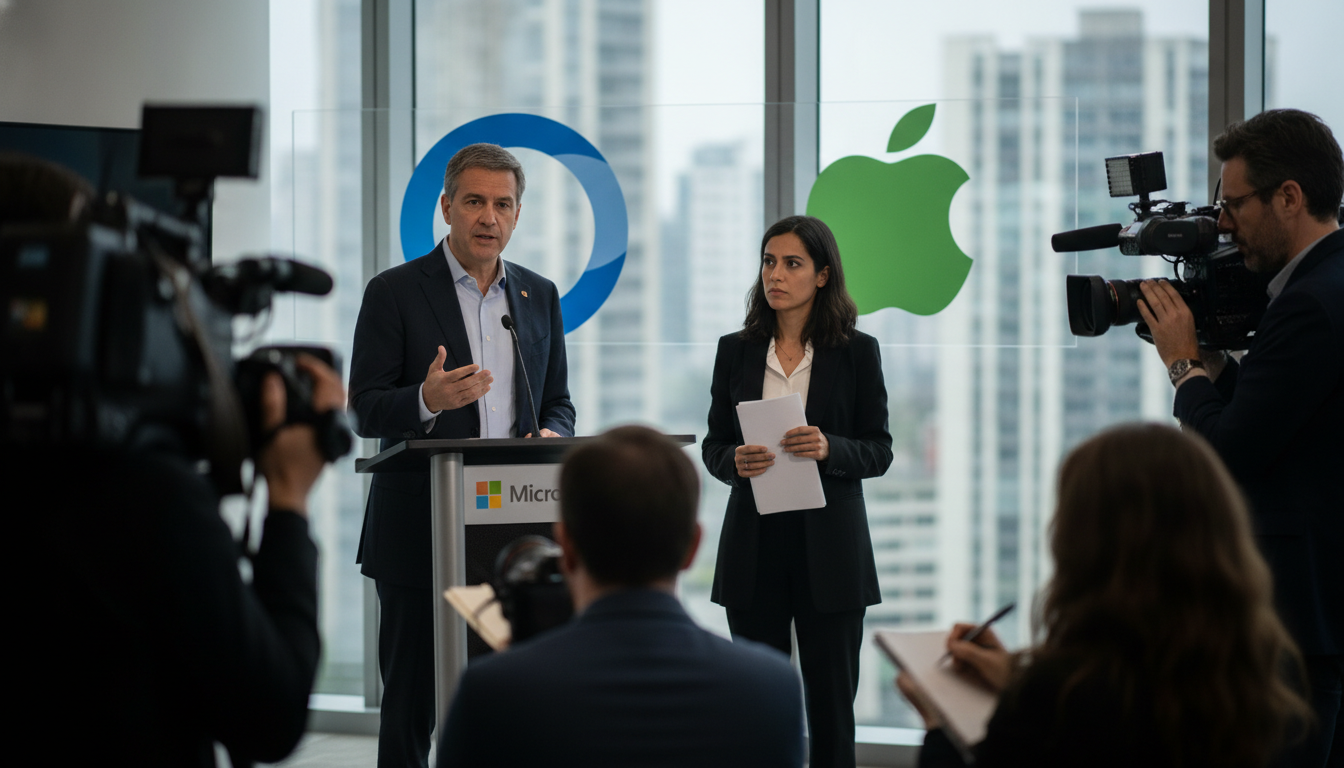
OpenAI Rejects Claims as Apple Sues OpenAI in Trade-Secrets Lawsuit
OpenAI says Apple’s trade-secrets lawsuit lacks merit, denying claims that former Apple staff took hardware plans as OpenAI develops a new device on Tuesday.
OpenAI on Tuesday pushed back against a trade-secrets lawsuit filed by Apple, saying the complaint contains no evidence that would justify the allegations. The company reiterated it supports fair competition and the right of employees to change employers while focusing on building technology designed to empower users.
OpenAI rebuts Apple’s allegations
OpenAI issued a brief statement rejecting the central claims in Apple’s complaint and saying it had seen no evidence that the case is meritorious. The statement, made public through social media posts, emphasized the company’s commitment to lawful, competitive practices. OpenAI said its priorities remain product development and innovation rather than acquiring proprietary information from other firms.
Apple’s filing, however, frames a different narrative and alleges coordinated misconduct by former Apple employees now at OpenAI. The divergent public positions set the stage for a protracted legal contest that could hinge on technical and factual proof now likely to be examined in court.
Key claims in the federal complaint
Apple filed a 41-page complaint in the U.S. District Court for the Northern District of California, alleging that confidential information and intellectual property were improperly obtained. The suit contends that OpenAI and associated partners used Apple’s internal data while pursuing their own hardware initiatives. Apple’s complaint seeks remedies that could include damages and injunctions to prevent use of the disputed materials.
The complaint presents a mix of factual detail and legal theory, asking the court to assess whether specific information was wrongfully accessed or used. Courts typically require clear evidence tying defendants to the alleged misappropriation, meaning discovery and depositions will be central to resolving competing claims.
Allegations involving former Apple engineers and leadership
Apple’s lawsuit names former Apple employees who later joined OpenAI, and it includes specific references to personnel and actions it describes as coordinated. Among those highlighted is Tang Tan, identified in the complaint as OpenAI’s chief hardware officer and a long-time Apple executive. Apple alleges a pattern of behavior by individuals that it says amounts to more than ordinary employee movement between companies.
OpenAI’s response did not address individual personnel matters directly, instead framing the dispute as unsupported allegations against the company generally. The focus on former Apple engineers raises questions about the boundaries of employee mobility, the protection of trade secrets, and the safeguards companies use to prevent improper transfer of sensitive work.
OpenAI’s hardware ambitions and recent moves
Apple’s filing arrives amid reports and corporate moves suggesting OpenAI is pursuing hardware products, a development that would place the AI laboratory in more direct competition with established device makers. Observers have noted OpenAI’s acquisition of a design startup associated with prominent designer Jony Ive, and media reports have described prototype efforts toward a screenless, mobile smart speaker intended as an AI companion.
OpenAI has publicly framed such activities as part of broader product innovation rather than a bid to appropriate competitors’ inventions. Still, the combination of strategic hires, acquisitions, and reported prototypes increases scrutiny from companies that view any encroachment on device markets as a material threat to their core businesses.
Legal timeline and possible industry consequences
The case, lodged in federal court, will move through standard pretrial procedures including discovery, motions, and possible settlement talks. Apple’s initial filing gives it the opportunity to frame the dispute and seek early protections, while OpenAI will be able to contest the evidentiary basis of the claims. Legal experts say such litigation can take many months or years to resolve, particularly when complex technology and trade-secret assertions are involved.
Beyond the courtroom, the dispute could influence hiring practices, noncompete enforcement, and the way companies document internal design and research protocols. If Apple’s claims proceed to a finding in its favor, it could prompt stricter internal controls across the tech industry and reshape collaboration and recruitment norms.
OpenAI and Apple now head into a legal process that will test how courts balance employee mobility, competitive innovation, and the protection of proprietary information. Both the specifics of the alleged conduct and the technical nature of any contested materials will be central to the case’s outcome.
The unfolding litigation will be closely watched by hardware makers, AI developers, and legal observers, who see in the suit a potential precedent for how intellectual property disputes are handled in an era where software, services, and devices increasingly overlap.
