
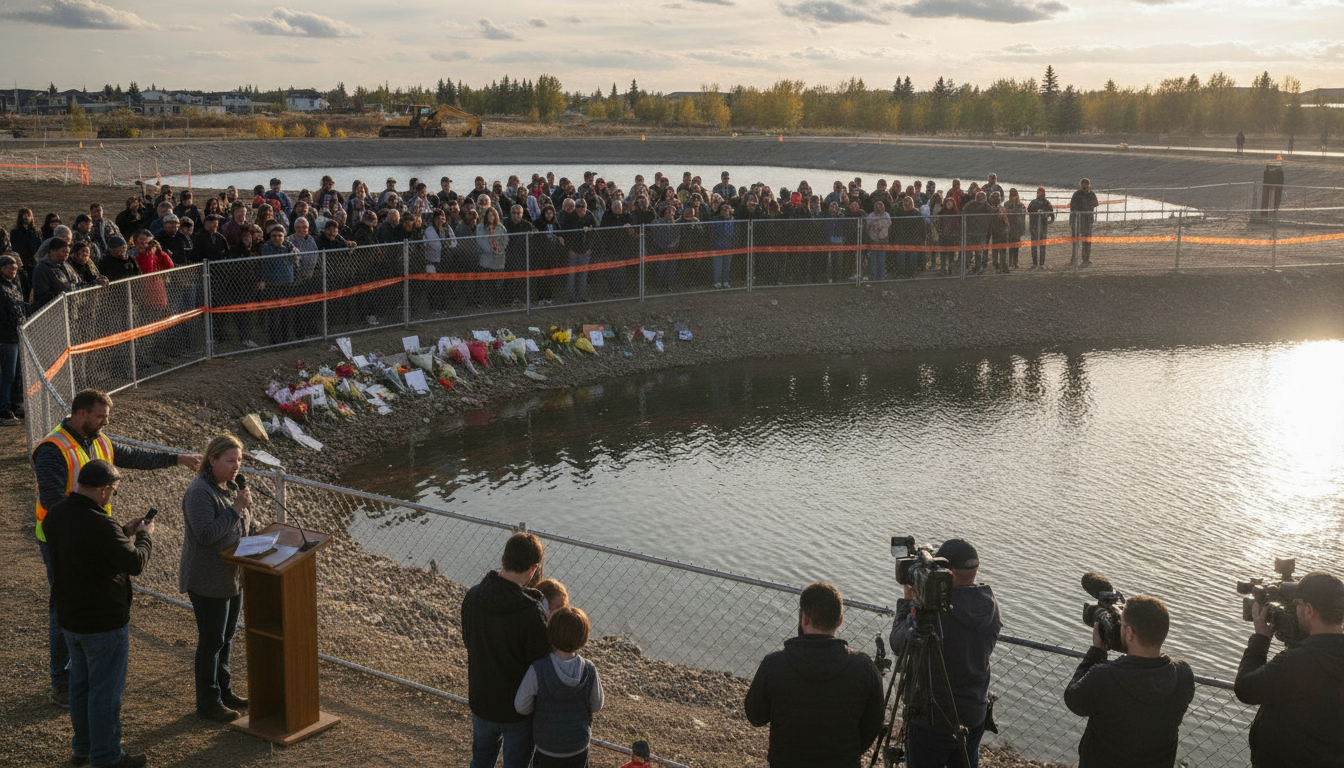
Legacy pond drowning in Calgary kills child as neighbours call for barriers and better supervision
A child died after a Legacy pond drowning in southeast Calgary on July 12, 2026, prompting calls from residents for physical barriers and renewed attention to water safety. Emergency crews and bystanders attempted life-saving measures after a family member pulled the child from a storm pond, but the Calgary Fire Department confirmed the death at the scene. The community is reeling and local safety experts say the incident highlights persistent risks around unsupervised urban water features.
Incident summary and emergency response
Calgary Fire Department crews were dispatched on the afternoon of July 12, 2026, after a family member retrieved a child from a storm pond in the Legacy neighbourhood. Bystanders began CPR and firefighters continued life-saving efforts until paramedics and STARS air ambulance personnel were on scene, according to public information officer Alex Kwan. The department said the child was underwater for about 20 minutes, and a search of the pond found no other victims.
Crews confirmed the fatal drowning at the pond and did not transport the child to hospital, Kwan added. Officers also noted that signage was present at the site. The death follows a separate drowning in May 2026 at Mahogany Lake that claimed the life of a 12-year-old, underscoring a troubling pattern of water-related incidents in the city this summer.
Neighbour accounts and calls for physical barriers
Residents living near the storm pond described a scene of shock and mourning on July 13, 2026, as flowers and mementos were left at a small memorial. Stewart Church, who lives close to the pond, said people often ignore warning signs and that the water sits adjacent to a playground used by young children. “There’s a really great rock…kids love to stand there and throw stuff in,” he said, describing how youngsters routinely gather at the water’s edge.
Several neighbours argued that signage alone is not enough and urged the city or developers to install fencing or other barriers to prevent access to the pond. Teryn Allred brought her two sons to leave flowers and said the incident felt like “every mother’s worst nightmare,” adding that children will test boundaries and can be at risk within seconds when they get too close to water.
Rescue timeline and on-scene decisions
Bystanders and first responders acted quickly after the child was pulled from the water, performing CPR until professional crews arrived. The Calgary Fire Department took over life-saving measures and coordinated with emergency medical services and STARS, but officials said the prolonged submersion critically reduced the chances of survival. A follow-up search of the pond established there were no additional victims.
Officials also noted a recent uptick in water-related calls across the city following the end of a river safety advisory on July 7, 2026. Kwan said firefighters have been patrolling the Bow River and responding to multiple rescues over single shifts, from overwhelmed swimmers to failed rafts and paddleboard incidents.
Expert perspective on supervision and cold-water risks
Madison Lalonde, interim managing director of the Lifesaving Society Alberta and Northwest Territories Branch, said drownings involving young children in Alberta between 2021 and 2025 were attributable to lack of supervision or distracted supervision. Lalonde stressed that supervising adults must designate an on-guard person whose sole responsibility is to watch children in or near water, and that phones or books are not substitutes for active attention.
She also warned about cold-water shock that can occur in Alberta’s outdoor water bodies year-round, noting that sudden exposure can impair breathing and muscle control even for strong swimmers. Lalonde urged families not to allow children alone near any natural or storm water and recommended lifejackets when appropriate.
Community safety measures under consideration
Residents and community associations are pressing councilors and developers to review storm pond designs and access controls in Legacy and similar subdivisions. Suggestions include physical fencing, more prominent warning signage, and community education campaigns focused on supervising young children. Some parents also called for regular safety patrols during peak summer hours when neighbourhood playgrounds and ponds are most active.
City officials and developers did not provide immediate comment at the scene, but community leaders say they will seek meetings with municipal representatives to discuss practical changes that could reduce the risk to children near urban ponds.
Broader context of summer water incidents
Summer weather and outdoor recreation contribute to a higher incidence of water emergencies, and Calgary’s emergency services have reported a range of problems in recent weeks. Along with drownings, crews have rescued people from fast-moving river conditions and attended to incidents involving small watercraft and paddleboards. Public safety messaging has emphasized personal flotation devices, supervising children, and checking local advisories before entering waterways.
Experts reiterate that many drownings are preventable when supervision is active and lifesaving equipment is available, and they urge communities to treat storm ponds and other unsupervised water features as potential hazards rather than recreational assets.
The Legacy neighbourhood continues to grieve while families and officials weigh immediate steps to prevent future tragedies, and residents say they will press for barriers and clearer safety protections around the pond.
