
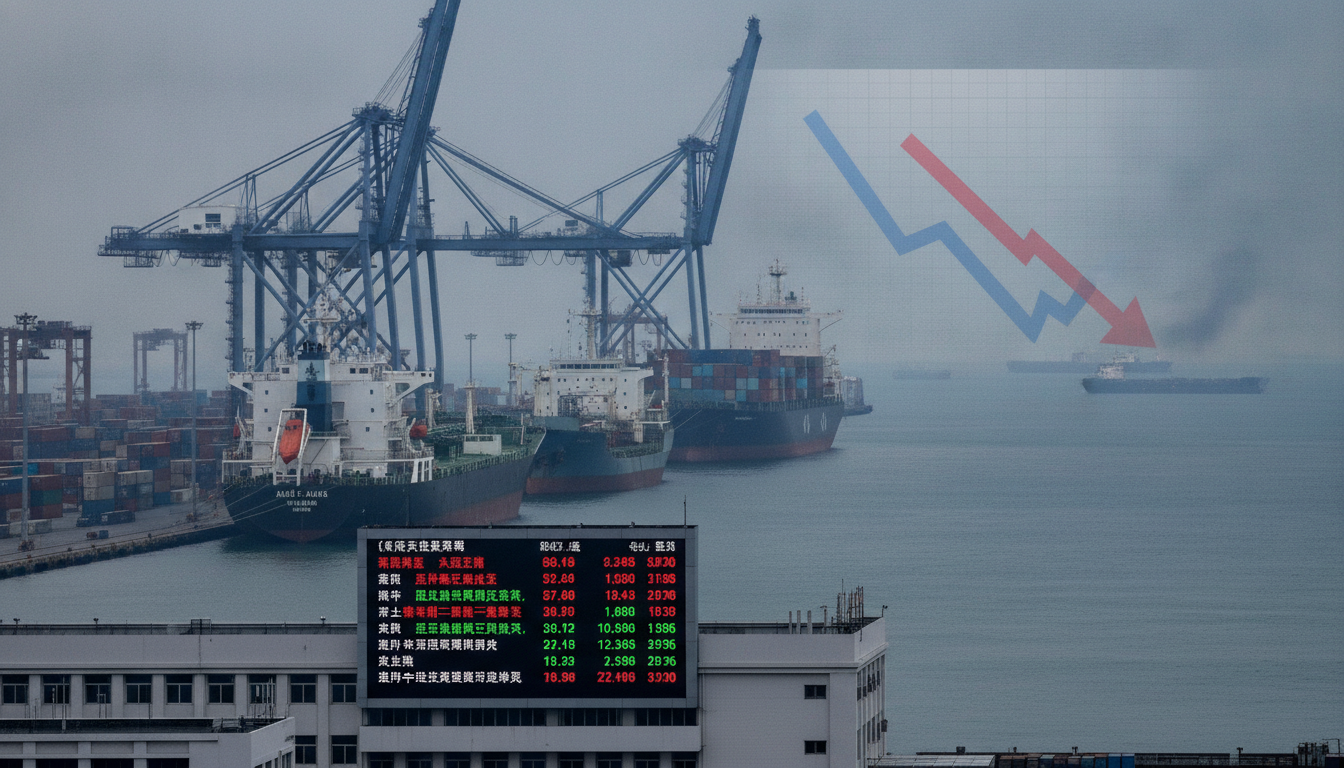
China oil imports helped blunt global price surge after Strait of Hormuz blockade
China oil imports and reserve draws eased supply shocks after Iran’s blockade, keeping Brent and WTI far below worst-case forecasts and returning prices near pre-crisis levels.
The sudden closure of the Strait of Hormuz in late February sparked fears of a catastrophic oil-price spike, yet global markets proved more resilient than many analysts predicted. China oil imports fell sharply as Beijing tapped the strategic stockpiles it had accumulated in 2024–25, a response that industry watchers say removed a key buyer from the market and helped cap price rises. Crude surged above US$110 a barrel at the peak of the crisis but has since eased toward roughly US$70 as shipping gradually resumed and governments used reserve supplies.
How China adjusted supply behavior
China had increased crude purchases in the two years before the crisis to replenish national reserves and feed rising domestic demand, energy analysts note. When the Strait of Hormuz was effectively blocked, those stockpiles gave Beijing flexibility to cut imports without immediately disrupting domestic supplies. Analysts at S&P Global Energy and academic researchers point to that shift as one of the most consequential factors in preventing an even larger global price shock.
Beijing’s actions were strategic rather than purely market-driven, officials and economists say, drawing on reserves to smooth domestic markets and reduce reliance on Middle Eastern cargoes during the disruption. By temporarily stepping back from the spot market, China removed a significant chunk of demand that would otherwise have accelerated price escalation.
Price movements and market response
Oil markets initially spiked on news of the strait’s closure, with benchmark crude briefly testing the highest levels seen in years. Traders priced in a severe supply shortfall, and gasoline and diesel prices rose rapidly in many consuming nations, contributing to headline inflation concerns. Yet the rally proved shorter and less extreme than the most dire forecasts, as multiple supply-side and demand-side interventions began to take effect.
Within weeks, prices descended from their peak as a combination of reserve releases, reduced Chinese imports, and the gradual reopening of shipping lanes alleviated supply fears. Economists observing the market described the decline as surprisingly swift given the scale of the geopolitical shock, though they also warned that volatility remains until normal trade patterns are firmly reestablished.
Strategic reserves and international coordination
Countries across Asia, Europe and North America moved to release oil from strategic reserves to dampen the price spike and ensure consumer fuel availability. These coordinated withdrawals provided immediate physical supply and sent a clear signal to markets that national stockpiles would be used to stabilize prices. Energy ministers and market authorities emphasized the tactical use of reserves as a short-term tool, not a substitute for sustained production increases.
Officials also highlighted the importance of inventory management; once the immediate crisis eased, many nations began planning to refill strategic holdings, creating a new layer of demand. That repurchasing could support prices in the near term, even as spot-market flows normalize.
Continued risks to the Strait of Hormuz corridor
Despite progress toward reopening shipping lanes, the waterway remained vulnerable to disruptions linked to military activity and maritime hazards. Incidents at sea, including recent attacks on transiting vessels, underscored the fragility of supply routes that carry roughly one-fifth of global oil shipments. Analysts warn that a breakdown in tentative ceasefire arrangements would quickly restore the case for much higher prices.
Market watchers stress that a return to full, unhindered transit is not guaranteed and could be slowed by the need to clear sea mines and repair port infrastructure. Any renewed interdiction of tanker traffic would immediately revive premium pricing for barrels that must be rerouted or supplied from alternative sources.
Demand outlook and longer-term shifts
How quickly global demand reverts to pre-crisis patterns depends heavily on buyers’ strategic choices, with China at the center of that calculus. Some economists believe Beijing will steadily rebuild imports as inventories are replenished, which would lift demand and sustain somewhat higher price levels. Others argue that the episode could accelerate a longer-term pivot away from crude, as China advances electric vehicle deployment and renewables in its energy mix.
Canadian and North American forecasters say that even if China resumes prior import volumes, a period of elevated stockpiling by multiple countries could create a durable baseline of demand above ordinary consumption levels. That pattern would limit how far prices can fall, at least until rebuilding is complete.
Global markets and policymakers now face a balancing act: maintaining adequate strategic cushions without triggering excessive upward pressure from competitive stockpiling. The immediate crisis has shown that inventories and the buying behavior of major consumers can be as influential as supply disruptions themselves.
Looking ahead, the market’s path will hinge on whether the Strait of Hormuz remains reliably open and on the pace at which key buyers like China decide to return to the spot market or continue to rely on strategic reserves.
