
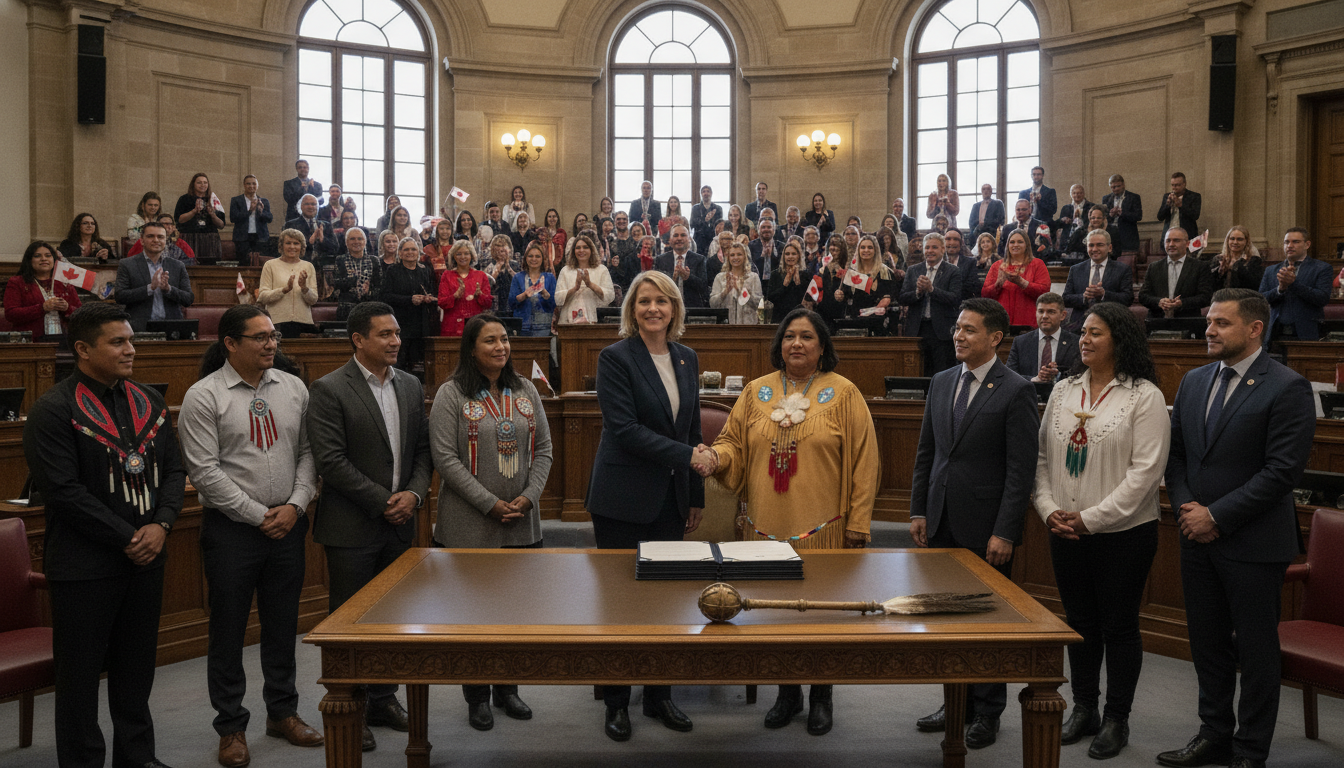
Alberta government urges celebration and reflection on Indigenous cultures, Sawhney says
Alberta Indigenous peoples are being urged to be celebrated and their contributions recognized in a provincial statement that calls for both celebration and reflection on Indigenous knowledge, traditions and leadership. Sawhney said the message highlights the “rich cultures, histories and leadership” of First Nations, Métis and Inuit peoples while acknowledging their ongoing role in shaping Alberta’s communities, economy and future. The statement frames the moment as an opportunity for public recognition and a renewed focus on Indigenous contributions across the province.
Province issues message on Indigenous leadership
Sawhney’s statement emphasizes cultural pride and acknowledgement rather than a single event or ceremony. The language stresses Indigenous leadership and the deep historical roots of First Nations, Métis and Inuit peoples in Alberta. Officials framed the message as a combined call to celebrate cultural achievements and to reflect on how Indigenous knowledge continues to influence provincial life.
Community leaders welcomed the tone of the message while noting that recognition must translate into action. Several Indigenous organizations have long advocated for concrete steps that support language revitalization, cultural programming and economic partnerships. The statement’s reference to leadership was read by advocates as an affirmation of the central role Indigenous peoples play in provincial governance and civic life.
Economic contributions and traditional knowledge
The statement highlights economic as well as cultural impacts, noting that Indigenous knowledge and traditions contribute to Alberta’s economy. Indigenous-led businesses and partnerships have grown in number, spanning energy, tourism, agriculture and cultural industries. Observers say recognizing economic leadership is vital to ensuring long-term, reciprocal relationships between Indigenous communities and regional industries.
Traditional ecological knowledge is increasingly involved in land stewardship and environmental planning, creating new pathways for collaboration. Indigenous approaches to conservation and resource management are being integrated into regional strategies, according to community representatives. Supporters argue that honoring these contributions in words should be matched with funding and policy attention.
Cultural programming and public events
Across Alberta, museums, cultural centres and Indigenous organizations routinely host programming that celebrates heritage and history. The provincial statement encourages continued participation in exhibitions, public teachings and gatherings that lift up stories and practices from First Nations, Métis and Inuit traditions. Organizers say such events are important for both Indigenous and non-Indigenous audiences to deepen understanding.
Educational institutions and community groups often run workshops and performances that center Indigenous languages, arts and ceremonies. These programs aim to strengthen cultural transmission among youth and provide broader audiences with opportunities to learn. The statement’s call for celebration aligns with ongoing efforts to make these cultural offerings more visible and accessible.
Education, youth and language revitalization
Sawhney’s remarks underscore the role of knowledge and traditions in shaping the future, a point that resonates strongly with youth-focused initiatives. Indigenous youth programs in Alberta increasingly combine cultural education with skills development and leadership training. Educators and elders collaborate to create spaces where language and tradition can be taught alongside contemporary competencies.
Language revitalization remains a central concern for many communities, with numerous initiatives underway to teach and preserve Indigenous languages. Supporters argue that provincial recognition should expand resources for immersive language programs, teacher training and curriculum development. Investment in these areas is widely seen as essential to sustaining cultural continuity.
Reflections on reconciliation and next steps
The statement’s reflective tone invites consideration of progress on reconciliation and outstanding challenges. Advocacy groups point to areas where more action is needed, including access to services, treaty implementation, and systemic barriers in health, education and justice systems. The call to reflect, according to community leaders, should include reviewing policies and measuring outcomes tied to Indigenous well-being.
Policy makers say statements of recognition are an important step but not an endpoint. Lasting change requires partnerships that respect Indigenous jurisdiction and decision-making authority. Observers and Indigenous representatives alike stress the need for clear targets, sustained funding and transparent reporting on initiatives that affect Indigenous communities.
Voices from Indigenous communities
Indigenous leaders and cultural practitioners have responded to the provincial message with a mix of appreciation and pragmatic demands. Many praise the affirmation of Indigenous histories and leadership, while urging that recognition be accompanied by concrete measures to support cultural preservation and economic self-determination. Community voices reiterate that celebration and reflection must be anchored in meaningful action.
Elders and youth alike emphasize the intergenerational nature of culture and the importance of creating everyday opportunities for Indigenous knowledge to thrive. For many, public statements are a useful reminder of the province’s diverse heritage, but the true measure of progress will be seen in policy choices and resource commitments that reinforce Indigenous priorities.
The provincial message, as delivered by Sawhney, frames the moment as both celebration and reflection, calling attention to the enduring contributions of First Nations, Métis and Inuit peoples to Alberta’s communities, economy and future.
