
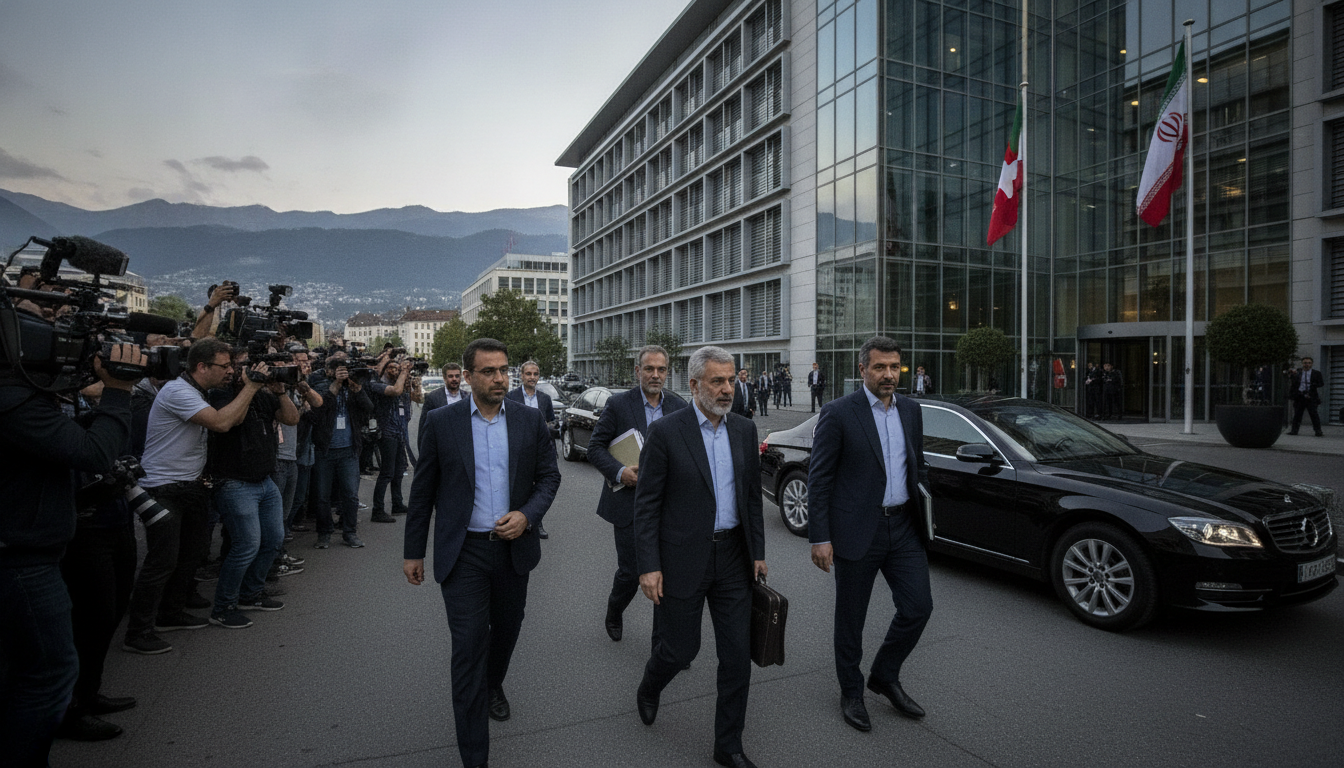
Iranian delegation leaves talks in Switzerland after U.S. message, threatening ceasefire push
An ‘insulting’ message from President Trump prompted the Iranian delegation to leave talks in Switzerland on June 21, 2026, the move that stalled a 60-day push for a Middle East ceasefire.
The negotiations, held at the Bürgenstock hotel above Lake Lucerne, were intended to produce a final agreement to end recent hostilities that began with strikes on February 28, 2026.
Officials and mediators warned the incident underscored how fragile the process remains as fighting continues in Lebanon and casualties mount.
Talks paused after U.S. message
A government news agency said the Iranian team left the venue after about 80 minutes of discussions and an interruption, citing what it described as an “insulting” public message from the U.S. president.
The message, posted on the former president’s social platform, urged Tehran to prevent its allies in Lebanon from “causing problems,” and warned the United States could resume strikes if that did not happen.
Iranian officials argued the public warning amounted to a threat and breached a clause in the U.S.-Iran protocol that called for refraining from threats of force.
Iran cites protocol breach and issues warning
Iranian state media and the chief negotiator, Mohammad Bagher Ghalibaf, publicly rebuked the message, saying Tehran would not accept intimidation while talks were under way.
Bagher Ghalibaf wrote on X that Washington “would do better to measure its words,” and warned that Iran’s armed forces stood ready to respond in other ways if provoked.
Tehran’s foreign ministry spokesman, Esmaïl Baghai, said a cessation of hostilities in Lebanon was a precondition for any agreement, underscoring Tehran’s insistence that regional dynamics be addressed in parallel.
Mediators and U.S. delegation on site
The Geneva-area discussions were being mediated by Pakistan and Qatar and involved senior U.S. envoys including Vice-President J.D. Vance, who described the talks as “historic.”
U.S. representatives present also included special emissary Steve Witkoff and Jared Kushner, who travelled to Switzerland to press for a rapid outcome.
A diplomat close to the talks, speaking on condition of anonymity, said the Iranians remained technically engaged and had not informed mediators of any intention to withdraw permanently.
Lebanon clashes deepen complications
The negotiations opened against the backdrop of continuing clashes in Lebanon between Israeli forces and Hezbollah, a Tehran-aligned group, which negotiators had sought to bring to a halt.
Iranian officials pointed to renewed hostilities and the closure of the Strait of Hormuz as examples of why confidence-building measures were urgently needed.
Israeli strikes in southern Lebanon over the weekend reportedly killed at least 30 people, and Lebanese authorities have placed the humanitarian and military toll at thousands since March.
Claims of progress despite fragility
Despite the walkout, U.S. officials said there had been “considerable progress” toward a ceasefire to make any truce in Lebanon hold, and that talks were expected to extend over several days.
Iranian state television, however, said nuclear issues were not discussed in the opening session and reported that Tehran’s delegates declined a joint photo with U.S. counterparts.
Diplomats warned that public disputes and social-media statements by political leaders risk undermining negotiators’ ability to conclude the planned 60-day renewable accord.
Next steps and narrow window for an agreement
Under the framework agreed by the parties, negotiators have a 60-day window, renewable, to reach a final accord intended to end the wider conflict that erupted with strikes on February 28, 2026.
Mediators are expected to convene further sessions and seek private consultations to repair trust after the public incident that triggered the Iranian departure from the meeting space.
Observers say success will depend on parallel moves to halt the fighting in Lebanon and quiet inflammatory public statements that can inflame domestic politics on both sides.
The immediate outlook is uncertain: while diplomats insist the talks remain salvageable, officials on each side have traded stern warnings and shown little appetite for public concessions.
How quickly negotiators can rebuild momentum will hinge on whether Washington and Tehran can restrain public rhetoric and ensure that mediators have the space to reach a binding arrangement within the limited 60-day timeframe.
