
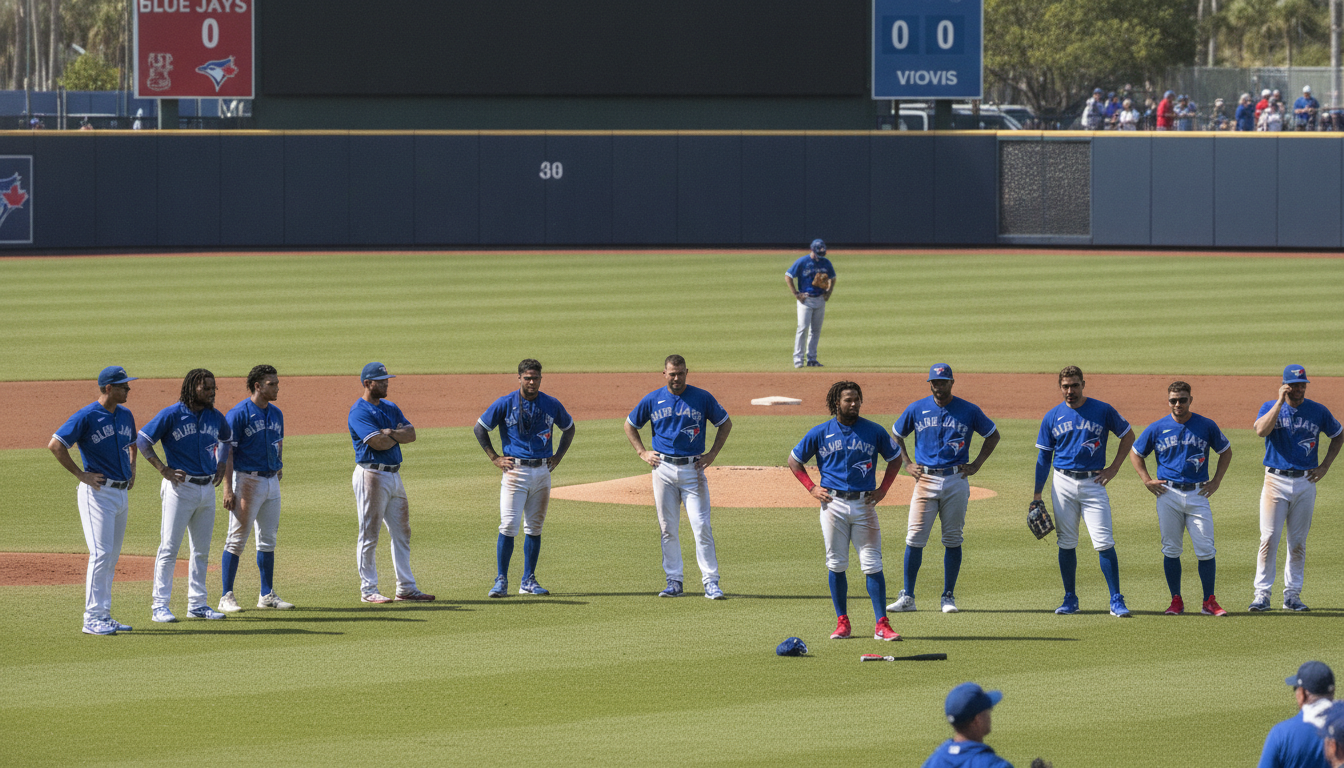
Toronto Blue Jays Struggle to Follow 2025 Run as Offseason Additions Offset Core Slump
Toronto Blue Jays 37-38 mid-2026 as offseason additions like Dylan Cease deliver while Guerrero and Springer struggle, leaving questions about roster depth.
The Toronto Blue Jays entered the midpoint of the 2026 season with a 37-38 record despite a World Series appearance last year and recent wins such as a sweep of the Boston Red Sox. Offseason signings including Dylan Cease and Tyler Rogers have produced encouraging performances, but several core bats that powered the 2025 run have cooled. The combination of bright new contributions and familiar mid-season erosion leaves Toronto balancing optimism with caution.
Startling early-season record
The Blue Jays’ 37-38 mark through the first half of the season is a sharp contrast to the momentum generated by last year’s postseason. Expectations were elevated after a World Series trip, and the current record positions the club as underperforming relative to last year’s standard. A sweep of the Red Sox offered a brief reminder of the team’s potential, but consistency has been elusive.
Offseason additions exceeding projections
Dylan Cease and veteran reliever Tyler Rogers have been two of Toronto’s most reliable offseason acquisitions, exceeding preseason projections. Both pitchers have provided stability in roles the club identified as priorities during the winter, and their early returns have exceeded ZiPS forecasts. Kazuma Okamoto and Jesús Sánchez have contributed above-average offense relative to expectations, with Okamoto emerging as a significant power presence and a better-than-anticipated defender.
Injuries and setbacks to rotation depth
Not every high-profile signing has paid dividends; Max Scherzer has struggled to recapture his previous form, and a notable injury to Ponce landed him on the 60-day injured list early in the season. The club’s depth has been tested as a result, with other starters and relievers asked to cover innings and preserve the rotation. While Cease has emerged as a reliable front-line option, Toronto still lacks a clear second foundational starter beyond him.
Core hitters slipping from 2025 production
Toronto’s offensive inconsistency is most evident in the struggles of Vladimir Guerrero Jr. and George Springer, two central figures from the 2025 lineup. Those declines have been compounded by injuries to Addison Barger and Alejandro Kirk, who combined for 6.9 fWAR in 2025 but have produced only 0.1 fWAR so far this season. Barger and Kirk have managed a .140/.254/.246 slash line in 67 plate appearances, depriving the middle of the order of protection and run production.
Comparisons to the 2025 supporting cast
The 2025 Blue Jays overcame long odds—after a 74-88 finish in 2024 and mixed results from offseason moves—to surge in the postseason. That season featured unexpected internal growth while a few veteran signings underperformed; for instance, Max Scherzer and Jeff Hoffman combined for roughly 153 innings with a 4.82 ERA and nearly zero fWAR contribution in 2025. Anthony Santander and Andrés Giménez also underdelivered in large sample sizes, yet the team’s internal development masked those shortcomings then in ways it has not this year.
Contributions from new arrivals and rookies
Newcomers and several younger players have been bright spots for Toronto, collectively accounting for meaningful share of the team’s value. The quartet of recent additions has generated 5.0 fWAR and represents roughly 28.7 percent of the club’s total fWAR to date. A strong rookie class has continued to produce, and the organization retains team control over most of the promising signings, which provides strategic flexibility for the short and medium term.
The balance between new talent and veteran underperformance is central to the Blue Jays’ current identity. With Cease now viewed as a foundational arm and relievers like Louis Varland offering value, the pitching staff contains building blocks even if it is not yet deep.
What the club can do next
Toronto’s path forward depends on several variables converging: regression from underperforming veterans back toward career norms, the return to health for injured contributors, and continued production from recent signings. If Guerrero Jr. and Springer recover productively and Barger and Kirk regain form after injury, the club’s blend of established talent and new arrivals could restore the balanced lineup needed to compete consistently. Front-office decisions on usage and timing of returns will also shape outcomes down the stretch.
Even with encouraging signs from offseason pickups, the Blue Jays have not yet assembled a clearly repeatable formula. The organization must reconcile short-term losses with the longer-term upside held in controllable contracts and an active farm system. For now, Toronto’s record reflects a team in transition rather than a failed rebuild.
The next stretch of the schedule will be telling as the Blue Jays aim to translate bursts of strong performance into sustained success and determine whether their roster can replicate the postseason chemistry that carried them in 2025.
