
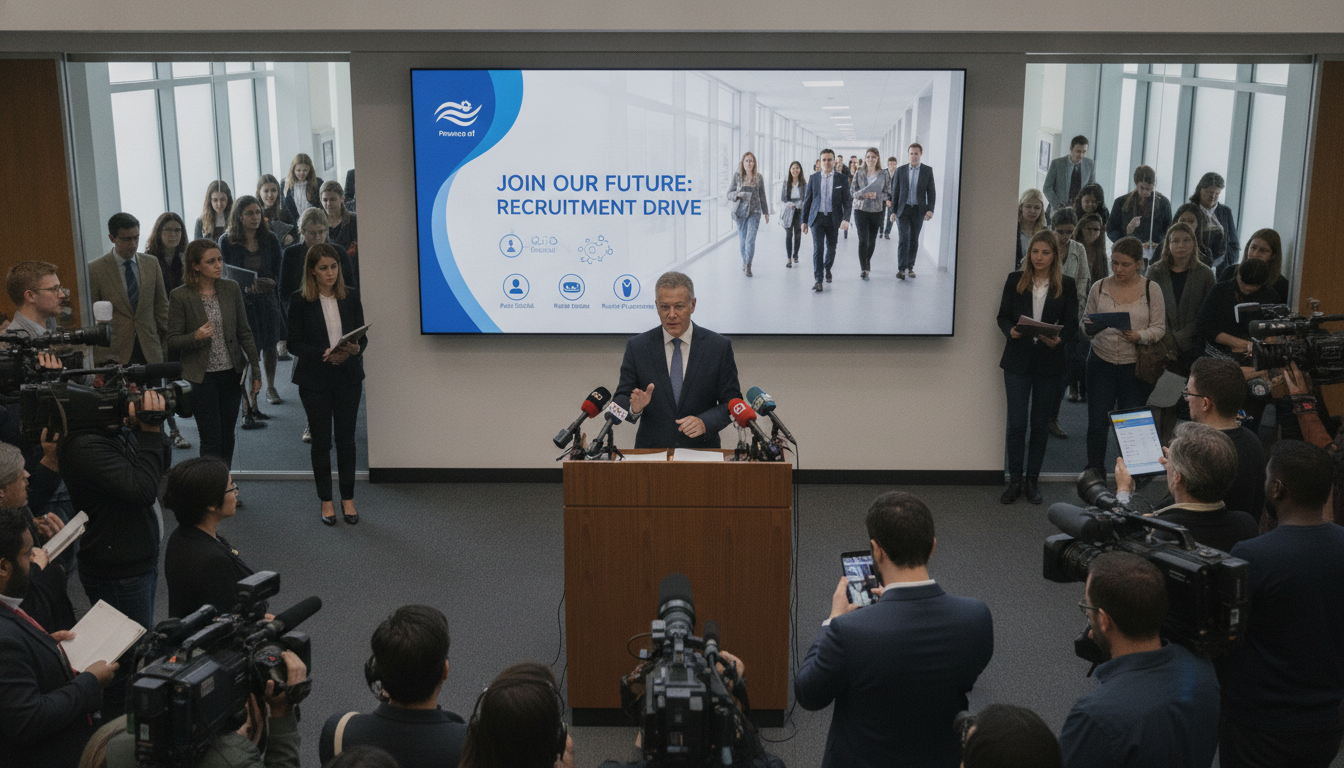
Provincial recruitment campaign to use social media, Indeed, radio and schools to boost uptake
Province-wide recruitment campaign will use media, social platforms, Indeed, radio and outreach to schools and municipalities to boost applications this year.
A province-wide recruitment campaign launched by provincial authorities aims to increase applications and participation in public programs by combining digital and traditional outreach. The provincial recruitment campaign will deploy paid and organic social media, an Indeed jobs push and radio placements to reach a broad audience. Organizers say the strategy targets areas with lower uptake and will include distribution of printed recruitment materials to schools, municipalities and community groups.
Campaign strategy combines channels for broad reach
The campaign relies on a mix of mass media and targeted advertising to reach different demographic groups across the province. Paid and organic social media posts are designed to raise awareness quickly, while radio placements and traditional media extend reach into communities with less online engagement. An Indeed campaign will provide a direct application pathway for job-seekers and residents looking to participate in provincial programs.
The integrated approach is intended to balance volume with precision, using data to steer resources toward communities that have shown lower response rates. Targeted advertising buys will prioritize specific postal codes and media markets where uptake has lagged. Officials said this combination should improve both awareness and conversion.
Targeted advertising aimed at low-uptake regions
Officials have identified regions where uptake remains below provincial averages and will focus additional advertising there. Targeted ads will be placed in local outlets and through geofenced digital channels to reach residents in those communities. The goal is to reduce geographic disparities in participation.
The campaign’s emphasis on low-uptake areas reflects a broader policy push to ensure services and opportunities are accessible to rural and underserved populations. By tailoring messaging and delivery methods, organizers hope to address barriers such as limited internet access or low awareness. This targeted work will run alongside province-wide messaging to maintain visibility everywhere.
Schools and municipalities to receive printed materials
Organizers will distribute recruitment materials to schools and municipal offices as part of the outreach strategy. Materials intended for students, parents and municipal staff aim to provide clear information on eligibility and application steps. The physical presence of flyers and posters is expected to complement digital outreach in community hubs.
Community organizations will also receive toolkits to help spread information at local events and service points. These kits will be adapted for different audiences, including youth, seniors and newcomers, to ensure clarity and relevance. Local partners are being asked to report back on distribution and community response.
Digital push: social media and Indeed focus
The campaign’s digital component includes both paid social media ads and organic content across major platforms to sustain visibility. Paid ads will be used to target demographic segments and retarget users who have shown interest, while organic posts will provide ongoing updates and human-focused stories. An Indeed campaign will list opportunities and direct applicants to centralized application portals.
Officials say digital analytics will guide adjustments to messaging and ad spend over time. Metrics such as click-through rates, application completions and cost-per-conversion will be monitored. The emphasis on digital is intended to meet people where they are while maintaining measurable performance indicators.
Radio placements and traditional media to boost reach
Traditional media remains a key part of the outreach plan, with radio placements scheduled to reach commuters and listeners in rural areas. Radio spots will run alongside print and community newspaper placements to capture audiences less active online. This dual strategy aims to raise baseline awareness across demographic groups.
Broadcasters in targeted regions will be used to tailor timing and language of spots to local audiences. Organizers believe that combining radio with local outreach through schools and municipalities will create repeated touchpoints. That repeated exposure is central to prompting action among residents who may need multiple reminders.
Monitoring results and next steps for the campaign
Officials have built in monitoring to measure uptake and to reallocate resources where results are weakest. Performance indicators will include application volumes, regional breakdowns and engagement metrics from social and job-board activity. The campaign will be adjusted based on early results to improve efficiency and impact.
Short-term results are expected to inform a longer-term recruitment plan that could include targeted community events or expanded partnerships. Organizers have asked local partners to collect feedback and report barriers encountered by residents. That information will shape follow-up phases and any additional supports required.
The province-wide recruitment campaign reflects an effort to combine digital targeting with community-level distribution to close gaps in participation. By using Indeed, social and traditional media alongside printed materials in schools and municipalities, authorities aim to raise awareness and convert interest into applications across the province.
