
Drolet study highlights gaps in wildfire evacuation support for displaced Canadians
Research by Drolet reveals critical weaknesses in wildfire evacuation support across Canada, from immediate aid to long-term recovery for displaced residents.
Wildfire evacuation support is the focus of new research by Drolet that maps how people are assisted from the moment they flee flames to the months and years after they leave their homes. The study underscores that, while fire prevention and ecological recovery get extensive attention, the human systems that carry evacuees through displacement remain fragmented. Drolet’s work examines both emergency-stage services and the longer-term social, financial and psychological supports that determine whether households can rebuild their lives.
Emergency response gaps identified
Drolet’s research finds inconsistent capacity in front-line evacuation services, particularly in rapidly evolving fire events where routes and shelter options change hourly. Coordination between municipal responders, provincial agencies and volunteer groups often breaks down, leaving some evacuees without timely information or transportation. The study highlights how uneven resource allocation amplifies risks for seniors, people with disabilities and households without private vehicles.
Support during evacuation
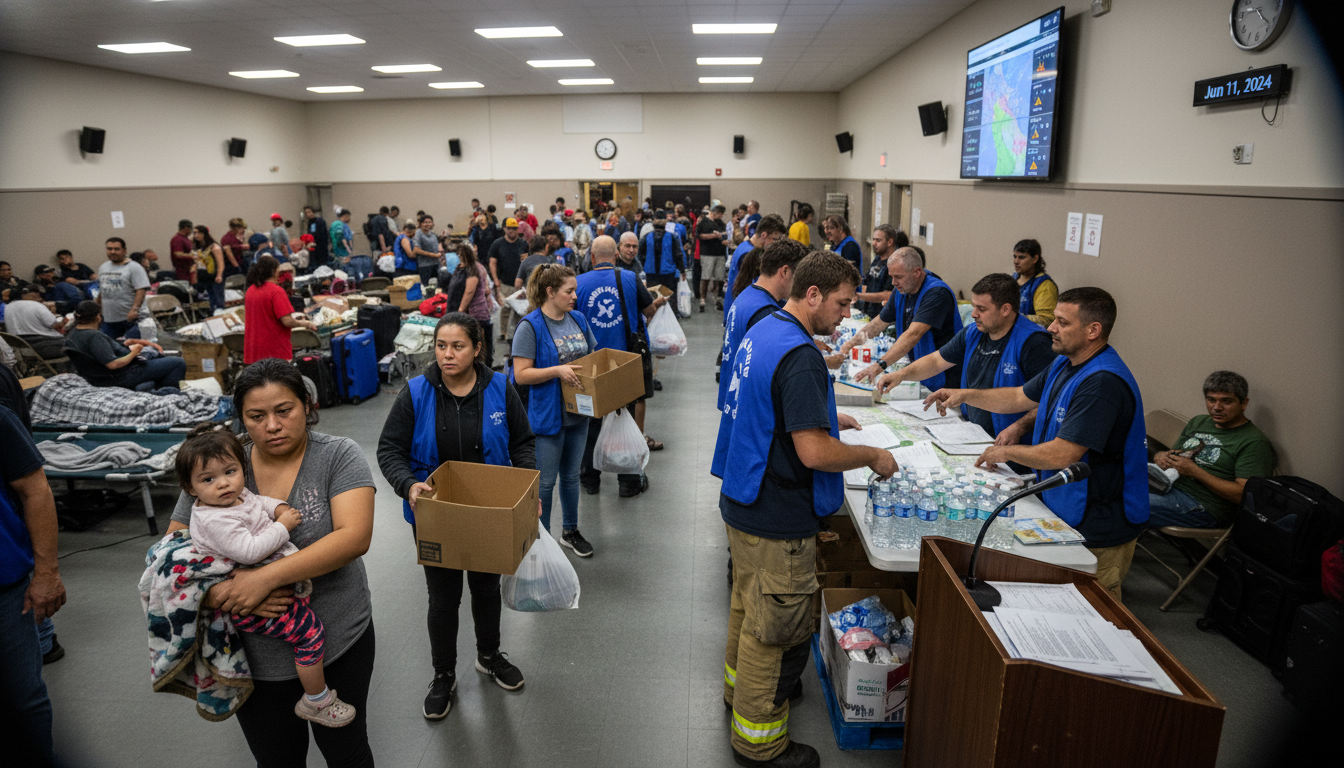
The research documents shortfalls in on-the-ground assistance during evacuations, including shortages of trained reception centre staff and language-accessible information. Many evacuees report arriving at registration sites without clear guidance on lodging, medication needs or how to access financial relief. Drolet emphasizes that effective wildfire evacuation support requires pre-established protocols and regular joint exercises among agencies to reduce confusion under pressure.
Long-term recovery challenges
Beyond the initial evacuation, Drolet’s work explores how long-term recovery systems frequently fail to align with survivors’ needs, prolonging displacement for months or years. Insurance disputes, housing shortages and fragmented benefits can prevent families from returning or rebuilding, while mental-health services are often temporary and insufficient. The research argues that recovery must be treated as a continuum tied to evacuation planning, rather than a separate phase managed by disparate programs.
Housing and displacement realities
A core finding is that housing availability and affordability determine whether displaced residents can return to community life or are forced to relocate permanently. In many affected regions, rental markets tighten rapidly after major wildfire seasons, pushing lower-income households into precarious situations. Drolet documents how displaced families face compounded stress when temporary accommodations become long-term, eroding social networks and employment stability.
Financial and social supports under strain
Drolet’s analysis shows that financial assistance programs and community supports often emphasize short-term relief rather than sustained rebuilding needs. Emergency funding may cover immediate costs such as food and temporary shelter, but gaps appear when households need help with repairs, relocation expenses or loss of employment income. The research calls for adaptive funding models that can be scaled up based on displacement duration and household vulnerability.
Policy and community responses
In response to these findings, municipal and provincial officials in several jurisdictions are revisiting evacuation protocols and recovery frameworks to better integrate welfare services. Drolet recommends clearer lines of accountability between emergency management offices and social services, as well as investments in culturally competent outreach. Community groups and Indigenous organizations are also urging inclusion in planning processes to ensure supports reflect local realities and lived experience.
Drolet’s research stresses the importance of data collection and monitoring to inform improvements, noting that many regions lack centralized records on evacuee needs and outcomes. Better tracking of who uses shelters, which households remain displaced, and the timelines for returning home would allow policymakers to target interventions more effectively. The study proposes establishing common metrics for evaluating wildfire evacuation support and recovery success.
The implications of Drolet’s work extend to preparedness planning, with an emphasis on redundancy and flexibility in service delivery. Planning exercises that simulate prolonged displacement, multilingual communication strategies and protocols for vulnerable populations are among the practical steps suggested. Investing in training for reception centre staff and creating standing mutual-aid agreements between municipalities can reduce delays when fires force mass evacuations.
Implementing the study’s recommendations will require coordinated funding and long-term commitment from multiple levels of government, as well as ongoing engagement with affected communities. Drolet urges that wildfire evacuation support be reframed as a core component of public safety infrastructure, not an episodic add-on to firefighting and ecological recovery. Without these changes, the research warns, the human costs of wildfire seasons will continue to accumulate long after flames are extinguished.
The research by Drolet presents a roadmap for strengthening how Canada supports evacuees through immediate crisis and sustained recovery, calling for integrated policy, improved data and investment in vulnerable populations to reduce long-term displacement.
