
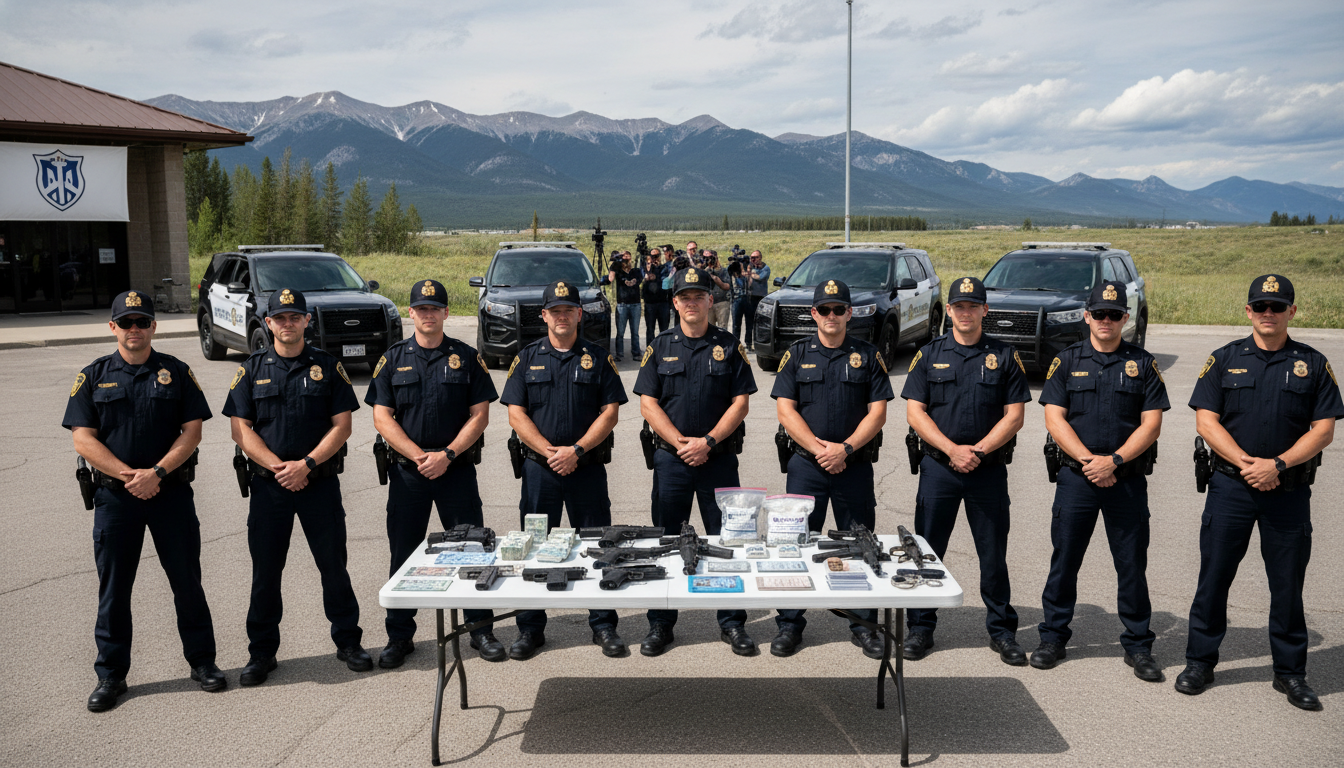
Joint law enforcement operation locates high‑risk offenders, disrupts cross‑jurisdictional crime in Alberta
Joint law enforcement operation in Alberta locates high-risk offenders and disrupts cross-jurisdictional crime, using shared intelligence to strengthen public safety.
A recent joint law enforcement operation in Alberta has led to the identification and apprehension of multiple high‑risk offenders who moved between communities, officials said. The operation, coordinated by municipal, provincial and federal agencies, used pooled intelligence and resources to track suspects and disrupt criminal networks across jurisdictions.
A spokesperson for Alberta law enforcement described the effort as a clear example of how coordinated policing can increase effectiveness and community safety. They said the collaborative approach made it possible to locate individuals who had previously evaded detection by operating across municipal boundaries.
Operation targets high-risk offenders
The operation focused specifically on offenders who travel between towns and cities to avoid law enforcement scrutiny, according to officials involved in the effort. By concentrating investigative resources on mobility patterns, teams were able to anticipate movements and deploy targeted enforcement.
Investigators combined traditional police work with analytical tools to map connections and movement corridors used by suspects. This targeted methodology reduced the time between identification and arrest, officials said, and helped prevent further offenses.
Inter-agency intelligence sharing
Cooperation between agencies was central to the operation, with law enforcement partners sharing tips, case files and surveillance data in near real time. That exchange of information allowed investigators to build more complete pictures of suspects’ activities than any single agency could achieve alone.
Analysts worked alongside frontline officers to corroborate leads and identify higher‑risk targets, linking incidents that had appeared isolated when viewed from separate jurisdictions. Authorities described the information flow as improving both investigative speed and operational safety for responding officers.
Arrests and evidence gathered
Several individuals were detained during coordinated sweeps that took place across multiple communities, and investigators seized items believed to be connected to criminal activity. Officials said the seizures included electronic devices and documents that will be examined as part of ongoing probes.
Charges are expected to be reviewed by prosecutors as investigators continue to build cases, with some matters still under active inquiry. Police cautioned that charges and the full scope of allegations will be disclosed when appropriate to protect investigative integrity and any victims involved.
Disrupting criminal activity across jurisdictions
By working across municipal and provincial boundaries, the operation aimed to sever the logistical networks offenders rely on to evade arrest. Officers targeted transit routes and locations known to facilitate the movement of people and contraband, officials said.
The cross‑jurisdictional approach limited safe havens that can form when agencies operate in isolation, and it helped expose relationships between individuals in different areas. Law enforcement sources called the disruption a setback for organized groups that exploit fragmentation between policing bodies.
Impact on community safety and victims
Authorities said the operation has tangible benefits for public safety by removing people assessed as posing higher levels of risk from the streets. Community members and local leaders expressed support for coordinated policing as a means to reduce fear and prevent further harm.
Victim support services were notified where appropriate and investigators urged anyone affected by the alleged crimes to come forward with information. Officials emphasized that protecting victims and preserving evidence remain priorities as cases move through the justice system.
Next steps and ongoing investigations
Investigations related to the operation are continuing, and officers said they will pursue additional leads uncovered during the coordinated action. Prosecutors will review the evidence packages as charges are finalized and court processes proceed.
Law enforcement agencies also indicated plans to sustain intelligence sharing and joint operations where needed to address itinerant offending. They encouraged the public to report suspicious behaviour and to provide any information that might assist ongoing inquiries.
The coordinated effort in Alberta highlights a broader trend toward collaborative policing models that seek to overcome jurisdictional boundaries and make investigations more efficient. Authorities say continued cooperation, community tips and careful evidence handling will be essential as they move cases forward and work to prevent similar criminal activity in the future.
