
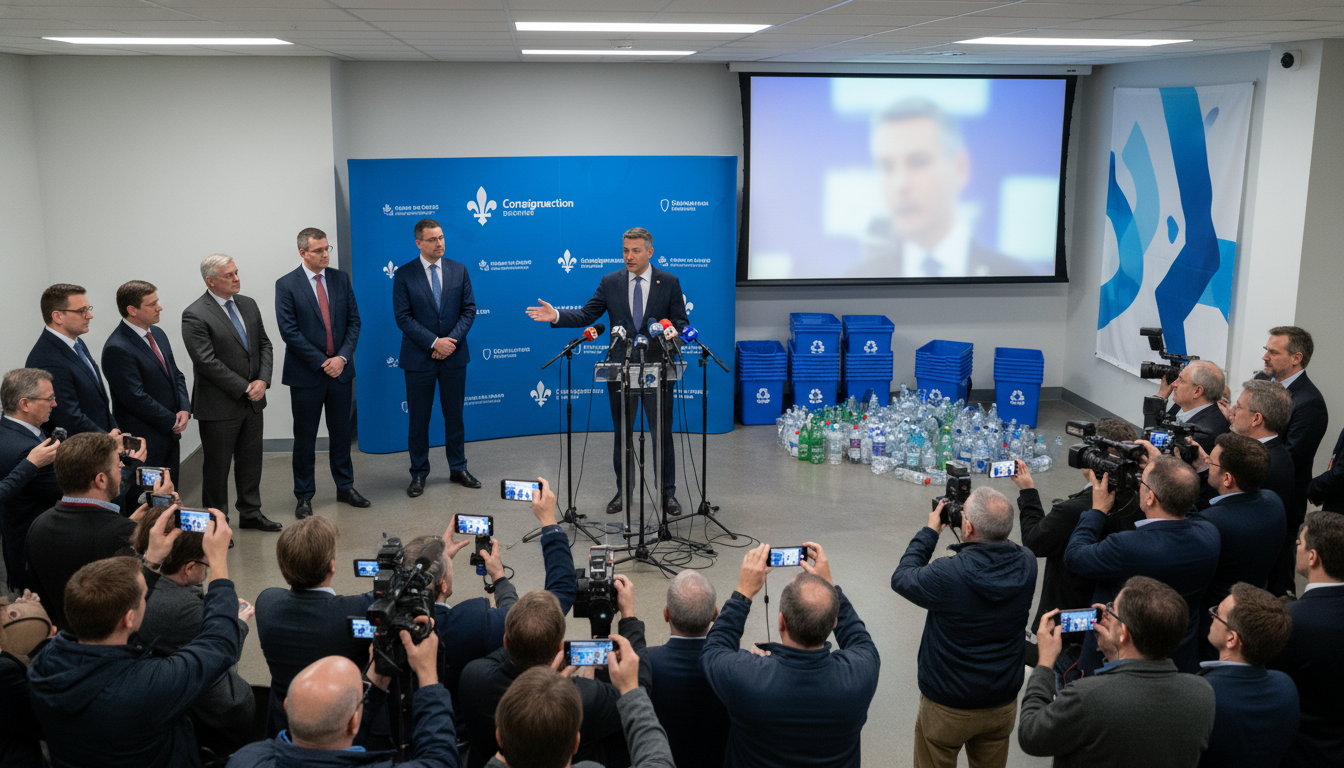
Consignaction accuses Quebec municipalities of blocking rollout of bottle-return centres
Consignaction says Quebec municipalities are delaying or blocking the opening of bottle-return centres, putting the province’s consignment rollout and targets at risk.
Consignaction, the body designated by the Quebec government to manage the province’s deposit-return system, is engaged in a series of disputes with several municipalities that it says are stalling the rapid opening of new bottle-return centres. The organization singles out Delson, Mercier, Rimouski and the Plateau‑Mont‑Royal borough of Montreal as locations where approvals or agreements have faltered, forcing project delays and financial strain. Municipal officials counter that their decisions reflect land-use, community and regulatory concerns, creating a standoff that is slowing the expansion of the network.
Delson refuses permit for downtown site
Consignaction and the Town of Delson are locked in a confrontation over a proposed return site that the municipality has refused to permit. Consignaction’s strategy vice-president says the group signed a lease after initial approval but was later denied a building permit when detailed plans were submitted. The organization reports it has been paying rent for a site it cannot use for nearly a year, a cost it calls unfair and avoidable.
Delson’s mayor has disputed that account, saying the organization committed to a lease without first securing municipal approvals or a council resolution. The mayor has expressed concerns about locating a busy return facility adjacent to a six‑storey residential building, citing potential noise, traffic and nuisance impacts for nearby residents. He says the town has proposed alternate locations and will not change its position on the contested site.
Mercier seeks a larger facility
In Mercier, the municipal leadership has rejected Consignaction’s current proposal, arguing the planned site would not meet community needs. The mayor has urged the organization to consider a larger, higher‑capacity centre given heavy through‑traffic on the municipality’s main thoroughfare. Officials say more than half the vehicles on that route do not originate locally and that a modest return site could be overwhelmed.
Consignaction counters that the unit it proposed has capacity well above projected local volumes, estimating the need at six to seven million containers while noting its standard return facility can process up to ten million containers annually. The disagreement has left negotiations at an impasse, with both sides calling for more engagement but differing on the scale and timing of a solution.
Rimouski project stalled by regulatory process
In Rimouski, administrative and regulatory steps have delayed a proposed return centre despite early work begun by a property owner. Consignaction located a potential site last autumn and construction work began, but the municipality has not yet authorized the operation, preventing the signing of a lease. City officials say a regulatory amendment is required, which triggers a public consultation process and a formal municipal review.
Consignaction had hoped to use a faster environmental authorisation pathway, but the municipal council has declined to pursue that option. The company’s leadership says it is puzzled by the reluctance to accelerate approvals, arguing that clear timelines would help meet provincial rollout targets. City spokespeople insist the public consultation and regulatory steps are necessary to uphold local planning standards.
Plateau‑Mont‑Royal loses Rachel Street location
In Montreal’s Plateau‑Mont‑Royal borough, Consignaction lost a sought‑after Rachel Street storefront after a prolonged approval process made the landlord accept another tenant. The organization says it could not sign a lease without municipal permission and that the time required to amend zoning rules made the site infeasible. Borough representatives say they are supportive of return centres in principle but opted to consult commercial development groups before permitting a second return site on a lower‑intensity commercial axis.
The borough already allows return centres on its main commercial arteries and has moved to develop a regulatory framework tailored to manage the anticipated growth of such facilities. Elected officials voted in April to ask Montreal’s city council to consider an accelerated approval process under provincial environmental law for siting additional return locations, reflecting a desire to balance local input with the need for a predictable approval path.
Rollout progress and the clock on targets
Despite the disputes, Consignaction reports it has opened 155 return sites in the past two years. The organization faces a near‑term target to reach 200 sites by March 1 next year, a pace that requires roughly twenty new openings per month to meet that milestone. Over the longer term, the province’s hybrid network is expected to include about 1,200 return points: roughly 400 full Consignaction centres and 800 additional locations hosted by retailers.
Municipal delays and refusals complicate that timeline and add financial pressure on the operator, which must secure sites and sometimes cover rent while awaiting approvals. City councils counter that municipal land‑use rules, noise and traffic concerns, and the need for community consultation are legitimate local responsibilities that must be respected as the network grows.
Municipalities and Consignaction both say they want an effective deposit‑return system, but their disagreements underline the tension between provincial rollout objectives and municipal planning prerogatives. Finding a balance that accelerates site openings while addressing local impacts will be pivotal if the network is to scale on schedule.
The coming months will test whether negotiated solutions, regulatory adjustments or provincial‑municipal coordination can clear the bottlenecks and keep Quebec on track to expand its bottle‑return infrastructure as planned.
