
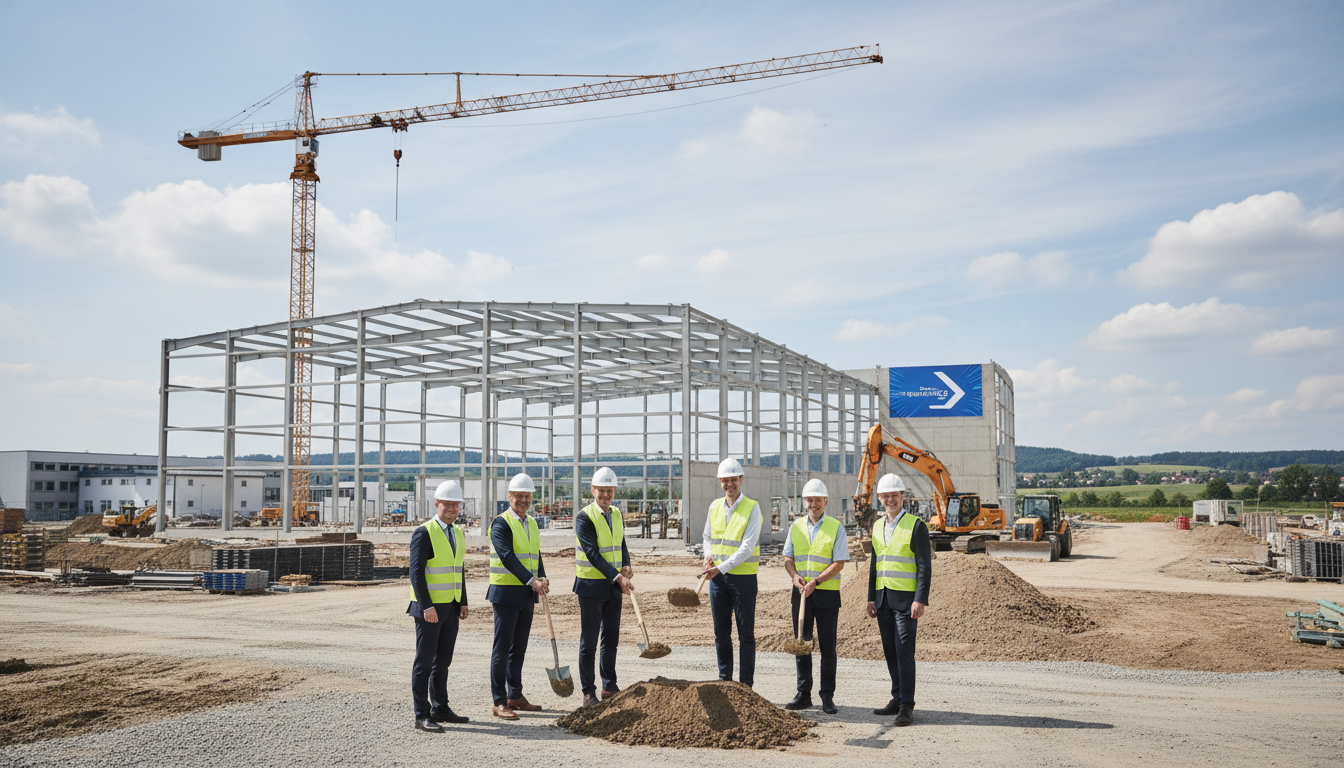
Isar Aerospace opens 40,000 m² rocket factory in Parsdorf to mass-produce launch vehicles
Isar Aerospace opens a 40,000 m² rocket factory in Parsdorf to mass-produce up to 40 launch vehicles annually, aiming to scale German launch manufacturing and boost local supply chains.
Isar Aerospace has begun building a large-scale factory on a 40,000 square metre site in Parsdorf, north of Munich, to produce rockets at industrial scale. The new Isar Aerospace rocket factory is planned to manufacture up to 40 vehicles a year, a cadence that would be notable in the European launch sector. Company officials say the move is intended to bring serial production techniques to rocket manufacturing and accelerate access to orbital launches for commercial customers.
Factory footprint and Parsdorf location
The Parsdorf facility occupies 40,000 square metres on the outskirts of Munich, a strategic choice that places the plant near Germany’s manufacturing and aerospace clusters. Local logistics links and proximity to suppliers were key factors cited by project planners, who view the site as a hub for both final assembly and integration. The factory’s size and location reflect Isar Aerospace’s ambition to move beyond prototype builds to routine, repeatable production.
Annual production target and industry significance
Isar Aerospace’s stated target of producing up to 40 rockets per year represents a high production rate for Europe’s nascent commercial launch industry. For context, that volume would exceed the typical output of many established European launch providers that still rely on batch-oriented manufacturing. If realized, the output could lower per-unit costs and reduce lead times for satellite operators seeking dedicated small-launch capacity.
Assembly-line methods and manufacturing approach
The company plans to employ flow-line production methods more common in automotive and electronics manufacturing, adapting them to aerospace tolerances and certification demands. Standardised manufacturing steps and modular assembly are intended to shorten cycle times and improve quality control across repeated builds. Isar Aerospace’s approach contrasts with traditional rocket production, which often centres on bespoke builds and lengthy, iterative assembly processes.
Comparative context with Ariane Group and European industry
While Isar Aerospace pushes for mass-production techniques, Europe’s incumbent, Ariane Group, has so far introduced only partial flow-line methods into its manufacturing, keeping a significant portion of production on traditional lines. This difference highlights a broader industry shift where new entrants experiment with industrial-scale processes to gain a cost and cadence advantage. Market observers say competition will come down to reliability, price per kilogram to orbit, and the ability to meet regulatory and customer certification requirements.
Supply chain, workforce and regional impact
The Parsdorf facility is expected to create skilled manufacturing jobs, draw specialised suppliers into the region, and stimulate broader investment in the German aerospace supply chain. Establishing consistent production volumes helps suppliers plan capacity, invest in tooling, and certify processes, which in turn supports a local ecosystem of precision part manufacturers and systems integrators. Local authorities have framed the project as a boost to regional industry and a step toward strengthening Europe’s independent access to space.
Market demand and customer profile
Isar Aerospace targets the growing small-satellite market that seeks frequent, responsive launches rather than rideshare schedules on larger vehicles, positioning the new factory to serve both commercial constellation operators and institutional customers. Regular production runs could enable shorter booking timelines and more predictable launch windows for payload owners, an increasingly valuable attribute as satellite deployments accelerate. Analysts note that capturing sufficient backlog will be essential to sustain the factory’s planned throughput.
Certification, testing and operational challenges
Scaling to serial production introduces challenges beyond manufacturing, including regulatory certification, repeated vehicle testing, and robust quality assurance regimes required for orbital launch reliability. Each vehicle must meet strict safety and performance criteria, and the factory will need integrated test facilities and experienced engineering teams to maintain consistency across many units. Isar Aerospace will also have to navigate export controls and spaceflight licensing regimes that govern launch services in Germany and other jurisdictions.
Isar Aerospace’s Parsdorf factory signals a deliberate bet on industrialising rocket manufacture in Europe by combining an extensive production footprint with flow-line methods and a clear annual output target. If the company can translate the planned cadence into reliable launches, the facility could reshape parts of the European launch market and prompt further investment in local suppliers. The success of this Isar Aerospace rocket factory will hinge on competitive pricing, certification progress, and the company’s ability to secure a steady pipeline of customers seeking dedicated small-launch services.
