
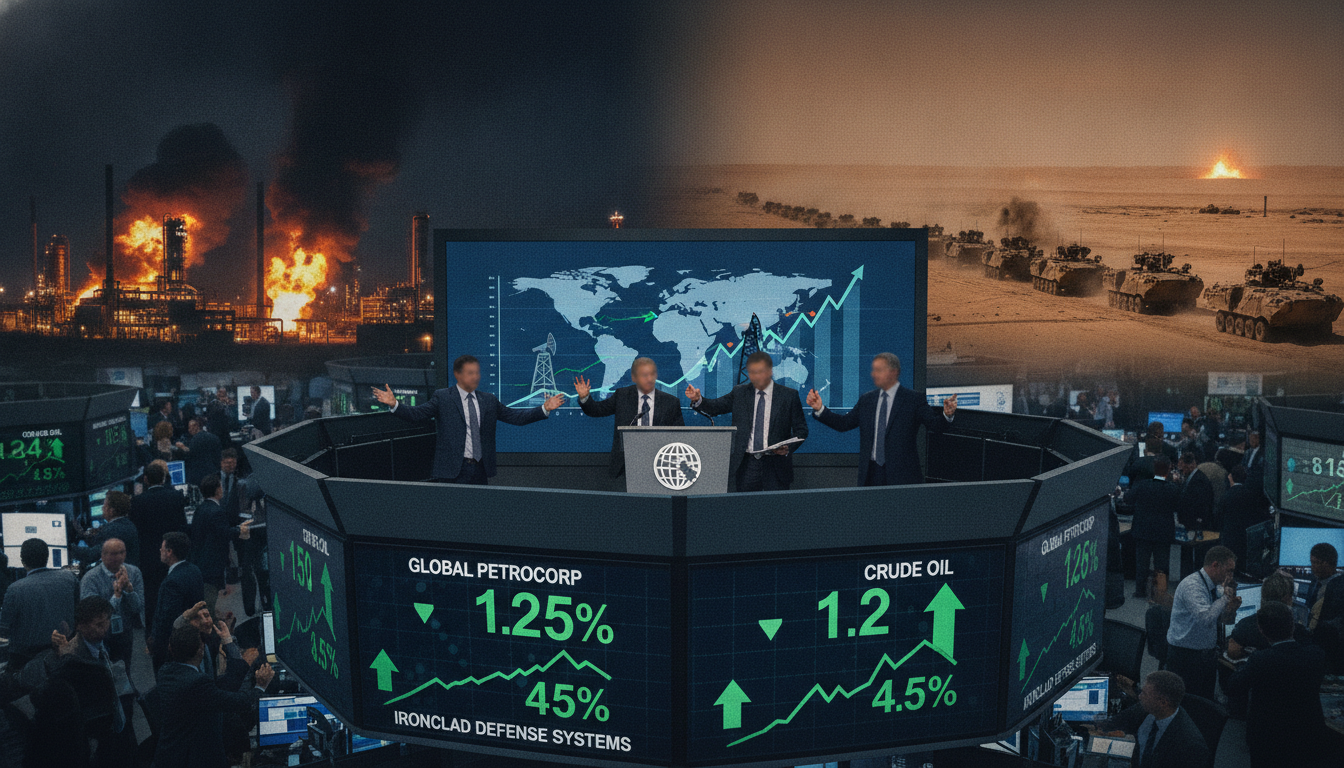
Economic impact of the war on Iran: Winners and losers six months in
Six months into the war on Iran, the economic impact of the war on Iran is reshaping global markets, creating clear winners in energy, defence and finance while straining food supplies, airlines and manufacturers. Elevated oil prices, surging defence contracts and market volatility have boosted earnings for some corporations even as higher fuel and fertiliser costs amplify hunger risks. This report examines which sectors have benefited and which have borne the brunt of the conflict’s economic fallout.
Oil majors post bumper profits
The closure of key shipping lanes and repeated strikes on Gulf energy infrastructure have pushed crude prices higher, translating into strong quarterly results for major oil companies. U.S. supermajors reported double-digit or record profits in recent quarters, and sovereign producers such as Saudi Aramco posted sharply higher net income compared with the prior year.
Not every regional producer gained equally, however, as disruptions to exports and constrained throughput have trimmed earnings at some state-owned firms. Abu Dhabi’s national company, for example, reported a large year-on-year decline in a recent quarter, underscoring how geography and export routes are shaping outcomes for producers.
US taxpayers face mounting long-term bills
U.S. officials have provided preliminary figures for direct military spending linked to the conflict, but analysts warn those tallies understate the full fiscal impact. Estimates cited by public policy experts suggest the short-term munitions and operating costs documented so far are only a fraction of spending that will be needed for repairs, veteran care and longer-term replacements.
Budget specialists warn that medium- and long-term liabilities — from disability and health payments to rebuilding damaged installations — could multiply the headline figures many times over. That gap between initial outlays and lifetime costs is shaping debate in Washington over how the war will affect federal budgets in years to come.
Defence contractors see contracts surge, stocks diverge
Demand for missiles, interceptors, counter-drone systems and other munitions has risen sharply as militaries replenish depleted inventories and expand layered air-defence capabilities. Recent defence agreements include multi‑billion‑dollar production increases for cruise missiles and Patriot interceptors, reflecting a rapid industrial response to operational losses in the theatre.
Despite booming contract activity, equity market performance among major defence firms has been mixed, with some contractors underperforming and others posting modest gains. The imbalance highlights investor concerns about program timelines, supply chains and the high unit cost of advanced systems versus low-cost asymmetric threats such as mass-produced drones.
Rising fuel and fertiliser hit global food security
Higher energy prices and restricted flows of feedstocks have flowed through to fertiliser costs, pressuring farm budgets and raising the prospect of lower crop yields in the coming seasons. International food price measures have climbed to multi‑year highs as drought and conflict-driven energy price inflation compound one another.
Humanitarian agencies report that millions more people in fragile states are struggling to access adequate food, and U.N. officials have warned that disrupted shipping through strategic straits is increasingly making the world’s food supply “collateral damage.” Import-dependent countries in Africa and Asia face particular exposure if higher input costs persist.
Banks profit amid market volatility
Volatility in equity and commodity markets has spurred trading revenue and asset reallocation, boosting second-quarter profits for several large banking groups. Major U.S. and international lenders reported sharp quarterly gains as clients sought hedges and portfolio adjustments in an unsettled market environment.
Those earnings, however, coexist with elevated risk and heightened balance-sheet scrutiny as lenders manage credit exposures tied to energy, trade and corporate borrowers affected by the conflict. Rapid moves in rates and currencies have created both opportunities and hazards for financial institutions.
Airlines and transport endure heavy costs
Air carriers have faced a confluence of operational and cost pressures from missile and drone activity, constrained airspace and much higher jet fuel prices. Middle East carriers absorbed particularly large disruptions early in the conflict, and industry forecasts point to large regional losses this year compared with a recent profit cycle.
Beyond the Gulf, longer routings, cancelled services and rising fuel bills have eroded airline margins globally, with some carriers reporting substantial annual losses. Freight and shipping lines also face higher insurance and rerouting expenses as strategic chokepoints remain threatened or closed.
Renewables and coal both pick up pace
The energy squeeze has had a paradoxical effect: elevated fossil fuel prices have accelerated investment into renewable electricity while also prompting some countries to increase coal use for immediate energy security. Governments and firms in several markets announced new clean-energy initiatives as higher oil and gas prices strengthened the business case for wind, solar and electrification.
At the same time, coal exporters and thermal producers reported profit gains as buyers sought readily available, lower-cost alternatives to disrupted oil and gas supplies. The twin trend underscores a short-term pivot toward security of supply even as long-term decarbonization goals remain on many national agendas.
Six months on, the economic fallout of the conflict is widening geography by geography and sector by sector, with gains concentrated among energy traders, defence suppliers and certain financial firms while airlines, vulnerable importers and hungry populations face mounting strain. How long elevated prices and disrupted trade routes persist will determine whether gains for some firms become entrenched profits or temporary windfalls, and whether the fiscal and humanitarian costs for states and communities can be contained.
