
Iceland referendum on EU membership puts resumption of accession talks to a public test
Iceland votes in a referendum on EU membership on August 29, 2026, to decide whether to resume accession talks paused 13 years ago amid domestic debate.
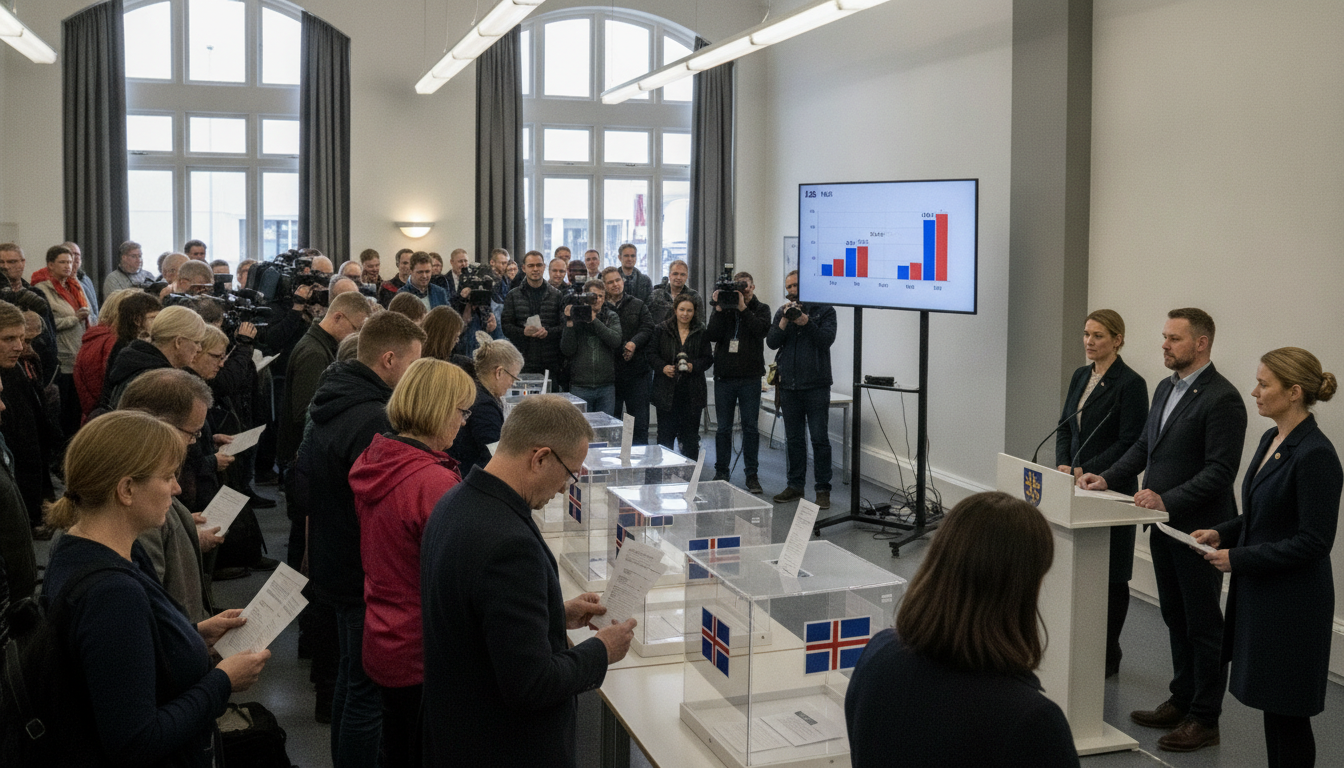
Icelanders turned out on August 29, 2026, for a referendum on the Iceland referendum on EU membership that will determine whether the government should reopen negotiations to join the European Union. Prime Minister Kristrún Frostadóttir was among those who cast ballots, underscoring the vote’s central role in national politics. The referendum comes 13 years after Reykjavik suspended formal accession talks, returning the question to voters at a moment of heightened public discussion.
Prime Minister Kristrún Frostadóttir casts her ballot
Prime Minister Kristrún Frostadóttir voted early on Saturday, signalling the government’s commitment to see the public decide the next move on accession talks. Frostadóttir has positioned the referendum as a democratic test for whether Iceland should explore closer ties with the EU. Her participation reflected the office’s visibility in the campaign without predetermining how the electorate will rule.
Observers noted a high level of attention from political leaders and civic groups, with both sides mobilizing supporters in the final days. The symbolism of senior politicians voting underscored how the question of EU membership has become a defining issue in Icelandic public life. Campaign rallies, media appearances and public debates intensified in the run-up to Saturday’s vote.
What voters were asked and legal consequences
The ballot asked a single, binding question on whether Iceland should resume accession talks with the European Union, effectively asking voters to authorise their government to reopen negotiations. A majority vote in favour would give the sitting government a clear parliamentary and public mandate to seek formal talks with Brussels. A majority against would leave the 2013 suspension of negotiations intact and keep the country outside formal accession discussions.
Legally, a positive result would not immediately trigger membership; it would restart a multi-year process of negotiations, chapter-by-chapter alignment and domestic ratification. Conversely, a negative result would keep Iceland on its current path of bilateral and sectoral cooperation with the EU without full accession. Both outcomes carry complex administrative and political follow-up work.
Political split and campaign dynamics
The referendum reopened long-standing divisions in Icelandic politics over sovereignty, fisheries and trade policy. Supporters of resuming talks argued that EU membership could provide economic stability, regulatory certainty and stronger ties across Europe. Opponents warned that accession could constrain national control over fisheries and other strategic resources central to Iceland’s economy.
Major parties and interest groups campaigned vigorously on both sides, framing the vote as a choice about economic security, national autonomy and future generations’ prosperity. Polling in recent weeks described a close contest, with movement among undecided voters giving the campaign a last-minute intensity. The debate also drew attention from Iceland’s fishing communities, business leaders and environmental organisations.
Economic and fisheries considerations at stake
Iceland’s economy, heavily linked to fisheries and tourism, has been at the centre of arguments over EU membership. Fisheries policy—particularly exclusive rights to fishing grounds and quota systems—remains one of the most sensitive issues in negotiations and in voters’ minds. Proponents of talks say EU-style market access and regulatory frameworks could diversify trade and investment prospects, while critics fear loss of sovereign control over marine resources.
Beyond fisheries, the debate has touched on currency options, trade agreements and regulatory harmonisation with the EU single market. Energy and climate policy were also part of the conversation, given Iceland’s renewable energy resources and potential alignment with European standards. Economists and industry representatives offered competing assessments of long-term costs and benefits, leaving many voters weighing economic forecasts against concerns about national autonomy.
If the result is Yes or No: expected next steps
If voters approve resuming accession talks, the government is expected to notify EU institutions and seek a formal negotiating mandate, a process that could take months to initiate. Negotiations would then proceed across numerous policy chapters, requiring domestic legislative work and eventual ratification by both Icelandic authorities and all EU member states. The timeline to potential membership, should talks advance, would likely span several years and hinge on complex technical and political negotiations.
If the referendum rejects resuming talks, the government would likely respect the outcome and maintain the 2013 suspension, focusing instead on deepening selective cooperation with the EU. That path would preserve greater national control over fisheries and other policies while leaving open possibilities for sectoral agreements. Either decision is poised to shape Reykjavik’s international orientation through the next parliamentary term.
The referendum on August 29, 2026, has thus reopened a foundational debate about Iceland’s place in Europe, pitting long-term strategic questions against immediate economic and cultural concerns. The result will set the direction for government policy and political debate in Reykjavik for years to come.
